

Maddy summaryHRES 288 is a symbolic congressional resolution (not a law) proposing to establish "National Garifuna Immigrant Heritage Month" in April. It aims to celebrate the contributions of Americans with Garifuna immigrant heritage - descendants of West African and Indigenous Caribbean peoples who settled in Central America after 1797 and migrated to the U.S. - to U.S. history and culture. The resolution expresses Congress’s sense that the nation should recognize this heritage through ceremonies and activities, building on existing observances in New York City and New York State since 2009. It does not create new government programs or legal requirements, but formally acknowledges the cultural significance of Garifuna communities in the U.S. and their UNESCO-recognized traditions.
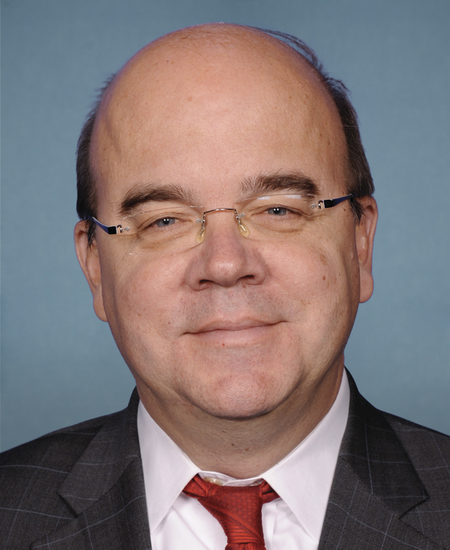
Rep. James P. McGovern
Sponsored bills
Maddy summaryHR 2585, the Armenian Genocide Education Act, establishes a federal program through the Library of Congress to develop educational resources about the 1915-1923 Armenian Genocide for K-12 schools. It requires the Librarian to create and distribute accurate teaching materials, provide teacher training workshops, and maintain an online resource hub focused on the genocide's history, lessons, and prevention of hate. The program directly supports local educational agencies, independent schools, and educators by offering professional development and curriculum resources. It defines key terms like "denial" and "distortion" to guide the educational content, aiming to improve understanding of this historical event and its relevance to preventing modern-day hate crimes.
Maddy summaryThis symbolic resolution (HCONRES 23) expresses Congress's support for International Transgender Day of Visibility, observed annually on March 31. It encourages Americans to recognize and celebrate transgender community achievements while acknowledging ongoing challenges like discrimination in employment, healthcare, and public accommodations. The resolution does not create new laws or policies but formally endorses the day's purpose through non-binding statements of support and recognition. It directly affects the broader public by promoting awareness and respect for transgender individuals' rights and contributions.
Maddy summaryHJRES 83 is a joint resolution seeking congressional disapproval of a specific proposed U.S. military sale to Israel. It directly targets the sale of 35,529 MK 84 or BLU-117 general-purpose bomb bodies and 4,000 I-2000 Penetrator warheads, as detailed in a March 2025 government transmittal. If passed, the resolution would prohibit the U.S. government from proceeding with this particular foreign military sale under the Arms Export Control Act. The bill affects the executive branch's ability to authorize the sale and Israel as the intended recipient of these defense articles.
Maddy summaryHR 1756, the "Stop Politicians Profiting from War Act of 2025," prohibits Members of Congress, their spouses, and dependent children from owning or trading stocks, bonds, or other investments tied to defense contractors with U.S. Department of Defense contracts. It requires all such holdings to be divested within 120 days (or 180 days for complex funds) of enacting the law or when taking office, banning "blind trusts" as a compliance method. Exceptions include diversified investment funds meeting specific criteria, Alaska Native Claims Settlement stock, U.S. Treasury securities, and government retirement plans. Violations could result in civil penalties up to $50,000 per offense.
Save America's Forgotten Equines Act of 2025 or the SAFE Act of 2025 This bill permanently prohibits the slaughter of equines (e.g., horses and mules) for human consumption. (Current law prohibits the slaughter of dogs and cats for human consumption. This bill extends the prohibition to equines.) Specifically, this bill prohibits a person from knowingly (1) slaughtering an equine for human consumption; or (2) shipping, transporting, possessing, purchasing, selling, or donating an equine to be slaughtered for human consumption or equine parts for human consumption. The bill subjects a violator to a fine. The bill applies to conduct in or affecting interstate or foreign commerce or within the special maritime and territorial jurisdiction of the United States. However, it does not apply to an activity carried out by an Indian for a religious ceremony. As background, in recent years, the appropriations acts have prohibited the Department of Agriculture (USDA) from using federal funds to inspect horses before they are slaughtered for human consumption. Therefore, there are currently no USDA-inspected horse slaughter facilities in the United States.
Maddy summaryHR 1271 increases funding for scholarships at 1890 institutions - historically Black colleges and universities established under the Second Morrill Act - by adding mandatory annual support. It amends existing law to explicitly include bachelor's and graduate programs in scholarship eligibility and requires $15 million annually from the Commodity Credit Corporation starting in fiscal year 2025, to remain available until spent. This funding directly supports students at these institutions by expanding access to financial aid for higher education. The bill updates previous funding language to ensure ongoing support beyond 2023.
Maddy summaryHRES 265 is a symbolic House resolution condemning the Trump administration for allegedly using the Signal messaging app to share highly sensitive or classified military information, directly affecting officials including Vice President Vance, Secretary of Defense Hegseth, and Secretary of State Rubio. The resolution cites risks to national security, noting foreign adversaries like China and Russia have previously accessed U.S. classified data. It calls for investigations into unauthorized communications, mandates review of classified information procedures, and demands accountability for any violations of federal laws governing classified data handling. The resolution does not create new laws but formally expresses disapproval of the administration's communication practices.
Maddy summaryHR 2475 establishes a 3-year pilot program providing direct cash payments and supportive services to homeless youth and young adults aged 18-30 living in low-income geographic areas. The program would randomly select up to 105,000 participants to receive monthly payments of at least $1,400 or the adjusted fair market rent for a 2-bedroom apartment, along with housing navigation, financial coaching, and workforce development services. Participants must consent to sharing tax information but the program is designed not to affect eligibility for other benefits or public charge status. The program includes a study to evaluate its impact on housing outcomes, economic mobility, and health for participants, with the goal of determining if direct cash payments could help reduce homelessness among young people.
Maddy summaryHR 2439 authorizes $50 million for fiscal year 2026 and $55 million for 2027 to fund the United Nations Population Fund (UNFPA), directly supporting its global programs. The bill specifies that these funds will help end preventable maternal deaths, address unmet contraceptive needs, combat gender-based violence, and end harmful practices like child marriage and female genital mutilation. UNFPA operates in over 150 countries, primarily aiding women and girls in developing nations and crisis zones, including those affected by conflict or natural disasters. The bill emphasizes UNFPA’s compliance with U.S. restrictions (not funding abortion) and its role in advancing U.S. strategic interests through voluntary family planning and reproductive health services.