

Maddy summaryThis bill establishes new requirements for pharmacy benefit managers (PBMs) working with Medicare Part D prescription drug plans and Medicaid programs. It mandates that PBMs pay pharmacies a specific reimbursement amount based on drug acquisition costs plus a fixed fee, pass through manufacturer rebates directly to beneficiaries at the point of sale, and prohibits steering practices that direct patients to specific pharmacies. The bill applies to Medicare Part D plans and Medicaid managed care organizations beginning January 1, 2027, affecting how PBMs interact with pharmacies and handle drug rebates. Violations could result in criminal penalties of up to $1 million or 10 years in prison for willful noncompliance. The bill aims to increase transparency and fairness in pharmacy drug pricing for Medicare and Medicaid beneficiaries.
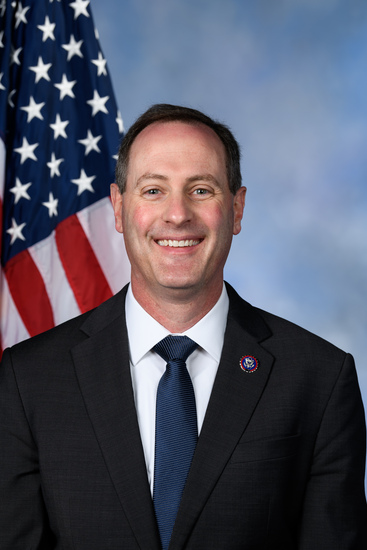
Rep. Tracey Mann
Sponsored bills
Maddy summaryHR 573, the "Studying NEPA’s Impact on Projects Act," requires the Council on Environmental Quality (CEQ) to annually publish detailed reports starting July 2025 on how the National Environmental Policy Act (NEPA) affects federal projects. The reports will track NEPA-related lawsuits (including outcomes and costs), the length and cost of environmental reviews (like impact statements), and timelines for completing key review steps over 5- to 10-year periods. Data must be broken down by project type (e.g., energy, transportation) and sector (e.g., renewable energy, pipelines) to show trends in compliance, delays, and expenses. This information will be made publicly available online and submitted to relevant congressional committees, providing transparency on NEPA’s practical implementation without changing the law itself.
Maddy summaryThis bill extends and increases tax credits for sustainable aviation fuel (SAF) producers. It raises the credit rate from 20 cents to 35 cents per gallon for certain SAF facilities and from $1.00 to $1.75 per gallon for others, while requiring SAF to meet ASTM International standards and exclude palm oil or petroleum-derived sources. The credit period is extended from ending in 2029 to 2033, applying to fuel produced after December 31, 2025. The bill directly affects SAF producers meeting these specific criteria, aiming to incentivize cleaner fuel production for the aviation industry.
Maddy summaryThis bill amends the Natural Gas Act to give the Federal Energy Regulatory Commission (FERC) exclusive authority to approve U.S. LNG export terminal projects, requiring FERC to deem such exports consistent with the public interest. It directly affects natural gas companies seeking to build or expand export facilities and streamlines FERC's review process by removing prior requirements for interagency coordination. The bill clarifies that FERC's decisions won't override existing sanctions laws, including restrictions on trade with countries designated as state sponsors of terrorism under current law. This change aims to accelerate domestic LNG export projects while maintaining legal safeguards for national security and foreign policy.
Maddy summaryHR 6093, the Agricultural Cooperative Energy Savings Act of 2025, expands eligibility for certain USDA programs to include agricultural cooperatives with fewer than 2,500 employees. This change directly affects smaller agricultural cooperatives that previously did not qualify under existing rules. The bill amends Section 9007(c)(1)(A)(i) of the Farm Security and Rural Investment Act of 2002 to add these cooperatives to the list of eligible participants. The key mechanism is simply broadening the definition of qualifying entities for existing USDA program access. This is a procedural change to eligibility criteria, not a new program.
Maddy summaryHR 5633, the Agriculture Infrastructure Stability Act of 2025, requires the Federal Crop Insurance Corporation to develop and make available a new revenue protection policy for farmers. Specifically, it mandates the Corporation conduct research on "harvest incentive policies" covering revenue loss from harvest issues and make this policy available within two years of the law's enactment, if certain requirements are met. The bill also requires the Corporation to submit a report to congressional committees within one year detailing the research results and the policy details. This directly affects farmers participating in federal crop insurance programs by potentially providing new coverage for revenue losses tied to harvest conditions.
Maddy summaryThis bill establishes the "Expanding Childcare in Rural America Initiative" under the USDA, directing the Secretary of Agriculture to prioritize funding through six existing USDA programs (like rural business grants and essential community facilities loans) for projects addressing childcare availability, quality, or cost in rural and agricultural communities. It specifically prioritizes applications from providers in farming-dependent counties (using USDA 2015 county typology) and requires balanced geographic distribution of funds across rural areas. The initiative runs from fiscal years 2026 through 2030, with the USDA required to evaluate outcomes and report findings to Congress within three years. It directly affects rural childcare providers, families in underserved communities, and existing USDA grant programs.
Give Kids a Chance Act of 2025 This bill expands the Food and Drug Administration’s (FDA’s) authority with respect to research on rare pediatric diseases, including by permitting the FDA to take enforcement action against drug sponsors that fail to satisfy pediatric study requirements and by reauthorizing programs that support pediatric research. Specifically, the bill modifies requirements relating to molecularly targeted pediatric cancer investigations to permit research on new drugs in combination with active ingredients that have already been approved, provided certain conditions are met; permits the FDA to take enforcement action against drug sponsors that fail to comply with pediatric study requirements, if such sponsors demonstrated a lack of due diligence in satisfying the requirement; renews the FDA’s authority to award priority review vouchers to sponsors of new products intended to treat rare pediatric diseases through September 30, 2029; and reauthorizes through FY2027 certain funding for the National Institutes of Health to support priority pediatric research. The bill also provides statutory authority for the FDA’s interpretation of the orphan drug exclusivity period. The bill specifies, consistent with FDA regulations, that the seven-year market exclusivity period for drugs for rare diseases or conditions (i.e., orphan drugs) prohibits the approval of the same drug for the same approved use or indication with respect to the disease or condition. (In Catalyst Pharmaceuticals, Inc. v. Becerra , a court rejected the FDA’s interpretation and held that orphan drug exclusivity extends to all uses or indications for the disease or condition.)
Maddy summaryThis bill denies immigration benefits to individuals who participated in, supported, or facilitated Hamas attacks against Israel starting October 7, 2023. It amends immigration law to make such individuals inadmissible (barred from entering the U.S.) and ineligible for any immigration relief, including asylum or other protections. The law requires annual reports from the Homeland Security Secretary tracking how many people are denied entry or removed under these provisions. It directly affects non-U.S. nationals involved in Hamas-related violence against Israel since the October 7, 2023, attacks.
Maddy summaryHR 5563, the DRIVE-SAFE Act, creates a structured apprenticeship program for commercial drivers under age 21. It requires employers to provide a two-phase training program: a 120-hour probationary period focused on basic driving skills (like traffic navigation and safety awareness), followed by a 280-hour period covering advanced tasks (such as pre-trip inspections and load management). During both phases, apprentices must operate vehicles equipped with automatic transmissions, collision mitigation systems, and video capture, and must be accompanied by an experienced driver (26+ years old with no recent accidents or violations). The bill does not change existing commercial driver’s license requirements and mandates employers to maintain records and provide remediation for preventable accidents or violations during training.