

Maddy summaryHR 4802, the Securing Infrastructure from Adversaries Act of 2025, bans the use of federal funds for certain foreign-made LiDAR technology in transportation projects. It prohibits the Secretary of Transportation from procuring, obtaining, or contracting for LiDAR technology from specified "covered foreign countries," "covered LiDAR companies," or "covered LiDAR technology" starting June 30, 2026. Contractors must certify they will not use banned technology, and the Secretary may grant limited waivers for national security reasons, requiring congressional notification. This directly affects transportation infrastructure projects funded by the Department of Transportation, including grants and contracts.
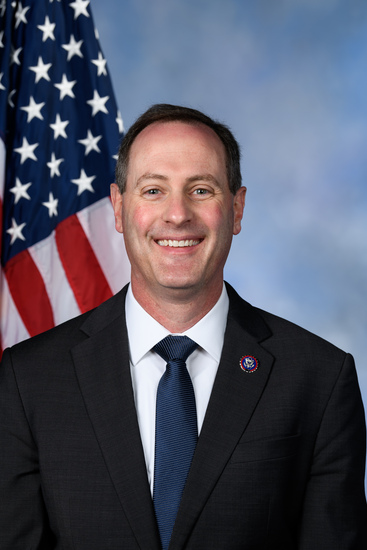
Rep. Tracey Mann
Sponsored bills
Maddy summaryThis bill requires commercial motor vehicle drivers to demonstrate English proficiency to pass knowledge tests or receive certification. Starting two years after enactment, drivers must understand English traffic signs, communicate with safety officers (like border patrol), and exchange directions in English while operating vehicles. It bans administering these tests in any language other than English and mandates the Transportation Secretary to update related regulations within two years. The law directly affects commercial drivers seeking certification or renewing licenses under federal rules.
Maddy summaryThe ADOPT Act of 2025 creates federal offenses to prevent exploitation in private domestic interstate adoptions. It prohibits unlicensed groups from acting as intermediaries between birth parents and adoptive parents, restricts certain adoption advertising, and caps payments to birth parents at $2,500 before consulting a licensed agency or attorney. The bill directly affects unlicensed adoption facilitators, birth parents, and prospective adoptive parents by requiring all adoption services to occur through licensed providers or exempt entities like attorneys and nonprofit agencies. Violations carry fines up to $100,000 for organizations or $50,000 plus 5 years in prison for individuals, with exemptions for public agencies, licensed child-placing organizations, and attorneys.
Maddy summaryHR 6167, the HEALTH Act of 2025, creates a new tax deduction for physicians providing unreimbursed charity care to patients enrolled in Medicaid (Title XIX) or CHIP (Title XXI) programs. The deduction equals the Medicare fee schedule amount for such care, but excludes services like sex reassignment surgeries and hormone treatments for gender transition. Additionally, the bill adds liability protection for physicians providing this charity care, shielding them from civil lawsuits for non-intentional harm during such services, and preempts conflicting state laws. This directly affects physicians who serve low-income patients through public health programs.
Rural Hospital Closure Relief Act of 2025 This bill temporarily allows additional hospitals to qualify as critical access hospitals (CAHs) that receive special payment under Medicare. Currently, in order to qualify as a CAH under Medicare, a hospital must either (1) be located more than 35 miles (or 15 miles in mountainous regions or areas with only secondary roads) from another hospital, or (2) have been certified prior to January 1, 2006, by the state as a necessary provider of services in the area. The bill allows a hospital to also qualify if the hospital is a small, rural hospital that (1) serves a health professional shortage area, or a high number of low-income individuals or Medicare beneficiaries; (2) has experienced financial losses for two consecutive years; and (3) attests to having a strategic plan to address financial solvency and to committing to provide a service that is in high demand in the hospital's service area. This authority expires nine years after the bill's enactment. The Government Accountability Office must study the effects of the bill's implementation. In addition, the Medicare Payment Advisory Commission must study and recommend payment systems for rural hospitals under Medicare. The Centers for Medicare & Medicaid Services must subsequently establish a mechanism and issue guidance on how newly designated CAHs may transition to different payment models under Medicare, including any new payment models recommended by the commission.
Maddy summaryHRES 891 is a ceremonial House resolution supporting the designation of National Rural Health Day, observed annually on the third Thursday of November (November 20, 2025, this year). It recognizes rural health care providers and the challenges rural communities face in accessing care, citing issues like hospital closures and workforce shortages. The resolution does not create new policies, funding, or requirements; it solely expresses the House's support for the day's goals and commitment to improving rural health accessibility. This is a non-binding acknowledgment, not a legislative action with concrete policy changes.
Maddy summaryHRES 864 is a ceremonial resolution honoring U.S. veterans on Veterans Day 2025. It does not create new laws or policies but formally recognizes veterans' service and sacrifice, calling on all Americans to observe Veterans Day. The resolution references historical context about Veterans Day's origins (from Armistice Day to honoring all veterans) but contains no concrete policy changes. It directly addresses the general public, urging them to participate in the observance. As a non-binding resolution, it affects no specific individuals or groups through legislative action.
Maddy summaryHR 5888, the UNtaxed Act, prohibits the United Nations or its affiliated bodies from imposing taxes, tariffs, or fees on U.S. citizens or companies without a Senate-approved agreement. It also blocks U.S. funding for any United Nations activities related to implementing or enforcing a global carbon tax, which is defined as a tax on vessel emissions under a worldwide fuel system. The bill directly affects U.S. businesses and citizens who might face UN levies, and it restricts federal resources from supporting international carbon tax initiatives. This legislation aims to prevent unilateral UN taxation and funding of carbon-related policies without congressional oversight.
Maddy summaryThis bill ensures that critical firearm-related government operations continue during federal shutdowns. It designates background checks (via the FBI's National Instant Criminal Background Check System), Bureau of Alcohol, Tobacco, Firearms and Explosives enforcement, and firearm export licensing (handled by Commerce and State Departments) as essential services that must remain operational. These functions would be treated as "excepted" under federal law, meaning their employees would continue working even if other government services halt. The bill affects how background checks and firearm export licenses are processed during shutdowns but does not change gun ownership laws or eligibility.
Maddy summaryThis bill amends the Safe Drinking Water Act to require community water systems to participate in cybersecurity training focused on protecting against and responding to cyberattacks. It updates funding periods for these training programs, extending them from 2020-2021 to 2026-2031. The key provision mandates that training programs must cover specific cyber threat mitigation and response strategies. This directly affects community water systems receiving federal funding under the Safe Drinking Water Act.