

Maddy summaryHR 7137, the Shutdown Fairness Act, requires federal agencies to pay covered employees (including most federal workers and military personnel) and covered contractors their regular pay during government shutdowns. It appropriates funds from the Treasury to cover standard employee compensation and contractor payments for work performed during a lapse in regular appropriations, ensuring pay continues without delay (within 7 days if a shutdown is ongoing at enactment) and aligns with regular pay schedules. The bill applies only to individuals employed or with accepted offers before the shutdown began and mandates that these payments be charged to future appropriations. It does not change agency obligations under existing contracts or authorize new spending beyond the specified shutdown period.
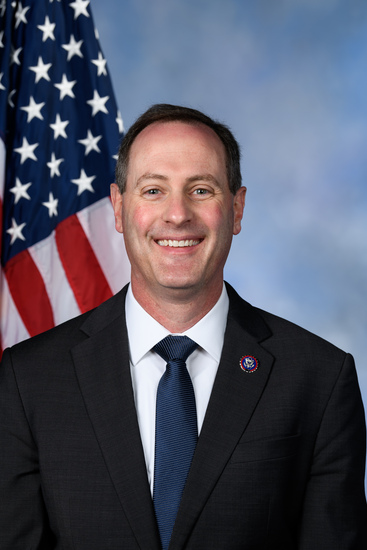
Rep. Tracey Mann
Sponsored bills
Maddy summaryThis bill amends Medicare and Medicaid regulations to clarify the conditions under which skilled nursing facilities lose approval for nurse training programs. It updates the criteria to include facilities assessed with a civil penalty of at least $12,924 for quality-of-care deficiencies or subject to specific corrective remedies. The changes refine the existing penalty thresholds and deficiency types that trigger loss of program approval. This is a technical regulatory adjustment affecting nursing facilities' compliance status under federal healthcare programs, not a new policy or funding measure.
Maddy summaryThe Fiscal State of the Nation Act requires the chairs of the House and Senate Budget Committees to hold an annual joint hearing within 45 days after the Treasury submits its annual financial report. At this hearing, the Comptroller General must present a nonpartisan analysis of the federal government's financial condition, including budget deficits, surpluses, and long-term fiscal projections, based on the Treasury's report. The hearing must be open to the public and media, and all members of Congress may participate, regardless of committee membership. This requirement applies to financial reports submitted on or after the bill's enactment date.
Maddy summaryThis bill requires state agencies administering the SNAP (food stamp) program to provide recipient-level data to the USDA Secretary upon request. It directly affects state SNAP agencies, which must submit this data within 30 days (or sooner for urgent cases) in secure electronic formats. Key provisions include mandatory data sharing for program oversight and integrity, strict privacy safeguards under the Privacy Act, and potential withholding of federal funds for non-compliance. The bill also clarifies that this does not limit the USDA's existing authority to access state data for program administration.
Maddy summary# Summary of Reserve Component Duty Consolidation Legislation This legislation is a comprehensive revision of military reserve component terminology and definitions throughout the U.S. Code. The primary purpose is to replace the outdated term "inactive duty training" with the more accurate and consistent term "reserve component duty" across all relevant sections of federal law. ## Key Provisions: 1. **Terminology Change**: - Replaces "inactive duty training" with "reserve component duty" in over 50 sections of the U.S. Code (primarily Titles 10, 32, and 37) - Also replaces related terms like "inactive duty" and "inactive duty for training" with "reserve component duty" 2. **Repeals**: - Repeals Chapter 13 of Title 10 - Repeals Sections 10147, 10148, 12406, 12503, 12552 of Title 10 - Repeals Sections 114, 115, and 328 of Title 32 3. **Definition Updates**: - Creates new definitions for "reserve component duty" and "remote assignment" in Title 10 - Defines "Active Guard and Reserve functions" more precisely - Clarifies that reserve component duty includes: * Training as described in sections 552(a) and 553(a) of Title 32 * Support activities authorized for members of the reserve components * Duty prescribed under sections 543 of Title 32 4. **Transition Provisions**: - Establishes a 10-year transition period from the date of enactment - Allows for earlier implementation if all relevant departments (Defense, Homeland Security, Veterans Affairs) certify readiness - Provides for early TRICARE eligibility for members ordered to active duty or full-time National Guard duty 5. **Conforming Amendments**: - Makes numerous technical changes to ensure consistent terminology throughout the U.S. Code - Updates references to training requirements, pay, and benefits to reflect the new terminology This legislation represents a significant effort to modernize military reserve component terminology, eliminate confusing and outdated references, and create a more consistent framework for understanding and managing reserve component service obligations and benefits.
Maddy summaryHR 6454 establishes a 5-year pilot program at five Department of Veterans Affairs (VA) medical centers to improve suicide care for veterans. The program requires VA staff at these sites to complete a 10-week training curriculum based on the Zero Suicide Institute's model, focusing on suicide screening, risk assessment, safety planning, and care transitions. It mandates annual reports to Congress tracking staff training completion, policy alignment with the Institute's standards, and comparisons of suicide-related outcomes (like screenings and hospitalizations) between pilot sites and other VA facilities. The pilot includes one site primarily serving rural veterans and requires site selection based on factors like regional suicide rates and staff capacity. The program will conclude after five years unless the VA extends it for up to two more years.
Aviation Funding Solvency Act This bill provides continuing appropriations to the Federal Aviation Administration (FAA) if (1) an appropriations bill for the FAA has not been enacted before a fiscal year begins, or (2) a law making continuing appropriations for the FAA is not in effect. Specifically, the bill provides appropriations from the Aviation Insurance Revolving Fund at the rate of operations that was provided for the prior fiscal year to continue programs, projects, and activities that were funded in the preceding fiscal year. The FAA may use the balance of the fund, minus $1 billion. If the FAA determines that the amounts from the fund are insufficient to continue all programs, projects, or activities, then the FAA must prioritize compensation payments for employees of the Air Traffic Organization (e.g., air traffic controllers). The bill provides the appropriations until the date on which either (1) specified appropriations legislation for the fiscal year becomes law, or (2) a bill making continuing appropriations becomes law. Finally, the bill permanently extends the FAA Non-premium War Risk Insurance Program. This program provides aviation insurance without a premium to eligible air carriers at the request of the Department of Defense or another federal agency, provided that the agency agrees to indemnify the FAA from all losses covered under the insurance. Eligible air carriers include those whose operations are under a federal contract and are necessary for national security or to carry out U.S. foreign policy.
Maddy summaryThe Reliable Power Act requires the Electric Reliability Organization (ERO) to conduct annual assessments of the U.S. power grid's ability to maintain reliable electricity supply, including analyzing generation resources, transmission needs, and risks of shortages during extreme weather. If the ERO identifies a risk of insufficient generation, it notifies the Federal Energy Regulatory Commission (FERC), which then alerts federal agencies like the Environmental Protection Agency (EPA) and Department of Energy (DOE) developing regulations affecting power generation. These agencies must submit proposed regulations for FERC review before finalizing them, and FERC can recommend changes to prevent reliability risks, with agencies required to respond to FERC’s comments. The bill directly affects federal agencies creating energy-related rules and aims to prevent power shortages by integrating grid reliability into the rulemaking process.
Essential Caregivers Act of 2025 This bill prohibits certain health care facilities from limiting the access of essential caregivers to residents of those facilities, including during designated emergency periods. Specifically, the bill generally prohibits Medicare skilled nursing facilities, Medicaid nursing facilities, Medicaid intermediate care facilities, and associated inpatient rehabilitation facilities from restricting the access of essential caregivers to residents of the facilities, including during emergency periods in which visitation rights are otherwise restricted. During emergency periods, facilities may restrict access for an initial period of up to seven days and for one additional maximum seven-day period (if the additional period is approved by the state health department). Facilities may restrict access for a total of 7 days (or 14 days with the approval of the state health department) during an emergency period. Essential caregivers must agree to comply with any safety protocols set by the facility, which may be no more stringent for caregivers compared to those for staff. Caregivers who fail to comply with these requirements may be denied access, subject to an appeals process.
Miracle on Ice Congressional Gold Medal Act This act provides for the award of Congressional Gold Medals to the members of the 1980 U.S. Olympic men's ice hockey team in recognition of the team's achievement at the 1980 Winter Olympic Games.