

Maddy summaryHR 7850, the *Eliminating Access Barriers to Conservation Act*, modifies payment rules in a federal conservation program to better serve farmers and landowners in high-cost areas. It amends the Food Security Act to allow the Secretary to waive payment limits for contracts in Alaska, Hawaii, American Samoa, Guam, the Northern Mariana Islands, Puerto Rico, and the U.S. Virgin Islands. This waiver authority directly affects agricultural producers in these territories and high-cost regions who previously faced payment restrictions under the program. The key provision removes a barrier by enabling tailored financial support for conservation efforts in geographically or economically challenging locations.
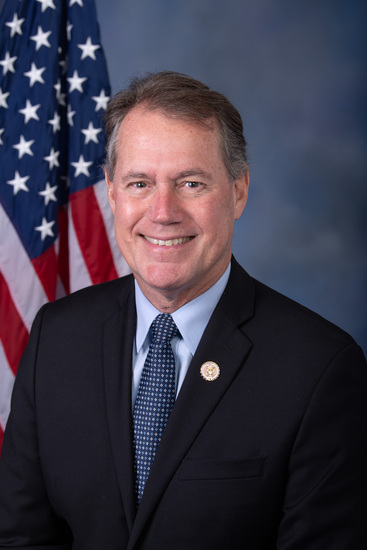
Rep. Ed Case
Sponsored bills
Maddy summaryHR 9238, the Marine Energy Technologies Acceleration Act, establishes a $1 billion Marine Energy Acceleration Fund to advance marine energy projects. It allocates $600 million for 20+ demonstration projects connecting to microgrids, community grids, or utility-scale grids, prioritizing projects supporting rural, Tribal, and disadvantaged communities, energy resilience, and environmental monitoring. Additional funding includes $230 million for research and development, $50 million for site assessments, $15 million for streamlining permitting processes across federal agencies, and $85 million for workforce development programs focused on communities near project sites. The bill directly affects marine energy developers, coastal communities, and federal agencies like the Department of Energy and Bureau of Ocean Energy Management.
Maddy summaryHR 9253, the National Gun Violence Research Act, repeals longstanding restrictions that blocked federal funding for gun violence research, including the 1996 Dickey Amendment. It establishes a National Gun Violence Research Program to support scientific studies on gun-related injury and death, with $200 million authorized over six years (2025-2030). The program directs agencies like the CDC, NIH, and National Institute of Justice to fund research, train researchers, develop safety standards, and share gun trace data with researchers through new protocols. This bill directly affects federal research institutions and public health agencies by enabling evidence-based study of gun violence causes and prevention strategies.
Maddy summaryThe Sustaining America's Fisheries for the Future Act of 2024 aims to improve the long-term health of U.S. fisheries by addressing climate change impacts, supporting fishing communities, and modernizing management practices. The bill requires federal agencies to incorporate climate science into fishery management decisions and mandates regular vulnerability assessments of fish stocks to environmental changes. It establishes new grant programs to help coastal communities preserve working waterfronts and improve data collection systems through electronic monitoring technologies. The legislation also strengthens transparency by requiring more detailed reporting on fishery management council activities and expanding tribal representation on regional councils. Additionally, the bill creates a standardized national program to track and reduce bycatch across all fisheries while updating international fisheries management agreements.
Maddy summaryThis bill reauthorizes the Debbie Smith DNA Backlog Grant Program, which provides federal funding to state and local law enforcement agencies to reduce backlogs in processing DNA evidence from crime scenes. It extends the program's funding period from fiscal years 2024 through 2029 (previously ending in 2024). The bill also updates audit requirements to ensure grant funds are used properly through 2029. This directly affects law enforcement agencies that receive these grants to accelerate DNA analysis for criminal investigations.
Maddy summaryThe SAFE Act establishes a national strategy to protect fish, wildlife, and plants from climate change impacts by requiring federal agencies to integrate climate adaptation into their conservation plans. It creates a Working Group to develop and update a National Strategy, establishes a Climate Adaptation Science Center Network for scientific support, and mandates that states develop their own adaptation plans to receive federal funding. The bill directly affects federal agencies, state governments, Indian Tribes, and Native Hawaiian organizations, emphasizing collaboration and incorporation of traditional ecological knowledge. Key mechanisms include regular review of the National Strategy, requirements for state adaptation plans addressing climate impacts on ecosystems, and coordination across different government levels. This legislation focuses on concrete policy changes to enhance ecosystem resilience to climate change effects like extreme weather, habitat loss, and species migration.
Maddy summaryHR 9104, the Access to Birth Control Act, requires pharmacies that normally stock contraception to provide birth control or related medications without delay if in stock, or immediately offer alternatives like referrals to other pharmacies or expedited orders if unavailable. It prohibits pharmacists from intimidating customers, misrepresenting availability, breaching confidentiality, or refusing to fill valid prescriptions for birth control. Pharmacies violating these rules face civil penalties up to $1,000 per day or private lawsuits. The law specifically applies to pharmacies that routinely carry contraception and excludes cases where a valid prescription is missing or payment cannot be made. It aims to address documented refusals to dispense birth control, particularly following the Dobbs decision.
Maddy summaryThis bill modifies two key VA programs to improve benefits for Native Hawaiian veterans. First, it updates housing loan eligibility by aligning the definition of "Native Hawaiian" with the Native Hawaiian Health Care Improvement Act (42 U.S.C. 11711), ensuring they qualify for the same direct housing loans as Native American veterans. Second, it requires the VA to reimburse Native Hawaiian health care systems for veteran care provided through their networks (including referred or purchased care), and exempts Native Hawaiian veterans from cost-sharing under VA medical programs. These changes directly affect Native Hawaiian veterans and the health systems serving them by expanding access to housing and healthcare benefits.
Maddy summaryHR 4581, the Maternal and Child Health Stillbirth Prevention Act of 2024, amends Title V of the Social Security Act to explicitly allow federal funds to support stillbirth prevention efforts. The bill directs states receiving Title V maternal and child health funds to use these resources for evidence-based programs and research aimed at reducing stillbirths, including tracking fetal movements, screening for growth issues, smoking cessation, and community support. It directly affects state maternal health programs by clarifying that existing funding can now cover specific stillbirth prevention activities previously not explicitly permitted. The law changes how Title V funds may be spent, adding clear provisions for research and programs targeting stillbirth reduction. This is a policy change that updates funding guidelines without creating new programs or mandates.
Maddy summaryHR 9005, the Teacher, Principal, and Leader Residency Access Act, amends the Higher Education Act to allow Federal Work-Study funds to support paid residency programs for aspiring teachers, principals, and school leaders. The bill enables schools to use these funds for compensation during residency training and travel, prioritizing students eligible for Federal Pell Grants. It defines a "residency program" as a structured, year-long apprenticeship where participants work alongside mentor educators while completing coursework in teaching or leadership skills, culminating in full state certification. This directly affects school districts facing teacher shortages, especially in high-need subjects and schools serving low-income or minority students, by expanding access to a proven model that increases educator retention. The policy change focuses on funding mechanisms rather than outcomes, making residency participation financially feasible for participants and institutions.