

Maddy summaryThis bill clarifies and preserves the existing exemption under the Fair Labor Standards Act for home care workers providing companionship services to seniors and people with disabilities. It explicitly states that services like personal care (bathing, grooming, meal prep) and household tasks related to their care remain exempt from minimum wage and overtime rules, including when workers are hired through third-party agencies (e.g., home care companies). The bill does not create new benefits or change access to care - it maintains the current legal framework governing these workers’ labor status. It directly affects home care workers, agencies employing them, and households using these services, by confirming their exemption status under federal law.
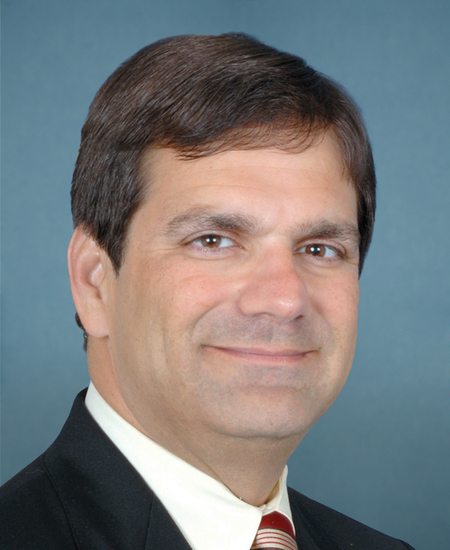
Rep. Gus M. Bilirakis
Sponsored bills
Maddy summaryThe Emergency Reporting Act (HR 7043) mandates the Federal Communications Commission (FCC) to issue detailed reports after major disasters activate its Disaster Information Reporting System. Specifically, the FCC must publish a preliminary report within 6 weeks of system deactivation (after a 7+ day activation), detailing outage durations for broadband, mobile, and emergency call services, followed by public hearings within 8 months and a final report with recommendations within 12 months. The bill also requires the FCC to investigate gaps in 911 outage reporting and the value of visual outage notifications for public safety agencies within one year of enactment. These requirements directly affect the FCC, communications service providers, and public safety agencies responsible for emergency response.
Maddy summaryHR 7014, the Protect Medicaid Act, prohibits federal Medicaid funding for the administrative costs associated with providing health benefits to noncitizens who are not lawfully admitted permanent residents and are ineligible for Medicaid due to immigration status. It directly affects states that currently offer health benefits to such noncitizens, requiring them to cover administrative expenses through state funds instead of federal Medicaid dollars. The bill amends federal law to add a specific prohibition on using federal funds for these administrative costs, while leaving the provision of medical care itself unaffected. Additionally, it mandates an Inspector General report analyzing how states separate administrative costs, ensure compliance, and finance these programs, including impacts on drug pricing. The law focuses solely on administrative funding, not on restricting medical benefits for eligible individuals.
Maddy summaryThe Death Tax Repeal Act would eliminate the federal estate tax and generation-skipping transfer tax for estates of people who die on or after the bill's enactment date, and for generation-skipping transfers made after that date. It would also establish a new $10 million lifetime gift tax exemption (adjusted annually for inflation) and replace the existing gift tax rate schedule with a revised structure. These changes would primarily affect high-net-worth individuals and their heirs, as the estate tax and gift tax typically apply to large estates or gifts exceeding the new exemption threshold. The bill's provisions would take effect on the date of enactment, with transitional rules for the year the bill is signed into law.
Maddy summaryHR 6987, the Student Visa Security Improvement Act, requires enhanced background checks for applicants seeking student visas (F, J, or M categories) and new monitoring rules for schools and exchange programs. It mandates DHS to conduct in-person interviews and review applications for these visas within 180 days, with special focus on security risks, and requires schools to verify student presence at least once every 60 days and report changes (like transfers or major changes) within 10 days. The bill also updates the SEVIS system to track academic performance and ensure timely reporting of student status changes. These changes directly affect international student visa applicants, U.S. educational institutions, and exchange program sponsors.
Maddy summaryH.J.Res. 92 seeks congressional disapproval of a 2022 rule from the Food and Nutrition Service (FNS) that updated how discrimination complaints are processed in federal nutrition programs (like SNAP) following the *Bostock v. Clayton County* Supreme Court decision. The bill aims to block the rule’s implementation, which would have required agencies to handle discrimination complaints under the expanded protections established by *Bostock* (covering LGBTQ+ individuals). If passed, the resolution would make the FNS policy update ineffective, maintaining the previous complaint processing approach. This affects how federal nutrition programs address discrimination claims but does not change the underlying anti-discrimination law.
Maddy summaryHR 6950, the Working Dog Health and Welfare Act of 2024, requires federal agencies and their contractors managing working dog programs to implement specific health and welfare recommendations from a 2022 Government Accountability Office report within 180 days of the law's enactment. It directly affects all federal agencies (including Congress and courts as defined), their contractors, and the Department of State when providing working dogs to foreign partners. Key mechanisms include mandatory implementation of the GAO's recommendations, a 60-day reporting requirement to Congress on steps taken, and ensuring new programs established after enactment follow these standards. The bill focuses on concrete policy changes to standardize care for working dogs used in federal operations, without altering existing program structures or outcomes.
Maddy summaryHR 6934, the Families’ Rights and Responsibilities Act, protects parents' fundamental right to direct their child's upbringing, education, and health care without government interference. It prohibits government actions that substantially burden these parental rights - including withholding benefits, imposing penalties, or excluding families from programs - unless the government proves a "compelling interest" and uses the "least restrictive means." The bill explicitly applies to all federal laws and requires courts to consider parental rights as a fundamental right under the Constitution, with exceptions only for actions causing serious child injury or death. It also adds parental rights to existing legal frameworks for recovering attorney fees in court cases involving these protections.
Maddy summaryThe Hydrogen for Ports Act creates a federal grant program to fund port infrastructure using hydrogen and ammonia as clean energy sources. Eligible entities - including states, local governments, tribes, port authorities, and private port operators partnering with public entities - can apply for grants to install or operate hydrogen/ammonia-fueled cargo equipment, trucks, vessels, shore power systems, and fueling infrastructure. The program prioritizes projects that reduce emissions, benefit low-income communities, create quality U.S. jobs, and avoid net job losses from automation (prohibiting grants for fully automated equipment that causes such losses). Additionally, the bill mandates a study on safety, feasibility, and storage challenges for hydrogen and ammonia fuels in maritime settings.
Hydrogen for Trucks Act This bill requires the Department of Transportation to establish a grant program that assists eligible entities in purchasing (1) heavy-duty fuel cell vehicles (e.g., trucks) that use hydrogen as a fuel source, and (2) related equipment. Certain entities that control heavy-duty truck fleets or public hydrogen fueling stations may apply for grants. Grant recipients must use the funding to demonstrate the performance of at least seven heavy-duty fuel cell vehicles that use hydrogen as fuel source or at least one hydrogen fueling station for use by such vehicles.