

Maddy summaryHR 7401, the Contract Our Veterans Act of 2024, requires the Department of Defense to set annual contracting goals for small businesses owned and controlled by veterans (including service-disabled veterans) in defense procurement. It mandates that these goals match the existing governmentwide targets for service-disabled veteran-owned businesses under the Small Business Act. The bill allows contracting officers to use sole-source awards or restricted competition for these businesses if they meet specific criteria, such as being listed in a federal database and offering best value to the government. This directly affects Department of Defense contractors and veteran-owned small businesses seeking federal contracts.
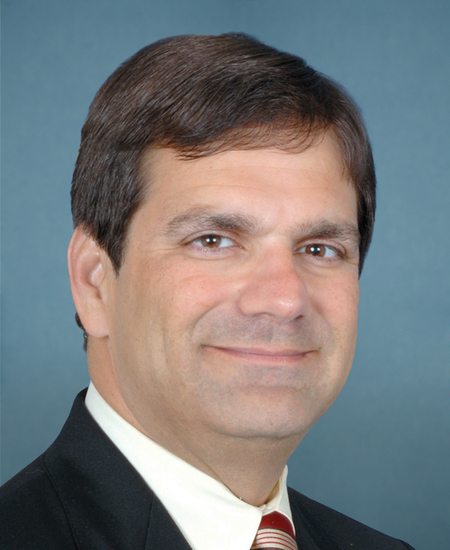
Rep. Gus M. Bilirakis
Sponsored bills
Maddy summaryThis resolution (HRES 1012) is a symbolic statement by the U.S. House of Representatives condemning Azerbaijan's detention of Dr. Gubad Ibadoghlu, an imprisoned academic and economist. It specifically addresses Azerbaijan's alleged wrongful arrest, beatings in custody, denial of medical care and legal access, and poor prison conditions. The resolution calls for Dr. Ibadoghlu's immediate release and urges the U.S. Secretary of State to prioritize his case in diplomatic engagements with Azerbaijan. As a non-binding resolution, it expresses congressional concern but does not enact new laws or impose sanctions.
Maddy summaryHRES 966 is a symbolic resolution condemning alleged sexual violence committed by Hamas during its October 7, 2023, attack on Israel. It specifically references eyewitness accounts, forensic evidence, and Hamas fighters' admissions of ordering gang rape, sexual mutilation, and assault against Israeli civilians. The resolution calls for international condemnation of such acts as weapons of war, urges nations to criminalize sexual violence, and supports investigations into Hamas' actions. As a non-binding resolution, it does not create new laws or directly affect any individuals but formally expresses the House's position on the issue.
Maddy summaryHR 7248, the FDA Modernization Act 3.0, creates a new FDA process to qualify alternative nonclinical testing methods that can replace or reduce animal testing in drug development. Drug developers can request qualification for methods that improve safety/efficacy predictivity or shorten development time, with the FDA required to review requests within 180 days. If qualified, these methods allow expedited FDA review of drug applications and enable referencing the qualified method in submissions. The bill mandates annual reports tracking qualified methods, animal use reduction, and application approvals, with transparency requirements for Congress. This directly affects pharmaceutical companies and biotech firms developing new drugs.
Maddy summaryHR 7288, the Armenian Protection Act of 2024, repeals the waiver authority that allows the President to bypass restrictions on U.S. aid to Armenia. Specifically, it prevents the waiver of Section 907 of the Freedom Support Act for fiscal years 2024 and 2025, which currently blocks U.S. assistance to Armenia due to historical disputes. This bill directly affects Armenia's eligibility for certain U.S. foreign aid programs by removing the possibility of executive branch waivers for those years. The key mechanism is the permanent removal of the waiver option under the specified appropriations law, changing the policy landscape for U.S.-Armenia aid relations.
This resolution expresses the sense of the House of Representatives that former President Trump did not engage in insurrection or rebellion against, nor give aid or comfort to the enemies of, the United States.
Maddy summaryThis non-binding resolution urges the U.S. State Department to redesignate Nigeria as a "Country of Particular Concern" (CPC) for systematic religious freedom violations under the International Religious Freedom Act, and to appoint a Special Envoy for Nigeria and the Lake Chad region. It cites U.S. Commission on International Religious Freedom (USCIRF) recommendations, reports of ongoing violence against Christian communities (including church attacks and kidnappings), and Nigeria’s blasphemy laws as justification. The resolution specifically requests the Secretary of State to immediately redesignate Nigeria as a CPC and the President to appoint a Special Envoy with direct reporting to the Secretary. It does not create new law but expresses congressional intent for U.S. diplomatic action. (3 sentences)
Maddy summaryThis bill appropriates over $15 billion in supplemental funding for U.S. security assistance to Israel following attacks in Israel. It includes specific allocations such as $5.2 billion for Israel's Iron Dome, David's Sling, and Iron Beam defense systems, as well as funds for military personnel, operations, and equipment across all branches of the military. The bill requires the Secretary of Defense and Secretary of State to submit regular reports to Congress detailing security assistance provided to Israel and designates all funding as "emergency requirements" under federal law. This funding directly supports U.S. security assistance programs with Israel to respond to regional security threats.
Maddy summaryHJRES 107 is a congressional resolution seeking to block a Federal Communications Commission (FCC) rule published on January 22, 2024 (89 Fed. Reg. 4128). The resolution aims to disapprove the FCC's rule implementing digital discrimination protections under the Infrastructure Investment and Jobs Act, which would have required internet providers to prevent discriminatory practices. If passed, this resolution would nullify the FCC rule, preventing it from taking effect under the Congressional Review Act (Chapter 8 of Title 5, U.S. Code). The bill directly affects the FCC's regulatory authority over digital discrimination enforcement in broadband services.
Maddy summaryHR 7202 requires the U.S. Secretary of State to report to Congress within 90 days on all U.S. funding provided to UNRWA (the UN agency supporting Palestinian refugees) from fiscal years 2020 through 2024, including monthly spending details. The bill also prohibits U.S. federal funds from being used to support UNRWA, either directly or indirectly, starting upon its enactment. This bill affects U.S. government funding decisions for UNRWA and mandates transparency about past financial support. The legislation focuses on requiring a spending report and blocking future U.S. financial assistance to the agency.