

Maddy summaryHR 1147, the Whole Milk for Healthy Kids Act of 2023, allows schools participating in the National School Lunch Program to offer whole milk as an option during lunch. It amends the school lunch law to explicitly permit schools to serve flavored and unflavored whole milk alongside reduced-fat, low-fat, and fat-free milk choices for students. The bill also requires the Secretary of Agriculture to adjust meal regulations to account for saturated fat from whole milk, ensuring it doesn't count against meal fat limits. This change directly affects participating schools and the students who receive school lunches, expanding their milk beverage options.
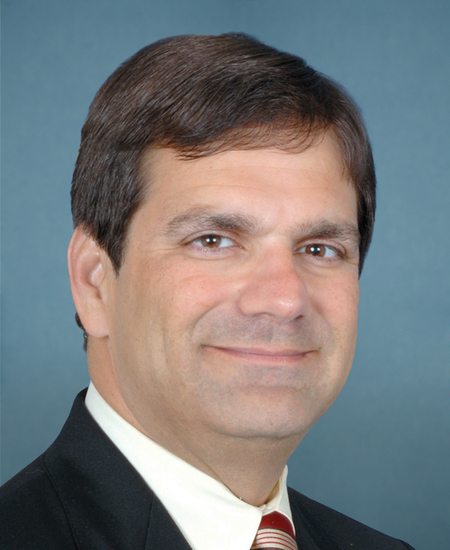
Rep. Gus M. Bilirakis
Sponsored bills
Maddy summaryHR 6734 prohibits the use of federal funds to finalize, implement, or enforce the Bureau of Alcohol, Tobacco, Firearms, and Explosives' (ATF) proposed rule (2022R-17) defining "engaged in the business as a dealer in firearms." This bill directly affects the ATF by blocking funding for this specific regulatory rule, which was proposed in August 2023. The legislation does not create new requirements but prevents federal resources from being used to advance this particular ATF regulation.
Maddy summaryThis bill reauthorizes and extends funding for programs addressing substance use disorders and opioid addiction, including residential treatment for pregnant and postpartum women, first responder training, and community recovery initiatives. It increases funding levels for these programs, adds xylazine to Schedule III of controlled substances, and requires a study on remote monitoring for patients prescribed opioids. The bill also expands Medicaid coverage requirements for medication-assisted treatment and mandates reporting on mental health condition data alongside substance use disorder data, directly affecting individuals with substance use disorders, healthcare providers, and state and tribal governments.
Maddy summaryHR 4468, the Choice in Automobile Retail Sales Act of 2023, blocks the Environmental Protection Agency (EPA) from finalizing or enforcing a specific proposed rule setting emissions standards for 2027+ light-duty vehicles. It amends the Clean Air Act to prevent future EPA regulations from mandating specific vehicle technologies or limiting the availability of new vehicles based on engine type (e.g., gasoline vs. electric). The bill directly affects EPA rulemaking authority and automakers' compliance with emissions standards, ensuring new vehicle options remain diverse without technology mandates. This is a procedural change to federal emissions regulations, not a direct consumer or industry mandate.
Maddy summaryThe PLAN for School Safety Act of 2023 creates a federal program to fund State and regional centers that help schools develop and improve individualized safety plans. These centers, established by eligible entities like state education agencies or Tribal organizations, provide tailored consulting on school safety, mental health, and violence prevention using research-backed methods. The program requires centers to cover 5% of activity costs and prioritizes support for schools in rural, Tribal, or low-resourced communities. Annual reports to Congress will track implementation progress, effectiveness, and how centers assist schools in accessing funding for safety initiatives.
Maddy summaryThe HOME Act of 2023 increases daily payments for services provided to homeless veterans and allows temporary waivers to higher rates (up to 200% of standard rates) in rural areas or regions with high veteran homelessness or suicide rates, limited to 10% of recipients annually. It temporarily authorizes the VA to use funds for direct assistance to homeless veterans, including food, shelter, transportation, and communication devices like smartphones to maintain contact with providers. The VA must submit detailed annual reports to Congress on fund usage and expires on September 30, 2024. This bill directly affects homeless veterans and those in specific housing programs by expanding flexible support services.
Maddy summaryHR 6568, the STOP Act of 2023, prohibits secondary ticket sellers from advertising or selling event tickets they do not physically possess (e.g., "speculative ticketing"). It requires these sellers to clearly separate ticket services from actual tickets, provide full refunds if events are canceled (except for unforeseeable events like natural disasters), and disclose refund policies upfront. The bill also bans deceptive website practices, such as falsely claiming affiliation with venues or using misleading domain names. These rules directly affect secondary market platforms like StubHub and Ticketmaster resale services, aiming to protect consumers from scams and unclear fees.
Maddy summaryThis bill allows ordained ministers, members of religious orders, and Christian Science practitioners who currently have Social Security exemptions to revoke that exemption. They can file an application by the due date of their second tax year after December 31, 2025 (2027), choosing to pay Social Security taxes starting in 2026 or 2027. Once revoked, the exemption cannot be reinstated, and late filings require back payment of taxes for the affected year. The IRS must also create a plan within 90 days to inform clergy about this option.
Maddy summaryThis bill requires Congress to authorize any U.S. vote to allocate IMF funds (Special Drawing Rights) or support quota increases for eight specific countries: China, Russia, Iran, North Korea, Cuba, Venezuela, Nicaragua, and Afghanistan under Taliban control. It directs the U.S. Treasury to oppose IMF proposals that would benefit these nations through funding or policy changes. The law applies directly to U.S. representation at the International Monetary Fund, preventing automatic U.S. support without legislative approval. It targets countries designated as adversaries or subject to U.S. sanctions.
Maddy summaryHRES 793 is a resolution passed by the U.S. House of Representatives calling on Hamas to immediately release all 199 hostages taken during Hamas' October 7, 2023 attack on Israel. The resolution condemns Hamas for the attack, the taking of hostages, and threats against hostages, while stating that holding hostages violates international humanitarian law under the Geneva Conventions. It demands the immediate release of all hostages and expresses sympathy for victims and their families. As a symbolic resolution, it does not create legal obligations but formally expresses the House's position.