

Maddy summaryThis bill expands mental health support for farmworkers by amending an existing program under the Food, Conservation, and Energy Act of 2008. It adds "farm work" to the program's scope and requires funding for peer-to-peer mental health support services specifically for agricultural workers facing stress and anxiety. The changes extend the program's deadline from 2023 to 2028, ensuring continued funding for these services. The bill directly affects farmworkers and agricultural laborers who lack access to behavioral health care, with no new funding mechanisms created - only adjustments to existing program eligibility and timelines.
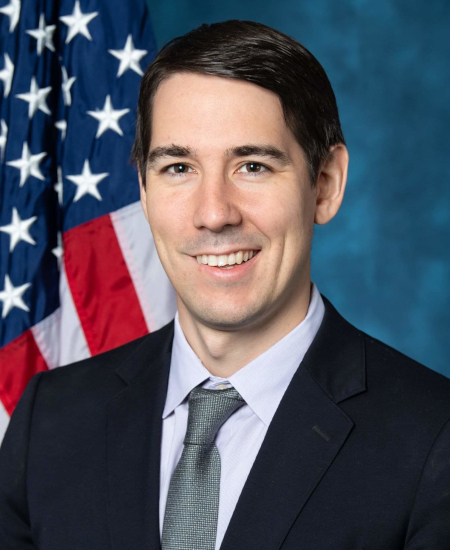
Rep. Josh Harder
Sponsored bills
Maddy summaryHR 5359, the Rural Development Modernization Act, raises population thresholds for rural communities to qualify for USDA programs like broadband, water infrastructure, and housing assistance. It increases limits from 20,000 to 50,000 residents for broadband/telemedicine, from 5,000 to 50,000 for telephone loans, and adjusts water/wastewater thresholds to 30,000-50,000. The bill expands eligibility for rural communities previously excluded due to population size, while clarifying that military bases and incarcerated populations are excluded from rural designations. It also updates program rules to explicitly include U.S. territories and freely associated states like the Marshall Islands and Palau.
Maddy summaryThe Better CARE for Animals Act of 2023 amends the Animal Welfare Act to strengthen enforcement of animal welfare standards. It gives the Attorney General authority to bring civil cases for violations, including seeking penalties up to $10,000 per day per violation and injunctions to remove or relocate animals. The bill also requires the Secretary of Agriculture and Attorney General to coordinate through a new Memorandum of Understanding, focusing on repeat violators. These changes directly affect dealers, exhibitors, and enforcement agencies by expanding civil enforcement tools and clarifying jurisdiction over rule violations.
Maddy summaryHR 5062 creates a new grant program under the Agricultural Marketing Act of 1946 to help specialty crop producers (like fruit, vegetable, and nut farmers) adopt automation and mechanization. The program awards grants to cover costs for specific equipment (such as drones, precision irrigation tools, and robotic harvesters) and required training to operate them. Recipients must provide at least 50% matching funds from non-federal sources. The grants aim to increase efficiency and reduce labor needs for targeted farm tasks, directly benefiting commercial specialty crop operations in the U.S.
Maddy summaryThis bill extends existing programs that provide payments to counties and states with federal land, primarily to support local schools and communities. It updates key deadlines, extending secure payments through 2026, special project authorities through 2029, and county fund expenditure authority through 2028. A new pilot program allows regional foresters to appoint resource advisory committee members directly, with this authority ending October 1, 2028. These changes directly affect rural counties and states managing federal lands, maintaining current funding mechanisms without altering eligibility or payment amounts.
Maddy summaryHR 5057, the Agricultural Emergency Relief Act of 2023, establishes a new program to provide financial assistance to farmers who suffer crop losses due to qualifying disasters like droughts, wildfires, or floods. It requires farmers to apply with proof of loss and calculates payments based on either their previous insurance claims or revenue from typical crop years, with income-based limits (capping payments at $125,000-$900,000 depending on farm income). A key provision mandates that recipients purchase crop insurance or enroll in the Noninsured Crop Disaster Assistance Program for the next two crop years. The bill directly affects eligible farmers (excluding joint ventures or general partnerships) who experience qualified losses, using funding authorized through fiscal year 2028.
Maddy summaryHR 4706, the Senior Nutrition Task Force Act of 2023, establishes an interagency task force to coordinate federal efforts addressing hunger and improving access to healthy food for older adults and adults with disabilities. The task force, led by the Agriculture Secretary and including representatives from multiple federal agencies (like Health, Transportation, and Veterans Affairs), will identify best practices, measure progress, and examine barriers to collaboration across existing nutrition programs. It requires the task force to submit a report to Congress by September 2026 detailing recommendations, existing barriers, and innovative approaches to reduce food insecurity for these groups. The bill does not create new benefits but focuses on improving coordination among current federal nutrition services.
Maddy summaryThe John R. Lewis Voting Rights Advancement Act of 2023 would strengthen the Voting Rights Act of 1965 by updating the criteria for which states and localities must obtain federal preclearance before changing voting practices. It would establish new standards for proving vote dilution and vote denial by requiring courts to consider historical discrimination, racial polarization in voting, and whether voting practices disproportionately burden minority voters. The bill would also require states and localities to provide public notice of voting changes and share demographic data about polling locations. These changes would primarily affect jurisdictions with a history of voting rights violations, aiming to prevent discriminatory voting practices before they take effect.
Maddy summaryThe Humane Cosmetics Act of 2023 bans cosmetic animal testing in the United States, prohibiting companies from conducting or contracting such testing after its enactment (effective 1 year later). It also bans selling or transporting cosmetics developed using animal testing conducted after that date within U.S. interstate commerce. The law directly affects cosmetic manufacturers, retailers, and suppliers operating in the U.S. market, requiring them to use non-animal testing methods for safety evaluations. Exceptions exist for foreign regulatory requirements or when no alternative testing methods are available for specific ingredients.
Fairness to Kids with Cancer Act of 2023 This bill requires the share of federal funds for cancer research that is allocated to pediatric cancer research to equal the percentage of the U.S. population that is under the age of 18.