

Maddy summaryThe Student Loan Refinancing and Recalculation Act establishes a program allowing eligible borrowers to refinance existing Federal Direct and FFEL loans. Borrowers with loans first disbursed or applications received before July 1, 2024, can apply to have their loans reissued with a new interest rate calculated as the 10-year Treasury note yield plus 1 percent. The bill also eliminates origination fees for future Federal Direct Loans and prevents interest capitalization on certain loans, meaning borrowers won't pay interest on unpaid interest. This program aims to provide relief by potentially lowering interest rates while maintaining original repayment terms for eligible borrowers. The refinancing program will expire on a date determined by the bill's provisions.
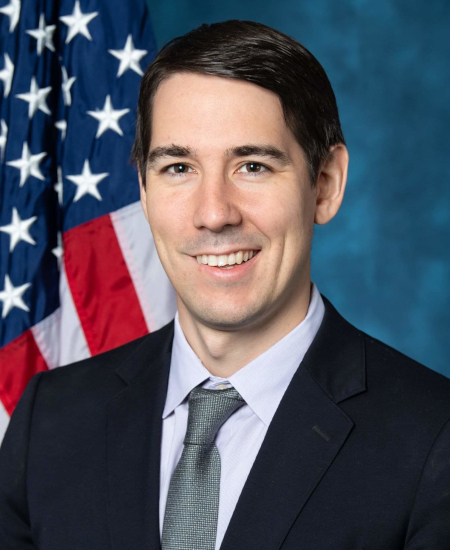
Rep. Josh Harder
Sponsored bills
Maddy summaryThis bill extends the funding period for the Distance Learning and Telemedicine Program from 2023 to 2028. It directly affects rural communities by ensuring continued access to telehealth services and educational programs through this existing federal initiative. The key provision is a simple amendment to the program's authorization date in existing law, without creating new requirements or altering the program's scope. The change ensures uninterrupted support for rural healthcare and education providers relying on this funding.
Maddy summaryThis bill creates a $75 million federal grant program to boost domestic sales of U.S.-grown specialty crops like fruits, vegetables, and nuts. It provides funding to eligible organizations (such as agricultural trade groups, cooperatives, or nonprofits) that develop marketing strategies to expand U.S. consumer demand for these products, requiring recipients to contribute at least 25% of the grant amount from their own funds. Grants cannot support foreign products or large for-profit corporations (except cooperatives or specific associations), and recipients must submit detailed marketing plans with measurable goals. The program requires annual reviews and audits to ensure funds are used effectively for domestic market development.
Investing in Our Crops Act This bill directs the Department of Agriculture (USDA) to provide additional payments to producers under the Environmental Quality Incentives Program for implementation of a nutrient management practice. USDA must provide the payments through FY2025 and may use up to 5% of the funding to provide technical assistance.
This bill amends the Emergency Watershed Protection (EWP) Program to allow the Department of Agriculture (USDA) to provide for certain restoration activities. The EWP Program offers technical and financial assistance, including the purchase of floodplain easements, to safeguard people and property from floods, drought, fires, windstorms, and other natural disasters that impair a watershed. Under the bill, USDA may allow restoration above pre-disaster conditions if that restoration is in the best interest of the long-term health and protection of the watershed.
Maddy summaryHR 5250, the Flooding Prevention, Assessment, and Restoration Act of 2023, requires the U.S. Department of Agriculture to conduct a national study on flood risks to agricultural lands within two years, analyzing economic losses, downstream effects, and existing flood data. It amends the Emergency Watershed Program to allow federal restoration projects that exceed immediate needs for long-term watershed health and adjusts funding for watershed rehabilitation projects, providing up to 65% federal cost coverage (up to 90% for "limited resource areas") for structural repairs near or past their lifespan. The bill directly affects farmers, agricultural producers, and local watershed management groups by mandating a comprehensive flood risk assessment and modifying federal support for flood prevention infrastructure. Key provisions include requiring detailed reports on flood impacts to crops/livestock and establishing new funding tiers for rehabilitation projects.
Maddy summaryHR 5203, the AGRITOURISM Act, establishes a new Office of Agritourism within the U.S. Department of Agriculture (USDA). This office, led by a Director appointed by the Secretary, will promote agritourism activities - including farm-based education, recreation, direct sales, accommodations, and dining - to support rural agricultural businesses. The bill requires the USDA to coordinate with existing agencies, update programs, provide technical assistance, and share best practices for agritourism businesses. It directly affects small and family-run farms in all states by integrating agritourism into USDA's existing support systems. The legislation focuses on structural changes within the USDA, not new funding or regulations.
Maddy summaryThis bill establishes special pay rates for wildland firefighters employed by the Forest Service or Department of the Interior. It creates a percentage increase over standard General Schedule base rates (ranging from 1.5% for GS-15 to 42% for GS-1), provides 450% premium pay for days deployed to qualifying wildfire incidents, and requires rest and recuperation leave following incident deployment. These changes apply specifically to firefighters whose duties primarily relate to wildland fires, not structural fires. The bill takes effect on October 1, 2023, and replaces standard pay rates for affected firefighters. Premium pay is not considered part of basic pay for various compensation calculations.
Maddy summaryHRES 719 is a symbolic resolution designating the week beginning September 24, 2023, as "National Source Water Protection Week." It does not create new laws or directly affect individuals or entities, but expresses congressional support for raising public awareness about protecting drinking water sources. The resolution highlights the importance of safeguarding water quality and quantity for public health, the environment, and community resilience. It encourages collaboration among local, state, and federal entities to promote water conservation and protection efforts.
Maddy summaryHR 5664 amends the Water Infrastructure Finance and Innovation Act to improve access to funding for small communities (populations under 25,000) and rural water projects, including those serving tribal communities. The bill lowers the minimum project cost threshold from $5 million to $1 million, creates new technical assistance for small communities to develop project proposals, and clarifies eligibility for rural water projects under various federal laws. It introduces "collaborative project delivery methods" like design-build and construction management at-risk, and requires a study on these methods' implementation. The bill extends annual funding through 2027 with $68 million for EPA and $15 million for the Army Corps of Engineers.