Daniel Anderl Judicial Security and Privacy Act of 2021 This bill generally prohibits federal agencies and private businesses from publicly posting the personally identifiable information (e.g., home addresses) of federal judges and their immediate family members. It also (1) requires information to be removed upon written request from the federal judge concerned, (2) prohibits data brokers from purchasing or selling such information, and (3) establishes programs to protect such information at the state and local level and to enhance security for judges.
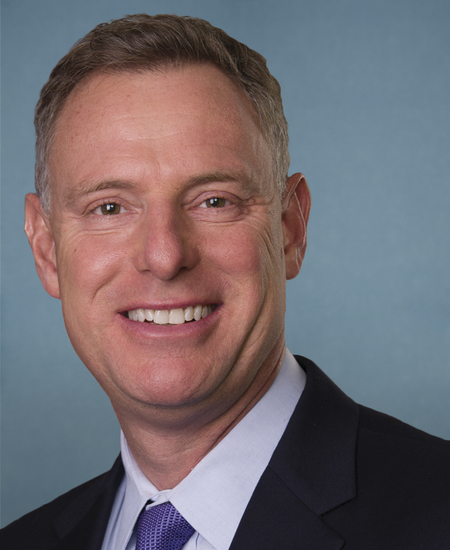
Rep. Scott H. Peters
Sponsored bills
3D Printed Gun Safety Act of 2021 This bill makes it unlawful to intentionally publish digital instructions for programming a three-dimensional printer to make a firearm.
Stop Shackling and Detaining Pregnant Women Act This bill prohibits the Department of Homeland Security (DHS) from detaining an individual during pregnancy or postpartum recovery and addresses related issues. DHS must immediately release any detainee found to be pregnant, unless the detainee presents an immediate and serious threat of hurting themselves or others. A DHS detention facility may not use a restraint on a detainee who is known to be pregnant, including during labor, transport to a medical facility or birthing center, and delivery, or during postpartum recovery, except for medical or safety purposes. The bill requires DHS to use the least restrictive restraint necessary and prohibits certain specified restraint types, including four-point restraints and binding hands behind the detainee's back. The bill prohibits DHS detention officers from being present during a detainee's pelvic exam, labor, delivery, or treatment relating to a pregnancy, unless specifically requested by medical personnel. If a detention officer is requested by medical personnel, such officer shall be female, if practicable, and remain at a reasonable distance from the detainee. A pregnant detainee must have access to health care services, including comprehensive services relating to reproductive health care and pregnancy. DHS must provide annual training about this bill's requirements to each employee who has a role in the detention or care of a pregnant detainee or a postpartum parent of a newborn. DHS must also provide each detainee notice of their rights under this bill in the detainee's native language.
Disarm Hate Act The bill expands the categories of persons who are prohibited from receiving or possessing a firearm. Specifically, it prohibits firearm sale or transfer to and receipt, possession, shipment, or transport by a person (1) who has been convicted of a misdemeanor hate crime, or (2) who has received an enhanced hate crime misdemeanor sentence.
This bill declares that Congress apologizes on behalf of the nation for violations of the civil liberties and constitutional rights of Italian Americans during World War II.
Fair Representation Act This bill sets forth provisions related to ranked choice voting (a system in which voters rank candidates in order of preference) and congressional redistricting. Specifically, the bill requires (1) that ranked choice voting be used for all elections for Senators and Members of the House of Representatives, (2) that states entitled to six or more Representatives establish districts such that three to five Representatives are elected from each district, and (3) that states entitled to fewer than six Representatives elect all Representatives on an at-large basis. The bill also requires that congressional redistricting be conducted in accordance with a plan developed by (1) a state-established independent commission; or (2) if such a commission fails to enact a plan, a three-judge panel from a U.S. District Court. Further, the bill directs the Election Assistance Commission to make payments to states to implement ranked choice voting and carry out congressional redistricting.
Greater Leadership Overseas for the Benefit of Equality Act of 2021 or the GLOBE Act of 2021 This bill contains provisions related to (1) the protection of LGBTQI individuals globally; and (2) immigration protections for vulnerable individuals. The bill establishes (1) an interagency group to respond to urgent threats to LGBTQI people in foreign countries, and (2) a permanent Special Envoy for the Human Rights of LGBTQI Peoples in the Department of State. The President shall impose visa-blocking sanctions on foreign persons responsible for violating the human rights of individuals based on sexual orientation, gender identity, or sex characteristics. The State Department shall establish the Global Equality Fund to provide assistance to nongovernmental organizations working to advance and protect human rights. The U.S. Agency for International Development shall establish the LGBTQI Global Development Partnership to work with the private sector and nongovernmental organizations to support LGBTQI rights. The bill removes prohibitions against providing foreign assistance to nongovernmental organizations that offer certain medical services (e.g., abortion-related services) using non-U.S. government funds. The bill contains several immigration-related provisions, such as those establishing that persecution based on sexual orientation or gender identity may form the basis of an asylum request, allowing certain applicants to file asylum claims more than a year after their arrival in the United States, including a permanent partnership between two partners as a marriage for immigration law purposes, providing for free counsel in certain immigration proceedings, and granting U.S. citizenship to a child born abroad through assistive reproductive technology from a U.S. citizen who is the child's nonbiological parent.

Keeping Our Promise Act This bill authorizes issuing visas to certain individuals who were previously refused a diversity immigrant visa or admission into the United States because of certain executive orders or the COVID-19 public health emergency. (Diversity immigrant visas are available to eligible immigrants from countries with relatively low rates of immigration to the United States.) Specifically, this bill applies to individuals who were refused such a visa solely due to certain executive orders from 2017 to 2020, including orders which suspended the entry of individuals from certain countries. The bill also applies to diversity visa applicants who, because of the COVID-19 emergency, were (1) unable to receive a visa interview despite requesting one, or (2) unable to be admitted into the United States despite being approved for a visa. The Department of State must notify each individual covered under this bill of the individual's visa eligibility. To retain eligibility, an individual must respond to the State Department's notice within one year of the notice. An individual may also lose eligibility if the State Department determines that the applicant fails to meet certain requirements. The bill also relaxes certain annual numerical limits for individuals obtaining a visa under this bill. An individual who was a child when initially selected for a visa shall be treated as a child for the purposes of a visa application under this bill.
Afghan Allies Protection Act of 2021 This bill provides for 4,000 additional special immigrant visas to qualified nationals of Afghanistan who were employed by or on behalf of the United States or the International Security Assistance Force after October 6, 2001. The visa allotment, in addition to any unused allocations of such special immigrant visas since FY2015, shall be available beginning FY2021, and unused visas shall carry over to subsequent fiscal years until exhausted.
Conrad State 30 and Physician Access Reauthorization Act This bill modifies the Conrad 30 Waiver program, which incentivizes qualified foreign physicians to serve in underserved communities. It also extends statutory authority for the program for three years from this bill's enactment. Aliens coming to the United States under a J-1 nonimmigrant visa to receive medical training typically must leave the country and reside for two years abroad before being eligible to apply for an immigrant visa or permanent residence. The Conrad program waives this requirement for individuals who meet certain qualifications, including serving for a number of years at a health care facility in an underserved area. The bill increases the number of waivers that a state may obtain each fiscal year from 30 to 35 if a certain number of waivers were used the previous year, and provides for further adjustments depending on demand. An alien physician may be employed at an academic medical center to meet the Conrad program's employment requirements if the alien's work is in the public interest, even if the medical center is not in an underserved area. Employment contracts for alien physicians under the Conrad program shall contain certain information, such as the maximum number of on-call hours per week the physician shall have to work. Certain alien physicians (along with the physician's spouse and children) shall be exempt from the direct annual numerical limits on immigration, including those physicians that have met certain requirements related to visas for physicians to serve in underserved areas.