

Extreme Risk Protection Order Act of 2021 This bill establishes grants to support the implementation of extreme risk protection order laws at the state and local levels, extends federal firearms restrictions to individuals who are subject to extreme risk protection orders, and expands related data collection. Extreme risk protection order laws, or red flag laws, generally allow certain individuals (e.g., law enforcement officers or family members) to petition a court for a temporary order that prohibits an at-risk individual from purchasing and possessing firearms. Among its provisions, the bill directs the Office of Community Oriented Policing Services within the Department of Justice to establish a grant program to help states, local governments, Indian tribes, and other entities implement extreme risk protection order laws; extends federal restrictions on the receipt, possession, shipment, and transportation of firearms and ammunition to individuals who are subject to extreme risk protection orders; and requires the Federal Bureau of Investigation to compile (and later destroy) records from federal, tribal, and state courts and other agencies that identify individuals who are subject to extreme risk protection orders.
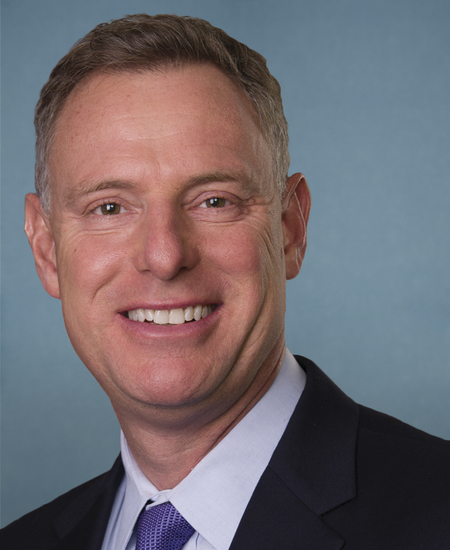
Rep. Scott H. Peters
Sponsored bills
This resolution recognizes Filipino American History Month as a testament to the advancement of Filipino Americans and a time to renew efforts toward researching and examining the history of Filipino Americans to give all people of the United States an opportunity to learn about their contributions.
Original National Domestic Violence Awareness Month Resolution of 2022 This resolution supports the goals and ideals of National Domestic Violence Awareness Month. Further, it expresses the sense of the House of Representatives that Congress should continue to raise awareness of and support programs to end domestic violence.
Root and Stem Project Authorization Act of 2022 This bill authorizes the Forest Service and the Bureau of Land Management (BLM) to conduct certain forest restoration projects. Specifically, the Forest Service or BLM may enter into an agreement for a project on federal land that was developed through a collaborative process that meets local and rural community needs if the party with whom it enters into an agreement initially provides the Forest Service or BLM with a portion of the funding necessary to complete any analysis deemed necessary under federal law for consideration of the proposed project; the Forest Service or BLM uses the funding to pay a contractor included on a list of contractors that it maintains to conduct the analysis; upon completion of the analysis, the Forest Service or BLM solicits bids to carry out the project and enters into a contract or agreement under the Healthy Forests Restoration Act of 2003 to carry out the project; and using certain receipts from the project, the Forest Service or BLM repays the initially provided funding. For purposes of a civil action relating to such a project, any person that participated in the collaborative process to develop the proposal for the project shall be (1) entitled to intervene, as of right, in any subsequent civil action; and (2) considered to be a full participant in any settlement negotiation relating to the project. The authority to enter into an agreement and the requirement to maintain a list of contractors shall expire on January 1, 2033.
Targeting and Offsetting Existing Illegal Contaminants Act This bill provides for a program within the Forest Service to identify, investigate, research, and remediate the environmental damage caused by trespass cultivation of cannabis on National Forest System lands and increases criminal penalties for illegal pesticide application on government property. Specifically, the bill directs the Forest Service to carry out a program of environmental remediation on its land, to be known as the Trespass Cannabis Cultivation Site Restoration Program.
Major Richard Star Act This bill provides that combat-disabled uniformed services retirees with fewer than 20 years of creditable service may concurrently receive, without reduction, veterans' disability compensation and retired pay or combat-related special compensation.
Manufacturing Jobs for Veterans Act of 2022 This bill requires the Department of Labor, as part of the Veteran's Workforce Investment Program, to implement the Veterans Manufacturing Employment Program to award competitive grants to three states for the establishment and administration of a State Manufacturing Employment Program. Such program must provide grants to manufacturing employers and joint-labor management organizations that provide eligible veterans with training, on-the-job training, apprenticeships, and training that leads to a recognized postsecondary credential. Eligible veterans are those who are employed by a manufacturing employer and enrolled or participating in a specified training, on-the-job training, apprenticeship, or certification class.
Keep Americans Safe Act This bill establishes a new criminal offense for the import, sale, manufacture, transfer, or possession of a large capacity ammunition feeding device (LCAFD). The bill does not prohibit certain conduct with respect to an LCAFD, including the following: importation, sale, manufacture, transfer, or possession related to certain law enforcement efforts, or authorized tests or experiments; importation, sale, transfer, or possession related to securing nuclear materials; and possession by a retired law enforcement officer. The bill permits continued possession of, but prohibits sale or transfer of, a grandfathered LCAFD. Newly manufactured LCAFDs must display serial number identification and the date of manufacture. Additionally, the bill allows a state or local government to use Edward Byrne Memorial Justice Assistance Grant Program funds to compensate individuals who surrender an LCAFD under a buy-back program.
Global Malnutrition Prevention and Treatment Act of 2021 This act sets out programs and otherwise directs the U.S. Agency for International Development (USAID) to carry out activities to prevent and treat malnutrition globally. Specifically, USAID may leverage resources to address malnutrition through the Global Nutrition Coordination Plan (an interagency effort to strengthen the impact of U.S. investments in nutrition) and its role on the board of directors of the U.S. International Development Finance Corporation. USAID must also select countries based on specified malnutrition-related indicators for purposes of targeting malnutrition prevention and treatment programs and update the selection within five years. Additionally, USAID may establish the Nutrition Leadership Council to coordinate federal government activities to prevent and treat malnutrition; and target resources and nutrition interventions to the populations most susceptible to severe malnutrition and otherwise support efforts to prevent and treat malnutrition globally. The act also requires USAID to provide to Congress an implementation plan and annual reports concerning its programs for treating and preventing malnutrition. The act's provisions terminate seven years after its enactment.
Preparedness and Risk Management for Extreme Weather Patterns Assuring Resilience and Effectiveness Act of 2022 or the PREPARE Act of 2022 This bill directs the President to establish the Interagency Council on Extreme Weather Resilience, Preparedness, and Risk Identification and Management, which shall establish government-wide goals and provide recommendations for addressing extreme weather resilience, preparedness, and risk identification and management. Each federal agency shall submit biannually to the Office of Management and Budget and to the council a comprehensive plan that integrates consideration of extreme weather into its operations and overall mission objectives.