

Maddy summaryThe Revitalizing Downtowns and Main Streets Act creates a 20% tax credit for converting non-residential buildings into affordable housing. To qualify, buildings must be at least 20 years old and nonresidential, with conversion costs exceeding 50% of the building's adjusted basis or $100,000. The converted housing must be rent-restricted for 30 years for residents earning 80% or less of area median income (60% in certain designated areas), with a $12 billion national credit limit. Special provisions apply for economically distressed areas and rural historic preservation projects, primarily affecting developers who convert vacant commercial buildings in downtown or main street areas into affordable housing.
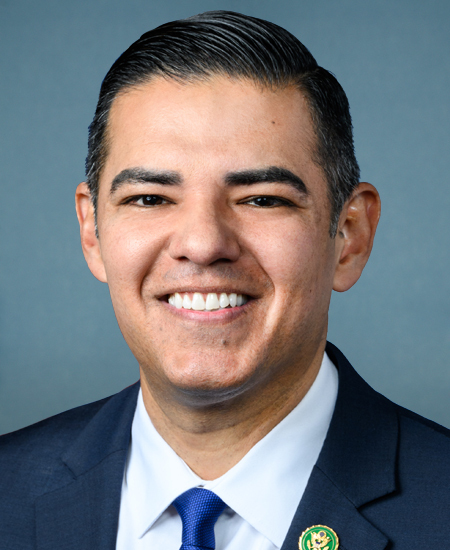
Rep. Robert Garcia
Sponsored bills
Maddy summaryHCONRES 119 is a non-binding congressional resolution expressing that people wrongfully or unjustly deported after establishing long-term ties in the U.S. (such as DACA recipients, veterans, or those with expunged convictions) deserve a fair process to return. It proposes creating a centralized unit within the Department of Homeland Security (DHS), modeled after DHS’s existing ImmVets program for veterans, to review applications for re-entry. The resolution does not change immigration law but urges DHS to establish this dedicated process to address systemic barriers like lengthy delays, complex procedures, and limited access to legal help. It specifically targets individuals separated from families after years in the U.S., including those deported due to errors, protests, or outdated convictions. The resolution emphasizes repairing past injustices without altering current legal frameworks.
Maddy summaryThe SHIELD Act (HR 8980) establishes a federal grant program to improve access to legal representation for people facing deportation. It authorizes $100 million annually for fiscal years 2025-2026 to fund workforce development and legal services infrastructure through competitive grants to states, local governments, and community organizations. The program will support recruitment, training, and retention of legal professionals to provide high-quality, culturally competent representation to immigrants in deportation proceedings. Grantees must report on services provided, outcomes achieved, and unmet needs to ensure accountability and measure the program's impact on addressing the current shortage of legal representation in immigration court.
Maddy summaryHR 8825, the Right to Vote Act, establishes a fundamental right for all citizens of legal voting age to vote in federal elections. It directly affects voters across all states and territories by prohibiting government actions that make voting harder (like restrictive ID laws or reduced polling places) unless those actions are the least restrictive way to serve a significant government interest. The bill creates two legal standards: "retrogression" (diminishing voting access) and "substantial impairment" (making voting significantly harder), allowing voters to sue in federal court to challenge such restrictions. Courts must expedite these cases, and the law applies to all federal elections occurring on or after September 1, 2024.
Maddy summaryHRES 1329 is a resolution formally acknowledging and apologizing for the U.S. government's historical discrimination against lesbian, gay, bisexual, and transgender (LGBT) individuals who served in the military, Foreign Service, and Federal civil service. It condemns past policies - including the 1949 Department of Defense decree banning "homosexual personnel" and the "Don't Ask, Don't Tell" policy (1993-2011) - that led to the discharge or termination of thousands of LGBT service members and employees. The resolution offers a formal apology on behalf of the United States to affected individuals and their families, reaffirming the government's commitment to equal treatment without authorizing legal claims or providing benefits. This is a symbolic act of acknowledgment, not a policy change or financial remedy.
Maddy summaryHRES 1331 is a non-binding House resolution supporting Immigrant Heritage Month by recognizing immigrants' economic, cultural, and military contributions to the United States. It cites data showing immigrants contributed $1.9 trillion to the economy in 2021, made up 20% of entrepreneurs, and serve in critical roles like healthcare and agriculture. The resolution calls on elected officials, educators, and the executive branch to counter anti-immigrant rhetoric, educate the public about immigrant contributions, and protect immigrant communities. It does not create new legal obligations but aims to raise awareness and promote inclusion.
Maddy summaryThis resolution condemns Uganda's Anti-Homosexuality Act, which criminalizes consensual same-sex relationships with penalties including life imprisonment and the death penalty for certain acts. It directly affects LGBTQI+ Ugandans, who face increased violence, evictions, job loss, and barriers to healthcare due to the law's enforcement. The resolution calls on Uganda to repeal the law and supports maintaining U.S. sanctions like visa restrictions for officials involved in human rights abuses and reduced aid. It reflects U.S. government opposition to the law, which has been linked to severe human rights violations against marginalized communities.
Maddy summaryThis bill bans developers and deployers of AI algorithms from using them to deceive voters about election procedures (like voting locations or registration rules) or intimidate people from voting. It requires clear disclaimers - such as "AI Disclaimer: This output was generated by artificial intelligence" - on AI-generated election content, including fake candidate videos or altered voting information. The law sets safety standards for election-related AI, requiring developers to ensure algorithms are "safe and effective" before use. The Federal Trade Commission enforces these rules, with violations potentially leading to fines or up to one year in prison.
Maddy summaryThis bill requires background checks to block gun sales to people under court orders restricting firearm access before trial. It amends federal gun law to explicitly prohibit firearm purchases, possession, or receipt by individuals subject to such pretrial court orders. The law updates background check systems (like NICS) to include these orders, ensuring courts can prevent gun access during pending criminal cases. It directly affects individuals detained before trial who face court-mandated firearm restrictions.
Maddy summaryThis bill requires the federal government to issue guidance to state Medicaid programs within 12 months to improve syphilis screening for pregnant women and newborns. It specifically encourages states to expand third-trimester and delivery screenings, integrate telehealth services, provide multilingual education for providers and patients, and enhance treatment protocols. The guidance aims to prevent congenital syphilis - where syphilis is passed from mother to baby during pregnancy - which caused over 3,700 newborn cases in 2022. States must report on implementing these practices to Congress within two years. The bill directly affects pregnant women, newborns, and Medicaid providers by standardizing and improving access to critical syphilis prevention services.