

Maddy summaryThis bill creates a federal framework for "extreme risk protection orders" (ERPOs) that temporarily remove firearms from individuals who pose a risk of harming themselves or others. Family members or law enforcement officers can petition a federal court for a temporary order (up to 14 days) based on probable cause, followed by a hearing within 72 hours to determine if a longer-term order (up to 180 days) is warranted. The bill requires clear and convincing evidence of risk at the hearing and mandates respondents to surrender firearms to law enforcement within 48 hours. It also includes provisions for reporting, training law enforcement on ERPOs, and a federal grant program to support state ERPO implementation, without preempting state laws.
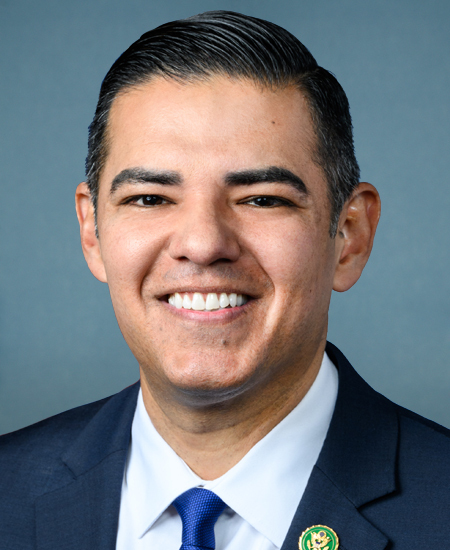
Rep. Robert Garcia
Sponsored bills
Maddy summaryThis resolution expresses the U.S. House of Representatives' support for designating June 28, 2024, as "Stonewall Day" to commemorate the anniversary of the 1969 Stonewall Uprising in New York City, a pivotal event in LGBTQ+ rights history. It recognizes the significance of the uprising in sparking the modern LGBTQ+ civil rights movement and acknowledges the upcoming opening of the Stonewall National Monument Visitor Center on Christopher Street. The resolution does not create new laws or policies but formally supports the commemorative designation and the Visitor Center's role in honoring this history. It directly affects no individuals or groups, as it is a symbolic gesture of recognition. The resolution was introduced by multiple House members and referred to the Judiciary Committee.
Maddy summaryHR 8834, the Safeguarding Our Supply Chains Act, creates a Supply Chain Crime Coordination Center within Homeland Security to collect and analyze data on supply chain fraud and theft hotspots, including high-risk transportation routes and retail areas. It also establishes a multi-agency Task Force (including FBI, ICE, state/local law enforcement, and private sector partners) to coordinate efforts targeting organized crime groups stealing cargo, disrupting supply chains, and committing fraud. The Task Force will share intelligence, track theft trends, and work directly with affected businesses to address threats. The bill authorizes $100 million over five years for implementation and requires annual reports to Congress on the Task Force’s effectiveness in reducing these crimes. This law directly affects federal, state, and local law enforcement agencies, transportation and retail businesses, and supply chain operators.
Maddy summaryHR 8830, the High Court Gift Ban Act, sets strict limits on gifts federal judges may accept. It prohibits judges from receiving gifts valued over $50 from a single source in a year, unless the total from that source stays under $100 annually. Key exceptions include gifts paid for by the judge, gifts from relatives, honorary degrees from educational institutions, and public opportunities available to all federal employees. The bill also outlines enforcement mechanisms, requiring the Judicial Conference to refer violations to the Attorney General for civil or criminal penalties. This directly affects all federal judges, including Supreme Court justices and lower court judges, by restricting gifts from sources that may have business before them.
Maddy summaryHR 8764, the Clean Hands Firearm Procurement Act, prohibits federal agencies from entering contracts with gun dealers who are identified as "covered firearms dealers" based on firearm tracing data. A dealer becomes "covered" if 25 or more firearms traced to them were recovered within 3 years of a crime during two of the past three calendar years. Federal agencies must then avoid contracting with such dealers for the current year and the two preceding years, with a 180-day implementation period. The law includes a national security waiver for the Defense or Homeland Security Secretaries, requiring immediate notification to congressional judiciary committees. This directly affects federal procurement decisions and gun dealers meeting the specified tracing thresholds.
Maddy summaryThis bill amends the Occupational Safety and Health Act to explicitly include public employees - such as those working for federal, state, or local government agencies - under OSHA's coverage. It changes the definition of "employee" to specify that public sector workers are protected, removing previous exclusions. The law takes effect 90 days after enactment for most workplaces, but gives states and local governments without OSHA-approved plans up to 36 months to comply. This directly affects public service workers in government roles by bringing their workplace safety protections under the same federal OSHA framework as private-sector employees.
Maddy summaryHR 8732, the Domestic Workers Bill of Rights Act, would establish new labor protections for domestic workers including nannies, housekeepers, and caregivers who work in private homes. The bill requires written agreements between employers and domestic employees, provides earned sick days, ensures fair scheduling practices, and prohibits unfair wage deductions for cash shortages or communications. It also creates a Domestic Employee Standards Board to recommend workplace standards and establishes a National Domestic Employee Hotline for assistance. The bill specifically targets domestic workers who have historically been excluded from labor protections under the Fair Labor Standards Act and Civil Rights Act, benefiting an estimated 2.2 million domestic workers in the U.S. who are disproportionately women of color and immigrants.
Maddy summaryThis bill amends federal jury selection laws to explicitly prohibit discrimination based on sexual orientation and gender identity. It updates definitions in Title 28 of the U.S. Code by adding "sexual orientation and gender identity" to the protected characteristics under "sex" and defining key terms like "gender identity" and "sexual orientation." The changes directly affect federal jury pools by requiring courts to consider these factors when selecting jurors and preventing discrimination in the process. The law clarifies that discrimination based on these characteristics - including associations with others who share them - is prohibited during jury selection. This is a concrete policy change to expand anti-discrimination protections in federal jury service.
Maddy summaryHR 8714, the "Home of Your Own Act of 2024," establishes a federal grant program administered by the Department of Housing and Urban Development (HUD) to assist first-time homebuyers. It provides up to $30,000 per person for down payments, closing costs, or necessary home repairs to make a home accessible for people with household incomes up to 120% of local median income (150% in high-cost areas). States and tribes receiving funds must distribute at least 25% through community development financial institutions and require financial counseling for applicants. The assistance must be repaid if the home is not occupied as a primary residence for 60 months, with exceptions for hardship or selling at a loss, and the program is funded at $6.7 billion annually for 2025-2029.
Maddy summaryThe Student Loan Servicers Accountability Act of 2024 requires the Department of Education to rigorously vet student loan servicers before awarding contracts, evaluating factors like past errors, consumer satisfaction, and ability to serve vulnerable borrowers (including language access and disability accommodations). It mandates specific contract terms, including placing loans in interest-free administrative forbearance during servicer errors, refunding overpayments, correcting erroneous credit reports, and providing credit toward loan forgiveness for periods affected by errors. The bill also requires a review of existing contracts and allows contract revocation for misrepresentation, while directing a Comptroller General study on loan transfer errors and their impact on borrowers' credit. This act directly affects the private companies that service federal student loans, impacting millions of borrowers who rely on these services.