

Maddy summaryHRES 665 is a ceremonial resolution honoring Lieutenant Commander Louis A. Conter as the last living survivor of the USS Arizona during the December 7, 1941, Pearl Harbor attack. It commemorates his service and the 1,177 crew members who died aboard the USS Arizona, along with all those who served during the attack and World War II. The resolution specifically recognizes Conter’s heroism during the attack, his subsequent military service, and pays tribute to all Pearl Harbor survivors and fallen service members. As a non-binding resolution, it has no legal effect but formally acknowledges historical events and individual contributions.
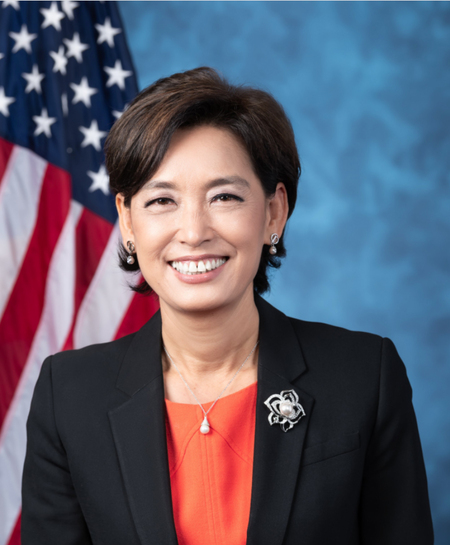
Rep. Young Kim
Sponsored bills
Maddy summaryThis bill requires the Bureau of Prisons to develop and implement a strategy for scanning all incoming mail at federal prisons to stop fentanyl and other synthetic drugs from entering facilities. It directs the Bureau to evaluate existing scanning technology within 180 days and submit a detailed plan to Congress within 90 days, including how to provide digital copies of mail to inmates within 24 hours and physical copies within 30 days (if safe). The strategy must achieve 100% mail scanning capacity at all federal prisons, prioritize high-security facilities, and include a budget proposal for fiscal years 2024-2026. This directly affects federal prisons, inmates, and Bureau employees by changing mail processing procedures to enhance safety and reduce staffing burdens from manual mail checks.
Maddy summaryHR 4745, the Delivering for Rural Seniors Act of 2023, creates a pilot program to expand home delivery of food packages under the Commodity Supplemental Food Program (CSFP) for low-income seniors in rural areas. The bill authorizes $10 million annually (2024-2026) for competitive grants to state agencies, which must prioritize rural service providers to cover costs like transportation, staffing, and outreach for home delivery. It requires grantees to report on delivery metrics, costs, and effectiveness annually. The program directly affects rural CSFP participants facing transportation barriers to accessing food assistance.
Maddy summaryThis bill allows funeral trusts and cemetery perpetual care funds to deduct investment advisory costs during the period when most miscellaneous itemized deductions are suspended (2024-2029). It specifically creates a temporary deduction for these organizations' investment advisory expenses, which would otherwise be disallowed. Additionally, it sets a $25 per grave limit for cemetery maintenance distributions (adjusted annually for inflation starting in 2025) to ensure funds are used for grave upkeep. These changes apply to taxable years beginning after December 31, 2023.
Maddy summaryHR 5127, the Visitor Visa Wait Time Reduction Act, requires the State Department to report on consular posts with visitor visa interview wait times exceeding 100 days and to take steps to reduce those waits. If wait times at any post exceed 300 days, the Secretary must temporarily reassign State Department personnel to assist consular staff at that location. The bill directly affects U.S. embassies and consulates handling visitor visa applications and the applicants waiting for interviews. It mandates specific administrative actions to address processing delays but does not change visa eligibility or fees. The focus is on improving internal staffing efficiency at consular posts, not altering immigration policy.
Maddy summaryHRES 636 is a non-binding House resolution condemning China's implementation of the Hong Kong national security law and related actions undermining Hong Kong's autonomy. It specifically criticizes the law's use to arrest over 200 people - including activists like the "Hong Kong 47" and media figure Jimmy Lai - and alleges it has eroded Hong Kong's independent judiciary, freedoms of speech and assembly, and its status as a separate financial hub. The resolution urges governments to hold China accountable, calls for dropping all national security law charges against detained activists, and questions Hong Kong's continued separate voting rights at international organizations. As a symbolic statement, it does not create new legal requirements but aligns with the existing Hong Kong Human Rights and Democracy Act by advocating for accountability measures.
Maddy summaryHR 5020 prohibits the U.S. Department of Health and Human Services (HHS) from funding or conducting animal testing research in China, Iran, North Korea, Russia, or other countries designated as "of concern" after consultation with the State and Defense Departments. It blocks federal grants, contracts, or support for such research conducted by foreign entities or facilities owned by these countries. HHS must submit detailed reports to Congress within 60 days when adding new countries to the list, explaining its reasoning.
Maddy summaryThis bill prohibits federal involvement in commercial greyhound racing, live lure training, and open field coursing by banning interstate activities related to these practices. It makes it unlawful to conduct betting on greyhound races (including remote gambling), use live animals as bait, or transport animals for these purposes. The law specifically targets the declining greyhound racing industry (now operating at only two tracks in West Virginia), banning federal facilitation of betting, live bait use, and interstate transport of animals for racing or training. It does not affect horse racing or state laws already prohibiting these activities in most states.
Research for Healthy Soils Act This bill includes research on the agricultural impacts of microplastics in land-applied biosolids on farmland as a Department of Agriculture (USDA) high-priority research and extension area. Microplastic is a plastic or plastic-coated particle that is less than 5 millimeters in size. The bill specifically allows grants for carrying out or enhancing research in this area (e.g., the development or analysis of wastewater treatment techniques to filter out or biodegrade microplastics from biosolids intended to be used for agricultural purposes). Further, the bill reauthorizes USDA grants to support competitive specialized research and extension activities, including high-priority areas, through FY2028. The bill also specifically reauthorizes through FY2028 the Pulse Crop Health Initiative; the Comprehensive Food Safety Training Network; pollinator protection research and extension grants; increased USDA capacity and infrastructure to address and conduct research on colony collapse disorder and other pollinator issues; and a USDA-conducted nationwide honey bee pest, pathogen, health, and population status surveillance program.
This bill requires the Department of State to make certain information regarding the 2021 withdrawal of U.S. personnel from Afghanistan available to Congress and to the public. Specifically, the State Department must provide Congress with the July 13, 2021, dissent channel cable regarding the likely consequences of a U.S. withdrawal from Afghanistan and the official State Department response to the cable. (The dissent channel is a tool that foreign service officers may use to communicate alternative or dissenting views about foreign policy matters with senior State Department officials. ) The unredacted cable and official response must be provided to Congress within five days of the bill's enactment, except that the names of the cable signatories may be redacted. The bill also requires the State Department to complete a declassification review of (1) the dissent channel cable and official response, and (2) the after-action review developed with respect to the Afghanistan withdrawal. After determining what information may be declassified, the State Department must publish such information online within 60 days of the bill's enactment.