

Maddy summaryThis bill establishes special pay rates for wildland firefighters employed by the Forest Service or Department of the Interior. It creates a percentage increase over standard General Schedule base rates (ranging from 1.5% for GS-15 to 42% for GS-1), provides 450% premium pay for days deployed to qualifying wildfire incidents, and requires rest and recuperation leave following incident deployment. These changes apply specifically to firefighters whose duties primarily relate to wildland fires, not structural fires. The bill takes effect on October 1, 2023, and replaces standard pay rates for affected firefighters. Premium pay is not considered part of basic pay for various compensation calculations.
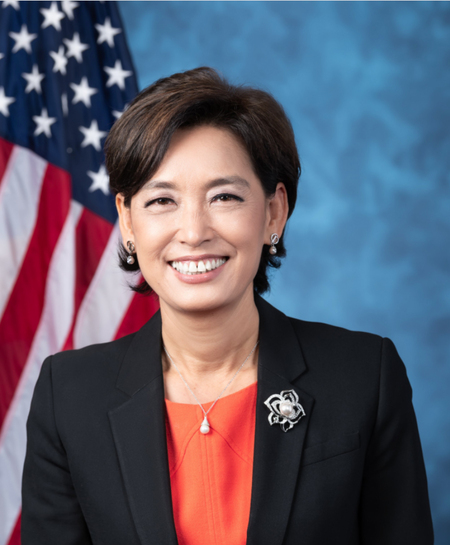
Rep. Young Kim
Sponsored bills
Maddy summaryHR 5686 authorizes $30 million in U.S. humanitarian aid for Armenians in Armenia and Nagorno-Karabakh affected by recent conflicts and blockades, and $12 million in foreign military financing to support Armenia's sovereignty and security cooperation. The bill requires the State Department to develop a strategy protecting Nagorno-Karabakh residents' rights, including cultural heritage and security, and mandates a 90-day report on Azerbaijani military actions during 2022-2023 attacks. It also directs the U.S. to push for International Criminal Court investigations into alleged atrocities and imposes sanctions on Azerbaijani officials involved in blockades or attacks. The legislation focuses on concrete U.S. policy actions - aid, accountability measures, and diplomatic efforts - without prescribing specific outcomes.
Maddy summaryThis bill creates a new exemption from U.S. passport application fees for first responders participating in disaster relief. Specifically, it allows the Secretary of State to waive both passport issuance and execution fees for volunteers working under U.S. government contracts, grants, or agreements to conduct search, rescue, or disaster relief operations within seven days of a natural disaster in a foreign country. The bill does not change existing fee exemptions for military personnel, seamen, or families of fallen service members. It also requires the Secretary of State to report annually on the number of such fee waivers granted to first responders.
Maddy summaryThe Better CARE for Animals Act of 2023 amends the Animal Welfare Act to strengthen enforcement of animal welfare standards. It gives the Attorney General authority to bring civil cases for violations, including seeking penalties up to $10,000 per day per violation and injunctions to remove or relocate animals. The bill also requires the Secretary of Agriculture and Attorney General to coordinate through a new Memorandum of Understanding, focusing on repeat violators. These changes directly affect dealers, exhibitors, and enforcement agencies by expanding civil enforcement tools and clarifying jurisdiction over rule violations.
Maddy summaryThe Humane Cosmetics Act of 2023 bans cosmetic animal testing in the United States, prohibiting companies from conducting or contracting such testing after its enactment (effective 1 year later). It also bans selling or transporting cosmetics developed using animal testing conducted after that date within U.S. interstate commerce. The law directly affects cosmetic manufacturers, retailers, and suppliers operating in the U.S. market, requiring them to use non-animal testing methods for safety evaluations. Exceptions exist for foreign regulatory requirements or when no alternative testing methods are available for specific ingredients.
Maddy summaryHR 3152, the "Fight CRIME Act," aims to maintain international restrictions on Iran's missile-related activities by requiring diplomatic efforts to extend these restrictions before they expire in October 2023. The bill mandates annual reports detailing U.S. diplomatic strategies, potential impacts of expiration, and measures to deter missile technology transfers to Iran. It establishes sanctions against foreign individuals or entities that knowingly support Iran's missile or drone programs, including asset freezes and visa restrictions. These sanctions apply regardless of whether UN restrictions remain in effect after their expiration, directly affecting foreign entities involved in these activities.
Maddy summaryHRES 492 is a congressional resolution condemning the Iranian government's systematic persecution of the Baha'i minority, which directly affects Baha'is in Iran facing arrests, property confiscation, and imprisonment. The resolution specifically calls for Iran to immediately release Baha'is detained for their faith, end state-sponsored hate propaganda against them, and reverse discriminatory policies denying equal access to education, employment, and religious freedom. It urges the U.S. President and Secretary of State to demand Iran’s compliance with international human rights treaties and to use existing sanctions authorities (under the 2010 and 2012 Iran sanctions laws) against officials responsible for these abuses. The resolution does not impose new legal requirements but serves as a formal U.S. government statement of condemnation and a call for diplomatic and sanctions action.
Maddy summaryHR 5419, the Direct Seller and Real Estate Agent Harmonization Act, amends the Fair Labor Standards Act to exclude direct sellers (like door-to-door sales representatives) and qualified real estate agents from the federal definition of "employee." This change means these workers would no longer be automatically covered by federal minimum wage and overtime protections under the Fair Labor Standards Act. The bill directly affects individuals working in these specific roles by altering their legal classification under labor law. The key provision is a new definition inserted into existing law, aligning labor classification with existing tax code definitions for these professions.
Maddy summaryHRES 668, the BUDS Resolution, amends House rules to allow bipartisan joint sponsorship of public bills and resolutions by one majority-party and one minority-party member. This change directly affects House members seeking to co-sponsor legislation with cross-party support, updating the existing rules for naming cosponsors and submitting constitutional authority statements. The key mechanism requires that for joint sponsorship, one sponsor must represent the majority party and the other the minority party, with both sponsors sharing responsibility for related procedural steps. This procedural adjustment streamlines the process for bipartisan co-sponsorship without altering legislative policy.
Maddy summaryThis bill directs the National Institute of Standards and Technology (NIST) to research and develop communication standards for wildland firefighters and fire management officials, focusing on real-time data sharing during fire responses. NIST must conduct field testing of technologies to improve secure information dissemination and issue recommendations to federal, state, tribal, and local fire agencies. The bill requires NIST to report findings to Congress and mandates a Government Accountability Office review of agency implementation one year after recommendations are published. It authorizes $3 million annually (2024-2028) for NIST to carry out these research and development activities.