

Maddy summaryThe CLEAR Act of 2024 provides $200 million annually (2024-2029) in federal grants to states, territories, and tribes to establish or maintain local resilience offices. These offices must develop 5-year plans addressing environmental, economic, infrastructure, health, and housing risks from disasters, implement community-focused resilience programs, and improve coordination between agencies. Priority is given to projects benefiting disadvantaged communities and adhering to prevailing wage rules, with 10% of funds reserved for tribes. The bill directly affects local governments and tribal entities by requiring structured planning and resource allocation to strengthen community resilience against climate and disaster impacts.
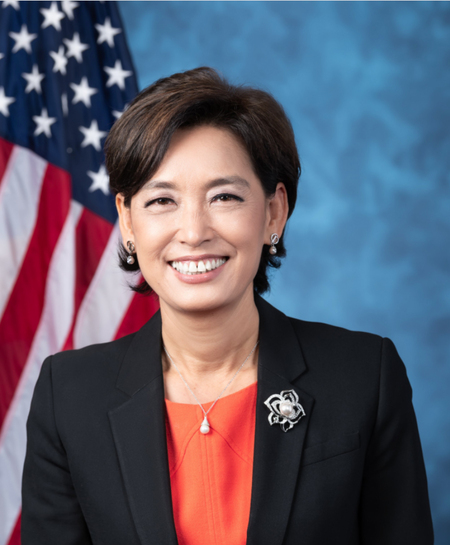
Rep. Young Kim
Sponsored bills
Maddy summaryHR 10196, the "Strengthening Exports Against China Act," amends the Export-Import Bank Act to prevent certain financing from counting toward the Bank's rate calculations. Specifically, it excludes financing that helps replace or compete with products from entities on U.S. sanctions lists (like the Bureau of Industry and Security's Entity List or Treasury's Specially Designated Nationals list). The bill targets financing provided to entities competing with sanctioned Chinese companies, excluding such transactions from the Bank's rate calculations under section 8(g)(1). This change directly affects the Export-Import Bank's financing oversight and entities seeking U.S. export financing tied to competition with sanctioned Chinese businesses.
Maddy summaryHR 3012 reauthorizes U.S. programs under the North Korean Human Rights Act of 2004 through 2028, extending funding and reporting requirements for existing initiatives. It directs the U.S. Agency for Global Media to continue broadcasting independent news into North Korea, supports transparent humanitarian aid delivery, and urges China to halt forcible repatriation of North Korean refugees. The bill directly affects North Korean citizens by promoting information access and refugee protection, and North Korean refugees in China by advocating for UNHCR access and refugee rights. Key provisions include extending program deadlines, reinforcing U.S. diplomatic efforts on human rights, and calling for swift confirmation of the Special Envoy on North Korean Human Rights Issues.
Maddy summaryHRES 1328 is a congressional resolution recognizing the actions of Sudan's Rapid Support Forces (RSF) and allied militias against non-Arab ethnic communities in Darfur - including the Masalit people - as genocide under international law. It cites evidence of mass killings, sexual violence, forced displacement, and targeted attacks on leaders, meeting the Genocide Convention's definition of acts intended to destroy a group. The resolution calls on the U.S. government to support humanitarian access, document atrocities, fund local aid, and review Sudan's genocide determination every six months. As a symbolic resolution (not a law), it does not impose new legal requirements but formally condemns the RSF's actions and urges U.S. diplomatic and humanitarian measures. It directly affects Masalit and other non-Arab communities in Darfur facing systemic violence.
Maddy summaryHR 10175, the "Global Alzheimer’s Initiative Now Act," authorizes U.S. government participation and funding in the Davos Alzheimer’s Collaborative (DAC) to advance global efforts against Alzheimer’s disease and dementia. The bill requires U.S. contributions to be matched by non-U.S. funding, with U.S. spending capped at 33% of total DAC funds, and mandates annual reports to Congress detailing U.S. financial commitments and governance involvement. It directly affects U.S. agencies (State Department, USAID, HHS) and international health systems, particularly in low- and middle-income countries where over 70% of global cases occur. The legislation focuses on leveraging existing U.S. global health funding to support DAC’s work in developing diagnostics, treatments, and care strategies worldwide.
Maddy summaryHR 10169, the Advancing Digital Freedom Act of 2024, establishes a Coordinator for Digital Freedom within the State Department's Bureau of Cyberspace and Digital Policy. This position is tasked with leading U.S. efforts to promote digital freedom globally, including coordinating with allies against digital authoritarianism, supporting information integrity, and advancing democratic governance of AI. The bill mandates an annual report to Congress analyzing global threats to digital freedom - such as censorship, disinformation, and risks to AI governance - and providing recommendations. The Coordinator’s duties focus on integrating digital freedom into U.S. foreign policy priorities and diplomatic engagements.
Maddy summaryThe HEATS Act removes the requirement for federal drilling permits for geothermal exploration and production on non-Federal surface lands where the U.S. owns less than 50% of the underlying geothermal resources. Operators must instead obtain a state permit, after which activities can begin 30 days later and are exempt from major federal environmental reviews under NEPA, the Endangered Species Act, and most historic preservation requirements. The bill does not change existing royalty payments for geothermal electricity production or byproducts, and the Secretary retains authority for onsite inspections to verify production and royalty reporting. This applies only to non-Federal lands not designated as Indian lands under specific tribal trust or ownership rules.
Maddy summaryHRES 1574 is a non-binding House resolution calling for the immediate removal of Federal Deposit Insurance Corporation (FDIC) Chairman Martin J. Gruenberg. It cites concerns about his leadership, including alleged mistreatment of staff, a "toxic workplace," staffing shortages, and failures in bank supervision that contributed to financial institution failures. The resolution does not change law or remove Gruenberg (as the President appoints FDIC leaders), but formally demands his removal. It was introduced by 25 Republican representatives and referred to the Financial Services Committee.
Maddy summaryHR 10143 requires the FEMA Administrator to transfer unspent funds from COVID-19 relief acts and funds that have passed their initial performance period for past disaster declarations into the Disaster Relief Fund. This bill directly affects FEMA's budget management by redirecting leftover government funds that were originally allocated for specific purposes. The key mechanism is a mandatory transfer of these unobligated amounts to the central Disaster Relief Fund, which is used to respond to future disasters. The bill does not create new spending but reallocates existing, unused funds to strengthen the Disaster Relief Fund's available resources.
Maddy summaryThe Fix Our Forests Act creates a new system for managing wildfire risk on federal lands by designating "firesheds" (landscape-scale areas with high wildfire risk) and establishing a central coordination center called the Fireshed Center. It streamlines environmental reviews for vegetation management projects in these areas, requires public tracking of wildfire risk and management activities through a Fireshed Registry, and limits legal challenges to these projects. The bill affects federal land management agencies (like the Forest Service and Bureau of Land Management), communities in wildfire-prone areas, and utility companies managing vegetation near power lines. It also includes provisions for community wildfire risk reduction programs and research on new wildfire management technologies, aiming to accelerate risk reduction while maintaining transparency about where and how these projects are implemented.