

Maddy summaryHRES 1566 is a symbolic House resolution honoring all U.S. veterans on Veterans Day 2024. It recognizes the service and sacrifice of the estimated 15.8 million veterans living in the U.S. as of 2023, including those who served in conflicts from World War II to post-9/11. The resolution calls on the American public to observe Veterans Day to acknowledge veterans' role in preserving national freedom. As a non-binding resolution, it has no direct policy impact but formally expresses congressional recognition of veterans' contributions.
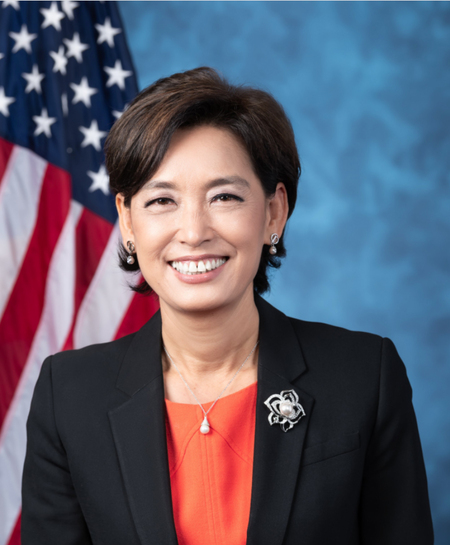
Rep. Young Kim
Sponsored bills
Maddy summaryHR 10102, the SIGAR Act, sets a fixed closure date of January 31, 2026, for the Office of the Special Inspector General for Afghanistan Reconstruction (SIGAR), ending its operations after nearly 15 years. It directly affects SIGAR employees by making them eligible for the Interagency Career Transition Assistance Program (ICTAP) to aid their transition to other federal roles if displaced. The bill also requires unobligated funds held by SIGAR as of February 1, 2026, to be transferred to State Department accounts for foreign operations, with consultation required from relevant congressional committees. This legislation focuses solely on the orderly wind-down of the SIGAR office and its resources, without altering its prior oversight mission.
Maddy summaryThis bill modifies how disability benefits are treated for homeless disabled veterans seeking housing assistance. It excludes certain disability payments (under Chapter 11 or 15 of Title 38, U.S. Code) from income calculations when determining eligibility for HUD-assisted housing programs, including the supported housing program under Section 8(o)(19) and housing on Department property. Specifically, it ensures these benefits are not counted toward income for housing eligibility, though they still count for "adjusted income" definitions. The bill directly affects disabled veterans applying for HUD housing assistance who receive these specific disability benefits. It makes a concrete change to income calculation rules without altering benefit amounts or creating new funding.
Maddy summaryHR 4551 (Protecting Investors’ Personally Identifiable Information Act) prevents the Securities and Exchange Commission (SEC) from requiring securities exchanges or associations to share investors' personal details - such as names, addresses, or Social Security numbers - for routine reporting. The SEC may only request such information during investigations into securities law violations, and exchanges must provide it within 24 hours. The SEC must destroy this data within one day after the investigation concludes. This law directly protects investors' privacy by limiting when their personally identifiable information can be collected and retained.
Maddy summaryThe ESCRA Act amends the Credit Repair Organizations Act to regulate credit repair companies. It prohibits upfront payments for services before results are verified (requiring a consumer report 6 months after service showing improved credit), bans misleading claims about services, and mandates clear disclosures that consumers can do these tasks themselves for free. The bill also requires credit repair organizations to follow specific rules when submitting disputes to credit bureaus, including identifying themselves and providing documentation of inaccuracies. These changes directly affect credit repair companies and their clients, aiming to reduce deceptive practices in the industry.
Maddy summaryHRES 1537 is a non-binding House resolution condemning Hamas' October 7, 2023, attacks on Israel, which killed over 1,200 people and took 251 hostages, including 7 Americans still held captive. It calls on Hamas to immediately surrender, cease attacks, and release all hostages unconditionally, while reaffirming Israel's right to self-defense. The resolution also urges international organizations to condemn Hamas' actions and address the global surge in antisemitism following the attacks. As a symbolic statement, it does not create new laws or alter policy but expresses congressional position. The bill specifically references the ongoing captivity of seven U.S. citizens: Edan Alexander, Itay Chen, Sagui Dekel-Chen, Gadi Haggai, Judith Weinstein Haggai, Omer Neutra, and Keith Siegel.
Maddy summaryHR 9889 provides $14 billion in emergency funding to assist farmers and ranchers recovering from 2023 natural disasters like droughts, wildfires, floods, and hurricanes. It directly affects agricultural producers who suffered crop, livestock, or dairy losses, including $1.5 billion specifically for livestock-related expenses. The bill establishes payment limits (up to 90% of losses for insured producers, 70% for uninsured) and requires beneficiaries to purchase crop insurance or NAP coverage for the next two crop years. Payments cover revenue losses for crops, trees, vines, and livestock relocation costs, with administrative costs capped at 1% of the total appropriation.
Maddy summaryHRES 1510 is a symbolic resolution expressing support for "Military Sexual Trauma Awareness Day" (observed September 25, 2024). It acknowledges that military sexual trauma (MST) affects approximately 1 in 3 women and 1 in 50 men in the military, causing long-term physical and mental health impacts like PTSD and suicide risk. The resolution urges the Department of Defense and Veterans Affairs to improve access to MST-related care, reduce stigma, and ensure survivors receive respectful support without fear of retaliation. It does not create new laws or funding but formally recognizes the need for better systems to support military personnel and veterans affected by MST.
Maddy summaryHR 1719, the Honoring Our Fallen Heroes Act of 2023, establishes a presumption that certain cancers diagnosed in public safety officers (like police and firefighters) are work-related if linked to their duties. It defines 22 specific cancers (including lung, mesothelioma, and WTC-related cancers) as "exposure-related," allowing officers or their families to receive benefits without proving direct work connection, provided they were diagnosed within 15 years of leaving active service. The bill also creates a process for adding new cancers to the list based on scientific evidence, requiring the Bureau to review petitions and make decisions within 180 days. This applies to deaths or disabilities occurring on or after January 1, 2023, directly affecting officers who developed covered cancers during service.
Maddy summaryThis symbolic resolution (HRES 1435) expresses U.S. House concern about proposed constitutional reforms in Mexico, particularly those affecting the judiciary. It highlights that Mexico’s reforms would require federal judges (including Supreme Court justices) to be directly elected, eliminate independent judicial oversight, and reduce qualification standards. The resolution states these changes could undermine Mexico’s democratic institutions, separation of powers, and judicial independence - potentially harming U.S.-Mexico trade (over $750 billion in 2023) and security cooperation on issues like fentanyl trafficking. The House calls the reforms a risk to shared commitments under the USMCA and urges Mexico to preserve its rule of law framework.