

Maddy summaryHR 3604, the *Reducing Waste in National Parks Act*, requires National Park Service (NPS) units to reduce and eliminate the sale of disposable plastic products (including water bottles, bags, and food containers) where feasible, considering operational factors like cost, waste reduction, and concessioner impacts. Park officials must develop visitor education plans, implement refill stations, and weigh 13 specific factors before eliminating sales, such as infrastructure costs, revenue effects, and public health safety. The program must be evaluated every two years to measure visitor satisfaction, waste collection rates, and safety outcomes. This bill directly affects NPS operations, concessioners, and park visitors who use park facilities.
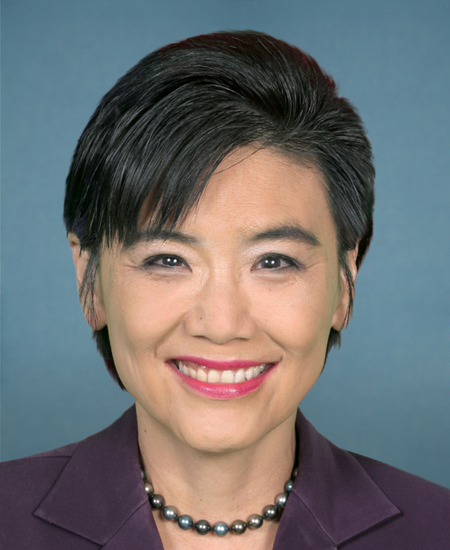
Rep. Judy Chu
Sponsored bills
Maddy summaryThis bill prohibits the U.S. military from discriminating against service members or applicants based on gender identity. It bans policies that would deny service, involuntarily separate members, deny medically necessary healthcare, or require service in a gender different from one's identity. The law defines "gender identity" broadly to include a person's internal sense of gender, appearance, and mannerisms, regardless of sex assigned at birth. It directly affects transgender and gender-diverse individuals currently serving or seeking to serve in the Armed Forces.
Maddy summaryThis bill amends federal education law to require K-12 schools to include Asian American, Native Hawaiian, and Pacific Islander (AANHPI) history in American history and civics education. It directs the Department of Education to update curriculum standards, teacher training programs, and national assessments to ensure AANHPI contributions and experiences are integrated into existing history lessons. The policy affects all public schools receiving federal education funding by mandating specific inclusion of AANHPI history alongside traditional American history content. This change aims to address historical gaps in curricula that have excluded these communities' diverse roles and experiences.
This bill prohibits the President from selling, transferring, or exporting certain defense articles or services to Israel, except in specified circumstances. Defense articles covered by the prohibition include BLU-109 bunker busting bombs, Joint Direct Attack Munition (JDAM) assemblies, and 155mm artillery ammunition. Defense services directly related to such articles are also covered. The President may sell, transfer, or export such defense articles or services to Israel if (1) a law is enacted specifying the purposes for which such articles or services may be used, and (2) Israel provides written assurances that the defense articles or services will be used for those specific statutory purposes and in a manner consistent with certain other laws, including international human rights laws.
Maddy summaryThis bill prohibits the President, Vice President, Members of Congress, and their immediate family members from engaging in specific digital asset activities. It bans them from owning digital assets where they could unilaterally alter them, serving as officers for crypto issuers, receiving compensation for crypto sales/marketing, or trading with non-public information while in office. The law also prevents these individuals from using trusts, companies, or other entities to secretly participate in digital asset markets, requiring full disclosure of indirect ownership. Violations could trigger criminal penalties under existing federal law, mirroring restrictions on other financial conflicts of interest.
Maddy summaryThe College for All Act of 2025 would eliminate tuition and required fees for eligible students at public community colleges and 4-year institutions through a federal-state partnership. The federal government would cover 100% of costs in the first year (2026-2027), gradually decreasing to 80% by 2030-2031, while states would start with 0% and increase to 20% by 2030-2031. Eligible students would include those with family income below $150,000 for single parents or $300,000 for married parents, regardless of immigration status. The bill also includes requirements to maintain instruction funding, improve transfer pathways between community colleges and 4-year institutions, and provide additional support for students after tuition elimination.
Maddy summaryThis bill would establish 18-year fixed terms for all Supreme Court justices, replacing lifetime appointments. It requires the President to nominate one justice every two years (during first and third years after presidential elections), with Senate confirmation within 90 days, and prohibits reappointments after a single term. Current justices would be phased out in order of seniority as new justices are appointed under this schedule. The bill directly affects all sitting and future Supreme Court justices by mandating term limits and a structured appointment process.
Maddy summaryThe Real Education and Access for Healthy Youth Act of 2025 would provide federal grants to support comprehensive sex education and sexual health services for young people aged 10-29. The bill establishes four grant programs: for K-12 schools and youth organizations, for colleges and universities, for educator training, and for sexual health services specifically targeting underserved youth. To qualify for funding, programs must be evidence-informed, medically accurate, inclusive of diverse gender identities and sexual orientations, culturally responsive, and trauma-informed. The bill appropriates $100 million annually for fiscal years 2026-2031, with specific funding allocations for each program type. It prohibits funding for programs that withhold health information, promote stereotypes, or fail to address the needs of specific groups like pregnant youth or survivors of violence.
Maddy summaryHR 3532, the Striking and Locked Out Workers Healthcare Protection Act, prohibits employers from terminating or altering an employee’s employer-sponsored health coverage during a lawful strike or a lockout (when an employer withholds work to influence bargaining). It directly affects workers participating in strikes or facing lockouts, ensuring continued healthcare access during these labor disputes. The bill adds penalties: $75,000 per violation for lockout-related coverage termination (up to $150,000 for repeat offenses), and $50,000 per violation for strike-related termination (up to $100,000 for repeat offenses), with penalties applied alongside other remedies. These provisions amend the National Labor Relations Act to protect workers’ healthcare rights during collective bargaining actions.
Maddy summaryThis bill establishes a code of conduct for Supreme Court justices, requiring them to disclose gifts, income, and potential conflicts of interest. It creates a formal process for handling complaints about justices, including a judicial investigation panel to review allegations. The bill adds specific circumstances requiring recusal, such as when a justice or family member has financial ties to a party in a case. Additionally, it mandates that parties and amicus briefs disclose any gifts given to justices and lobbying activities related to their nomination. These provisions aim to increase transparency and accountability in the Supreme Court's operations.