

Maddy summaryHR 3708, the "No Place for LGBTQ+ Hate Act," repeals five specific executive orders targeting LGBTQ+ rights and blocks federal funding for their implementation. It directly affects transgender, nonbinary, intersex, and gender-nonconforming individuals by reversing policies that: mandated discrimination in employment/healthcare (EO 14168), reinstated a military ban (EO 14183), restricted transgender youth healthcare (EO 14187), barred transgender female students from sports (EO 14201), and required schools to deny transgender existence (EO 14190). The bill’s key mechanism prohibits federal funds from being used to enforce these orders, effectively nullifying them. This is a procedural repeal bill focused on reversing specific executive actions, not creating new laws.
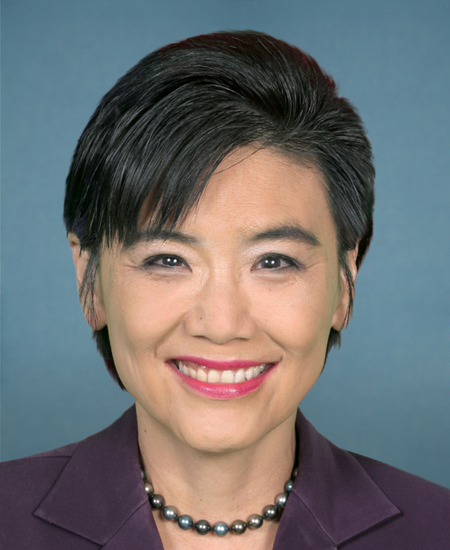
Rep. Judy Chu
Sponsored bills
Maddy summaryHRES 473 is a non-binding House resolution calling on the U.S. government to urgently use diplomatic efforts to ensure food and medical supplies reach civilians in Gaza. It directly addresses the needs of approximately 2.2 million Palestinians facing acute hunger, including 10,000 children identified with acute malnutrition, following a border blockade that blocked aid from March to May 2025. The resolution specifically urges the White House and State Department to secure "immediate and secure delivery and disbursement" of aid and a lasting end to the conflict, citing collapsed bakeries, exhausted food rations, and a near-total health system collapse.
Maddy summaryThis bill reinstates the federal government's authority to provide Direct Stafford Loans to graduate and professional students, preventing them from losing access to these loans after 2012. It temporarily extends this loan program through June 30, 2025, by modifying the Higher Education Act to remove a prior termination clause. The key provision allows graduate students to continue borrowing for education costs during this temporary period. This directly affects graduate and professional students who rely on these loans to cover tuition and expenses.
Maddy summaryThis bill repeals key provisions of the Protection of Lawful Commerce in Arms Act (PLCAA), which previously shielded gun manufacturers and dealers from civil lawsuits. It allows gun trace data from the federal Firearms Trace System to be used as evidence in civil court cases involving gun violence. Victims of gun violence (or their families) who sue gun manufacturers, dealers, or distributors in state or federal court can now access and rely on this trace information. The bill directly changes the legal landscape by removing a major barrier to holding gun industry entities accountable in civil cases. It does not alter criminal proceedings or affect gun ownership rights.
Maddy summaryThe Excess Urban Heat Mitigation Act of 2025 creates a federal grant program to fund heat-reduction projects in communities most affected by urban heat islands, primarily low-income neighborhoods (defined as census tracts with ≥20% poverty rate) and areas with higher heat exposure for communities of color. It authorizes $30 million annually for grants to states, cities, tribes, or nonprofits for projects like planting native trees, installing cool roofs/pavements, building shaded transit stops, and creating community cooling centers. Grants require community engagement plans to ensure equitable participation and prioritize projects in underserved areas (75% of funds must target "covered census tracts"). The program mandates annual reporting to Congress and includes oversight to evaluate project success in reducing heat impacts.
Maddy summaryHRES 465 is a resolution expressing the House of Representatives' support for Congress to enact the Older Americans Bill of Rights. It calls for future legislation establishing specific rights for older Americans, including access to dignified healthcare (like affordable prescriptions and caregiver support), financial security (such as strengthened Social Security), and community participation (like accessible housing and voting). The resolution itself does not create new laws but urges Congress to draft such a bill. It directly addresses older Americans, particularly those facing poverty, health disparities, or isolation, based on cited statistics about their challenges.
Maddy summaryThe Menstrual Equity For All Act of 2025 requires schools, colleges, correctional facilities, and federal buildings to provide free menstrual products to those who need them. It makes menstrual products covered by Medicaid, prohibits states from taxing these products, and creates grant programs to support low-income individuals. Key provisions include mandating free products in educational settings, requiring employers with 100+ employees to provide them, and expanding Medicaid coverage for these items. The bill directly affects students, incarcerated individuals, homeless people, Medicaid beneficiaries, and low-income families by addressing period poverty through concrete access requirements.
Maddy summaryThis bill reorganizes collective bargaining rules for Veterans Health Administration (VHA) employees by removing existing subsections (b), (c), and (d) from Section 7422 of Title 38 and redesignating the current subsection (e) as (b). It directly affects VA health care employees by altering the structure of their collective bargaining framework. The bill explicitly states it does not change the Secretary of Veterans Affairs' existing authorities over incentive pay or expedited hiring under Section 706 of Title 38. The change is purely procedural, focusing on the internal organization of bargaining rules without introducing new employee benefits or obligations.
Maddy summaryThe FIRE Act would extend workplace safety protections under OSHA and labor rights under FLSA to incarcerated firefighters who work in correctional facilities. It defines "incarcerated firefighter" as someone performing firefighting duties while incarcerated, including in prison work programs, facility maintenance, or emergency response services. The bill requires states and federal prisons to report on workplace safety conditions and provides grants to help states implement these protections. It also establishes an expungement process for certain criminal records of eligible incarcerated firefighters who have completed their sentences. This legislation aims to improve safety for incarcerated firefighters while creating pathways for their successful reentry into communities as firefighters.
Maddy summaryHouse Resolution 442 is a symbolic measure recognizing California's public higher education systems (University of California, California State University, and community colleges) and reaffirming the U.S. commitment to supporting them. It highlights their economic impact - such as generating billions in state revenue and supporting hundreds of thousands of jobs - and their role in providing accessible education, particularly for low-income and underrepresented students. The resolution does not create new policies or funding but formally acknowledges these systems' contributions to California's economy and workforce development. It serves as a statement of support without altering existing programs or obligations.