

Maddy summaryHR 8505, the Household Goods Shipping Consumer Protection Act, requires household goods motor carriers, brokers, and freight forwarders to designate a "principal place of business" and disclose recent ownership relationships during registration. It gives states the option to use federal grant funds to enforce federal household goods shipping regulations for both interstate and intrastate transport, if state laws align with federal rules. The bill also ensures states retain fines and penalties collected from shipping companies for violations, rather than forwarding them to the federal government. These changes aim to improve regulatory oversight and accountability in the household goods shipping industry.
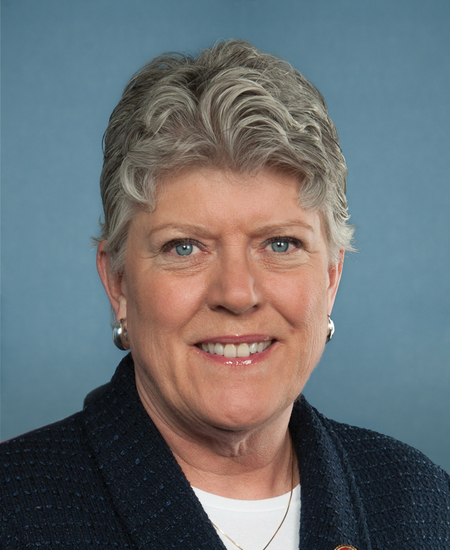
Rep. Julia Brownley
Sponsored bills
Maddy summaryHR 2367, the Truck Parking Safety Improvement Act, creates a federal grant program to address commercial truck parking shortages on highways. It provides competitive grants (totaling $175M-$320M over three years) for projects like building new rest areas, expanding parking at ports or truck stops, or improving safety at existing facilities. The program requires all funded parking to be free, publicly accessible to all truck drivers, and maintained without user fees. This directly affects commercial truck drivers, motor carriers, and highway safety by aiming to improve parking access, reduce traffic congestion, and enhance safety on federal-aid highways.
Maddy summaryThis bill requires major airlines to create and regularly update plans aimed at preventing flight delays and cancellations during disruptions like severe weather, staffing shortages, or cybersecurity threats. The plans must detail how airlines will maintain operations, protect staff and technology systems (including crew scheduling), and address known vulnerabilities. Airlines must submit these plans to the Transportation Secretary within one year of the law taking effect, with safeguards for confidential business information. A government audit will assess the plans' effectiveness three years after implementation.
Maddy summaryHR 3396, the Fire Department Repayment Act of 2023, requires the Secretaries of Agriculture, Interior, Homeland Security, and Defense to establish standard procedures for federal fire suppression cost share agreements within one year. It mandates reviewing existing agreements to align them with local cooperative fire protection agreements and conducting second-level reviews after wildfires, involving state and local fire organizations. The bill directly affects fire departments and agencies participating in these cost-sharing arrangements under the Reciprocal Fire Protection Act. Key changes include standardized procedures for agreement management and post-wildfire reviews to ensure cost-sharing compliance.
Maddy summaryThis bill extends Medicare payment adjustments for physicians and other practitioners through 2025 instead of ending in 2024. It specifically adds a 4.73% payment increase for services provided between January 1, 2025, and January 1, 2026. The legislation modifies existing Medicare payment rules to stabilize practice revenues during transition periods. It directly affects doctors and healthcare providers who bill Medicare for patient services. The key change is the extended timeframe and the defined 4.73% rate for the 2025-2026 period.
Maddy summaryThe STAR Plus Scholarship Act creates a federal program to fund scholarships for students pursuing careers in mental health and substance use disorder treatment. It requires scholarship recipients to work full-time in designated mental health professional shortage areas for one year for each year of scholarship funding received. The program authorizes $75 million annually (2025-2029) to cover tuition and educational expenses for students enrolled in approved programs at accredited institutions. This directly affects students in behavioral health fields and aims to address workforce shortages in underserved communities by linking scholarship support to service requirements.
Maddy summaryHR 8796, the "Stop Comstock Act," removes outdated restrictions from federal law that previously banned the distribution of materials related to contraception and abortion as "obscene" or "indecent." The bill amends Title 18 and the Tariff Act by deleting references to "indecent," "immoral," "unlawful abortion," and "procuring abortion" from provisions governing obscene materials. It clarifies that the law only prohibits "obscene materials" in commerce, eliminating broad restrictions on reproductive health information. This directly affects internet platforms, healthcare providers, and individuals sharing reproductive health resources by removing legal barriers to their distribution.
Maddy summaryThis bill requires Medicare Advantage plans to implement electronic prior authorization systems by 2027 and publish detailed data on their approval and denial rates for medical services by 2026. It directly affects Medicare Advantage plans (private insurers offering Medicare coverage) and their enrollees (seniors 65+), mandating transparency about prior authorization decisions, processing times, and appeal outcomes. Key provisions include requiring plans to report annual statistics on request approvals/denials, average processing times, and use of technology, with this data published publicly by the Centers for Medicare & Medicaid Services. The bill also sets timelines for plan responses to prior authorization requests and mandates reports to Congress on implementation and impacts.
Maddy summaryHR 8411, the Defending American Property Abroad Act, blocks U.S. government funding for activities involving foreign ports or terminals where a U.S. entity owns the land needed for access, and a foreign government has taken actions like nationalizing that land or nullifying a related contract. It requires the Homeland Security Secretary to designate such "prohibited property" within 60 days, then prohibits funding for vessels using these locations to import goods, dock, or receive maintenance. The bill mandates annual reports to Congress tracking designated properties, affected vessels, and the foreign actions triggering designations, along with assessments of economic and national security impacts. This directly affects U.S. businesses with foreign port access and U.S. agencies managing maritime activities.
Maddy summaryThe SOAR Act of 2024 removes supplemental oxygen and related equipment, supplies, and services from Medicare's competitive bidding program, ensuring direct Medicare payment for these items starting in 2025. It establishes new payment rates for oxygen services, including specific rates for rural areas and liquid oxygen with annual inflation adjustments, and requires oxygen suppliers to provide specific services like initial evaluations, safety education, and 24-hour coverage. The bill also adds respiratory therapist services to Medicare coverage with a new payment add-on, requires electronic templates for documenting medical necessity for oxygen services, and establishes new beneficiary rights including the right to choose suppliers and receive timely equipment repairs. This legislation directly affects Medicare beneficiaries requiring oxygen therapy, oxygen suppliers, and respiratory therapists by changing how these services are paid for and delivered.