

Maddy summaryHR 768, the Holocaust Education and Antisemitism Lessons Act, requires the U.S. Holocaust Memorial Museum Director to study how states and school districts currently teach about the Holocaust and antisemitism in K-12 schools. The study will examine curriculum requirements, teacher training, educational materials used, and assessment methods across all states and a representative sample of school districts and schools. It specifically aims to identify gaps, resources needed, and how schools address antisemitism and genocide prevention in their teaching. The Museum must submit a report to Congress within three years of the bill's enactment, detailing findings on current practices and challenges. This bill does not mandate new teaching requirements but seeks to understand existing approaches to Holocaust education.
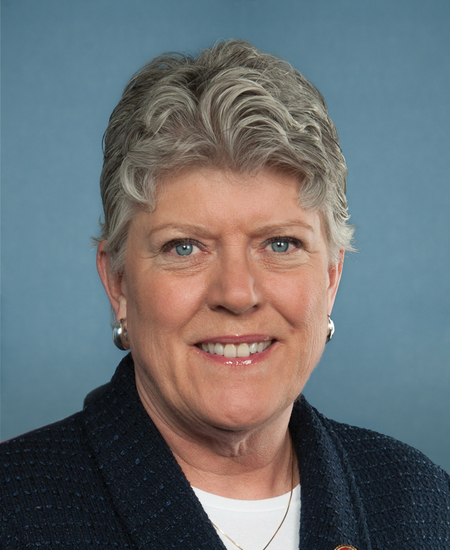
Rep. Julia Brownley
Sponsored bills
Maddy summaryHR 764, the Global Health, Empowerment and Rights Act, removes two barriers for foreign nongovernmental organizations (NGOs) seeking U.S. foreign assistance. It ensures these organizations cannot be denied funding solely because they provide health services (like counseling and referrals) using non-U.S. government funds, as long as those services comply with local laws. The bill also requires that foreign NGOs face the same rules on using non-U.S. funds for advocacy and lobbying as U.S. NGOs receiving similar aid. This directly affects international health-focused NGOs working in countries where U.S. aid is provided.
Maddy summaryThis bill authorizes a posthumous Congressional Gold Medal for Fred Korematsu, a Japanese American civil rights advocate who challenged the World War II internment of Japanese Americans. It recognizes his legal fight against Executive Order 9066, which led to the unjust incarceration of over 120,000 people, and his lifelong advocacy against racial discrimination. The medal, designed by the Treasury Secretary, will be displayed at the Smithsonian Institution. The bill is purely commemorative and does not create new legal rights or funding requirements.
Maddy summaryHR 753, the FIRE Act of 2025, directs the NOAA Administrator to establish a program improving wildfire forecasting and detection to reduce loss of life and property. The bill requires developing advanced satellite detection, fuel moisture assessments, and coupled fire-atmosphere modeling systems to better predict wildfire spread, smoke dispersion, and enable early detection. It authorizes $15 million for fiscal year 2026 to fund research testbeds for these capabilities, created through NOAA partnerships with industry and academia. This program directly affects communities at wildfire risk, firefighters, and emergency responders by enhancing early warning systems and risk communication.
Maddy summaryHRES 68 is a non-binding House resolution expressing strong disapproval of the President’s announcement to withdraw the U.S. from the Paris Agreement. It commends states, businesses, and citizens supporting the Agreement, urges the President to reverse the withdrawal decision, and calls for Congress to prioritize U.S. climate leadership. The resolution does not create new laws or affect specific groups but formally states the House’s position against withdrawing from the international climate accord. It was introduced by 115 co-sponsors and reflects broad congressional concern about reversing U.S. climate commitments.
Maddy summaryThis bill creates a new above-the-line tax deduction for performing artists (like musicians, actors, and dancers) to deduct work-related expenses directly from their gross income, rather than itemizing deductions. It sets a $100,000 income threshold (adjusted annually for inflation), phasing out the deduction by 10% for every $2,000 earned above this amount. The bill also explicitly includes commissions paid to an artist’s manager or agent as deductible expenses and raises the $200 "nominal employer" threshold for expense deductions to $500 (with inflation adjustments). These changes apply to tax years beginning after December 31, 2024.
Maddy summaryHRES 60 is a non-binding resolution expressing the House of Representatives' support for naming new or undedicated Department of Veterans Affairs (VA) facilities after women veterans and minority veterans. It aims to honor their service by reflecting the diversity of all military personnel who have served the U.S. since the Revolutionary War. The resolution specifically applies to future facility naming decisions, not existing names, and cites historical examples of women and minority veterans' contributions. It does not create new requirements or funding but seeks to recognize underrepresented groups in military history through symbolic recognition. The House states this would highlight the enduring presence of these veterans in the Armed Forces.
Maddy summaryHR 712, the Child and Animal Abuse Detection and Reporting Act, amends federal law to require the national clearinghouse tracking child abuse and neglect data to also collect information on animal abuse incidents connected to child abuse cases. Specifically, it expands the existing data collection framework to include "the incidence of any such cases related to animal abuse," such as when a family's pets are harmed during a child abuse situation. This means state child welfare agencies reporting to the federal clearinghouse must now include animal abuse data tied to child abuse incidents, without requiring separate animal cruelty reports. The bill directly affects the federal agency managing the clearinghouse (within the Department of Health and Human Services) and state child welfare systems that provide this data.
Maddy summaryHR 612, the Health Care Providers Safety Act of 2025, provides federal funding to help health care facilities improve safety. It authorizes the Secretary to award grants to hospitals, clinics, and other health care providers to cover costs for physical security (like structural improvements) and cyber security (such as data privacy tools and video surveillance systems). These grants directly help health care providers protect their facilities, staff, and patients from security threats. The bill creates a new funding mechanism under the Public Health Service Act, making specific security upgrades eligible for federal support.
Maddy summaryHR 609, the Assuring Medicare's Promise Act of 2025, directs revenue from the net investment income tax (currently applied to investment income) into the Medicare Hospital Insurance Trust Fund. It expands the tax base to include certain business income for high-income individuals with modified adjusted gross income exceeding $400,000 ($500,000 for joint filers), with a phase-in to limit the tax increase. The bill ensures this tax revenue directly supports Medicare's hospital insurance program, applying to taxable years beginning after December 31, 2025. The changes do not alter the tax rate but broaden the income types subject to the tax for high earners.