

Stop Antiabortion Disinformation Act or the SAD Act This bill prohibits deceptive advertising for reproductive health services. Specifically, the bill makes it unlawful for a person (i.e., individual, partnership, corporation, association, or organization) to deceptively advertise the reproductive health services they offer, including by misrepresenting that the person (1) offers or provides contraception or abortion services (or referrals for such contraception or abortion services), or (2) employs or offers access to licensed medical personnel. The bill provides for enforcement by the Federal Trade Commission. In addition to any other penalty, violations are subject to a civil penalty that may not exceed the greater of $100,000 (adjusted annually for inflation) or 50% of the revenue earned during the preceding 12-month period by the ultimate parent entity of the person who violated the bill.
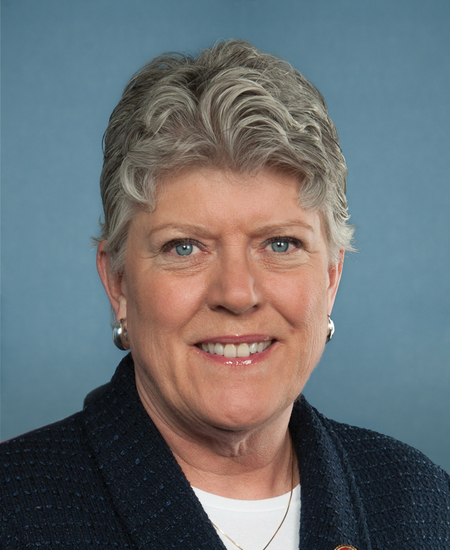
Rep. Julia Brownley
Sponsored bills
Maddy summaryThis bill allows the FDA to request microbial sampling at large livestock facilities (concentrated animal feeding operations or CAFOs) during foodborne illness outbreaks to identify causes and protect public health. CAFOs must grant "reasonable access" for sampling of animals, plants, water, and the environment, though they can specify timing and location to avoid disruption. The law clarifies it does not impose new requirements beyond sampling for USDA-regulated foods (like meat or poultry) and requires sharing collected data with the USDA and public health agencies. It directly affects CAFOs and federal food safety agencies, focusing on outbreak response mechanisms.
Medicare Patient Access and Practice Stabilization Act of 2025 This bill increases certain payment adjustments under the Medicare physician fee schedule for services furnished between April 1, 2025, and January 1, 2026.
American Music Fairness Act of 2025 This bill establishes that the copyright holder of a sound recording shall have the exclusive right to perform the sound recording through an audio transmission. (Currently, the public performance right only covers performances through a digital audio transmission in certain instances, which means that nonsubscription terrestrial radio stations generally do not have to get a license to publicly perform a copyright-protected sound recording.) Under the bill, a nonsubscription broadcast transmission must have a license to publicly perform such sound recordings. The Copyright Royalty Board must periodically determine the royalty rates for such a license. When determining the rates, the board must base its decision on certain information presented by the parties, including the radio stations' effect on other streams of revenue related to the sound recordings. Terrestrial broadcast stations (and the owners of such stations) that fall below certain revenue thresholds may pay certain flat fees, instead of the board-established rate, for a license to publicly perform copyright-protected sound recordings.
Maddy summaryHR 903, the Smoke and Heat Ready Communities Act of 2025, creates federal grant programs to help communities prepare for wildfire smoke and extreme heat events. It funds air pollution control agencies to monitor air quality, deploy monitoring equipment, equip public buildings with air filtration, and distribute protective gear like N95 masks. The bill also establishes university research centers to study health impacts and develop community response strategies, and provides competitive grants for local governments, tribes, and Native Hawaiian organizations to create collaborative community plans. These programs target communities most vulnerable to poor air quality from wildfire smoke and extreme heat, with priority given to areas impacted by these events.
Maddy summaryHR 848 establishes a voluntary program allowing food manufacturers, importers, distributors, or sellers to display a standardized "food climate label" on products. The label provides two numerical summaries of a food's total lifecycle greenhouse gas emissions: one covering production (growing, processing, packaging, distribution) and another covering consumption (storage, retail, home use, disposal). The Environmental Protection Agency (EPA) develops the label format, verification standards, and a public database to ensure accuracy and accessibility, while requiring businesses to verify their own production data and EPA to validate consumption data. Participation is optional, with no requirement for businesses to reduce emissions - only to disclose verified emissions data to help consumers make informed choices.
Maddy summaryThis resolution (HRES 72) expresses the House of Representatives' support for designating January 30, 2025, as "CTE and RHI Awareness Day." It aims to raise public awareness about chronic traumatic encephalopathy (CTE) and repeated head impacts (RHI), which are linked to brain damage from head injuries - commonly affecting athletes, military veterans, and others with exposure to repeated head trauma. The resolution encourages the CDC and NIH to share information on CTE/RHI in public education materials and recognizes researchers, patients, and families impacted by these conditions. As a symbolic resolution, it does not create new laws or policies but promotes public education and reflection on these health issues.
Maddy summaryThis resolution expresses the House of Representatives' position that Congress should take steps to prevent the privatization of the United States Postal Service (USPS), ensuring it remains a federal independent agency. It highlights USPS’s constitutional role, self-sustaining nature (relying on service revenue, not taxpayer funds), and critical functions - serving 168 million addresses daily, supporting rural communities, and underpinning e-commerce. The resolution opposes privatization, noting it would raise prices, reduce services, and harm the $1.9 trillion mailing industry. As a non-binding resolution, it reflects the House’s stance but does not create new law or policy.
Sustainable Cardiopulmonary Rehabilitation Services in the Home Act This bill permanently allows services relating to cardiac rehabilitation programs, intensive cardiac rehabilitation programs, and pulmonary rehabilitation programs to be furnished via telehealth at a beneficiary's home under Medicare.
Maddy summaryThe STAR Act of 2025 adds a 25% tax credit for qualified semiconductor design expenses incurred by U.S. companies. It directly affects businesses conducting semiconductor design in the United States, covering both in-house costs (like wages and supplies for U.S. design work) and contracted design services. The credit excludes duplicating existing products, cosmetic design, or activities unrelated to performance or reliability improvements. This incentive expires for design expenses paid after December 31, 2036.