

Maddy summaryThis bill prohibits the U.S. military from discriminating against service members or applicants based on gender identity. It bans policies that would deny service, involuntarily separate members, deny medically necessary healthcare, or require service in a gender different from one's identity. The law defines "gender identity" broadly to include a person's internal sense of gender, appearance, and mannerisms, regardless of sex assigned at birth. It directly affects transgender and gender-diverse individuals currently serving or seeking to serve in the Armed Forces.
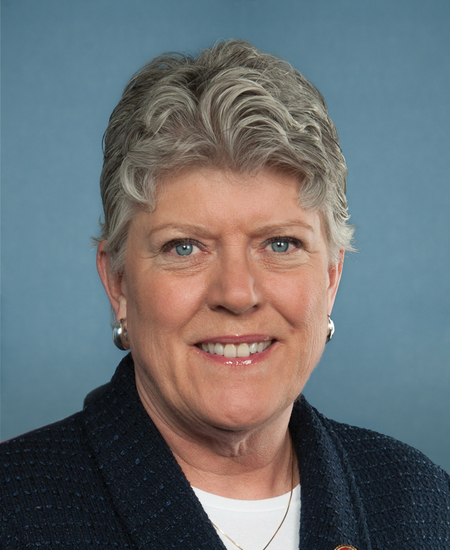
Rep. Julia Brownley
Sponsored bills
Maddy summaryHR 3559, the Save Our Forests Act of 2025, requires the U.S. Forest Service to increase staffing for National Forest System lands within 30 days of enactment to support forest health and productivity. It mandates reinstating Forest Service employees terminated between January 20, 2025, and the bill’s enactment date. The bill also directs the continuation of specific existing projects funded under laws like the Inflation Reduction Act and Infrastructure Investment and Jobs Act. These provisions directly affect Forest Service operations, workers, and the management of national forests.
Maddy summaryHR 3555, the Protect our Parks Act of 2025, requires the Secretary of the Interior to ensure National Park Service units are fully staffed for visitor safety, resource protection, and maintenance within 30 days of enactment. It mandates rehiring all National Park Service employees involuntarily terminated between January 20, 2025, and the bill’s enactment date. The bill also directs the continuation of specific park projects funded under the Great American Outdoors Act, Infrastructure Investment and Jobs Act, and the Inflation Reduction Act. This legislation directly affects National Park Service staff and park operations, focusing on staffing stability and project continuity.
Maddy summaryThe Real Education and Access for Healthy Youth Act of 2025 would provide federal grants to support comprehensive sex education and sexual health services for young people aged 10-29. The bill establishes four grant programs: for K-12 schools and youth organizations, for colleges and universities, for educator training, and for sexual health services specifically targeting underserved youth. To qualify for funding, programs must be evidence-informed, medically accurate, inclusive of diverse gender identities and sexual orientations, culturally responsive, and trauma-informed. The bill appropriates $100 million annually for fiscal years 2026-2031, with specific funding allocations for each program type. It prohibits funding for programs that withhold health information, promote stereotypes, or fail to address the needs of specific groups like pregnant youth or survivors of violence.
Maddy summaryHR 3532, the Striking and Locked Out Workers Healthcare Protection Act, prohibits employers from terminating or altering an employee’s employer-sponsored health coverage during a lawful strike or a lockout (when an employer withholds work to influence bargaining). It directly affects workers participating in strikes or facing lockouts, ensuring continued healthcare access during these labor disputes. The bill adds penalties: $75,000 per violation for lockout-related coverage termination (up to $150,000 for repeat offenses), and $50,000 per violation for strike-related termination (up to $100,000 for repeat offenses), with penalties applied alongside other remedies. These provisions amend the National Labor Relations Act to protect workers’ healthcare rights during collective bargaining actions.
Maddy summaryThis bill establishes a code of conduct for Supreme Court justices, requiring them to disclose gifts, income, and potential conflicts of interest. It creates a formal process for handling complaints about justices, including a judicial investigation panel to review allegations. The bill adds specific circumstances requiring recusal, such as when a justice or family member has financial ties to a party in a case. Additionally, it mandates that parties and amicus briefs disclose any gifts given to justices and lobbying activities related to their nomination. These provisions aim to increase transparency and accountability in the Supreme Court's operations.
Maddy summaryHR 3526, the Uplifting First-Time Homebuyers Act of 2025, increases the maximum amount first-time homebuyers can withdraw penalty-free from retirement accounts. It amends the Internal Revenue Code to raise the limit from $10,000 to $50,000 for qualified first-time homebuyer distributions. This change directly affects individuals using retirement savings to purchase their first home, allowing them to access significantly more funds without incurring the usual 10% early withdrawal penalty. The provision applies to taxable years beginning after December 31, 2024.
Maddy summaryThe Valve Safety Fairness Act of 2025 requires the Pipeline and Hazardous Materials Safety Administration to apply an existing 2022 pipeline safety rule to Type A gas gathering lines. This rule mandates specific valve installations and rupture detection systems to prevent pipeline failures and enhance safety. The bill directly affects natural gas pipeline operators managing Type A gathering lines, which transport gas from wells to processing facilities, by requiring compliance with these safety standards. The legislation extends current safety requirements to a previously excluded pipeline category without creating new rules.
Maddy summaryHR 1147 establishes the Veterans Accessibility Advisory Committee to improve accessibility for veterans with disabilities across Department of Veterans Affairs (VA) services. The committee, composed of 15 members including four veterans with disabilities, four accessibility experts, two VA staff, and five veteran service organization representatives, will assess barriers in VA facilities, digital services, benefits, and communications. It must submit biennial reports identifying accessibility gaps and recommending improvements, with the VA required to respond to these reports within 90 days. The committee directly affects veterans with disabilities by mandating regular VA consultation on compliance with accessibility laws like the Americans with Disabilities Act and Section 508 of the Rehabilitation Act.
Maddy summaryThis bill sets new renewable energy targets for federal buildings, requiring the U.S. government to increase its use of renewable energy over time. It mandates that federal agencies meet minimum renewable energy consumption levels: 7.5% from 2013-2019, rising to 35% by 2030-2039, 75% by 2040-2049, and 100% starting in 2050. The law directs agencies to prioritize on-site, on federal lands, or on tribal lands renewable energy projects where economically and technically feasible. These requirements directly affect all federal buildings and agencies managing energy procurement.