

Maddy summaryThis bill clarifies that the President has no constitutional authority to withhold funds Congress has appropriated. It creates new legal mechanisms allowing private citizens and state/local governments to sue the federal government for impoundments of appropriated funds. The bill strengthens the Comptroller General's oversight role by requiring executive branch cooperation in investigations of potential violations. Federal employees who knowingly violate these provisions would face personal liability and lose immunity protections. The legislation aims to reinforce Congress's constitutional authority over the budget process.
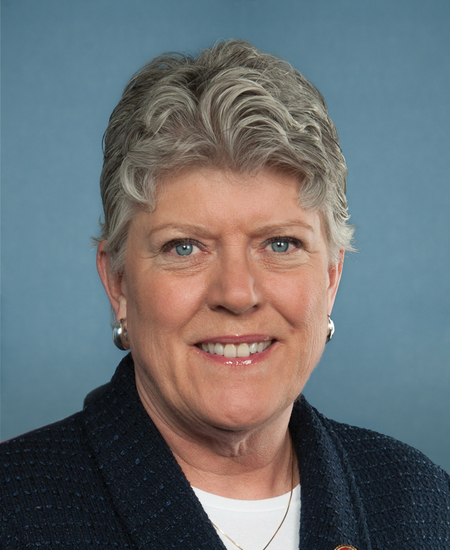
Rep. Julia Brownley
Sponsored bills
Maddy summaryThe HEADs UP Act of 2025 would improve healthcare access for people with developmental disabilities by adding them to the list of medically underserved populations that health centers must serve. It authorizes $15 million annually from 2026 to 2030 to fund new primary care and specialized dental services through health centers in underserved areas. Health centers receiving these grants must use the funds to supplement, not replace, existing services for this population. The bill directly affects health centers serving underserved communities and the people with developmental disabilities who face barriers to healthcare.
Maddy summaryThis bill establishes minimum nurse-to-patient ratios for hospital units across the country, requiring hospitals to maintain specific staffing levels (such as 1:1 in trauma units, 2:1 in critical care units, and 3:1 in emergency rooms) to improve patient safety and quality of care. Hospitals must develop transparent staffing plans that account for patient acuity, involve direct care nurses in planning, and document actual staffing levels for each shift. The bill includes strong whistleblower protections for nurses who object to unsafe staffing levels and prohibits hospitals from retaliating against nurses who report violations. It requires hospitals to comply with these standards as a condition for receiving Medicare and Medicaid payments, with enforcement through audits and civil penalties of up to $50,000 for repeated violations. The bill also includes provisions to support nurse recruitment and retention through workforce initiatives and training programs.
Maddy summaryHR 3368, the "Born in the USA Act of 2025," prohibits federal funding for Executive Order 14160 (which aimed to restrict birthright citizenship for children born in the U.S.). The bill directly affects federal agencies that might implement the executive order by blocking their use of funds for that purpose. Its key provision is a funding ban targeting the executive order and any similar future policies, without changing citizenship law. The bill does not alter birthright citizenship rights but prevents federal resources from being used to enforce the controversial executive order. It is a procedural measure focused on funding, not a substantive policy change to citizenship rules.
Maddy summaryThis bill prohibits businesses from charging different prices for substantially similar consumer products or services based on the gender they're marketed to, such as charging more for women's razors or grooming services compared to identical men's versions. It defines "substantially similar" as having no meaningful differences in materials, use, or design (excluding minor color variations), and makes violations enforceable by the Federal Trade Commission (FTC) under existing laws. State attorneys general can also sue businesses for violations to stop the pricing difference or recover damages for affected residents. The law directly affects consumers who face gender-based price discrimination and businesses selling comparable products or services.
Maddy summaryHR 3373, the GHOST Act of 2025, requires entities shipping certain firearm parts (barrels, slides, or bolts) across state lines to register shipments with the Attorney General within 5 business days. This includes providing sender/recipient details, shipping method, and proof of delivery via certified mail or recipient signature. The bill creates a confidential database for law enforcement access but prohibits public disclosure under the Freedom of Information Act. Violations carry fines or up to 1 year in prison for single shipments, and up to 10 years for shipping 50+ parts in one transaction.
Maddy summaryThis bill amends the Fair Labor Standards Act to prohibit children under 18 from having direct contact with tobacco plants or dried tobacco leaves on farms. It directly affects minors who might work on tobacco farms and tobacco farm employers who currently allow such employment. The key change adds tobacco farming to the list of occupations where children under 18 cannot work, closing a loophole that previously permitted this activity. This update explicitly excludes tobacco-related agriculture from exceptions allowing minors in certain farm jobs under federal law.
Maddy summaryHR 3013 amends U.S. Code to increase annual funding for programs supporting homeless veterans. It extends the funding authorization period through fiscal year 2024 and sets specific amounts: $350 million for 2025, with future years receiving "such sums as may be necessary." This directly affects homeless veterans by securing sustained federal funding for comprehensive service programs. The bill makes no changes to program requirements, only adjusting the authorized funding levels year by year.
Maddy summaryHR 3277, the Ensuring Lasting Smiles Act, requires group health plans and health insurance issuers to cover medically necessary outpatient and inpatient treatments for congenital anomalies or birth defects primarily affecting the eyes, ears, teeth, mouth, or jaw. This includes reconstructive procedures, dental/orthodontic support during treatment, and follow-up care, but excludes purely cosmetic surgery not tied to a medical diagnosis. Cost-sharing (like copays) for these services must not be stricter than for other medical benefits. The law takes effect for plan years beginning January 1, 2026, and mandates insurers to provide notice about this coverage to beneficiaries.
Maddy summaryThis bill defines composting as an official conservation practice under federal farm programs, directly affecting farmers who use composting to improve soil health and water retention. It amends key agricultural conservation programs (Conservation Stewardship Program and Environmental Quality Incentives Program) to explicitly include composting practices, making them eligible for technical assistance and financial support. The bill specifies that composting includes using organic waste generated on a farm or brought from nearby communities (with emissions considerations) to produce and manage compost on farms. These changes streamline access to existing conservation funding for composting activities without creating new programs. The bill focuses on updating program eligibility criteria to support sustainable soil management.