

Maddy summaryThis bill adjusts health insurance subsidies by modifying the premium tax credit structure under the Internal Revenue Code. It replaces previous income thresholds with a sliding-scale formula, increasing subsidies for households earning between 150% and 400% of the federal poverty level - reducing their required premium payments as income rises within these tiers. The changes apply to tax years beginning after December 31, 2025, directly affecting middle-income individuals and families purchasing coverage through health insurance marketplaces. It also repeals specific provisions from a prior reconciliation law related to health care.
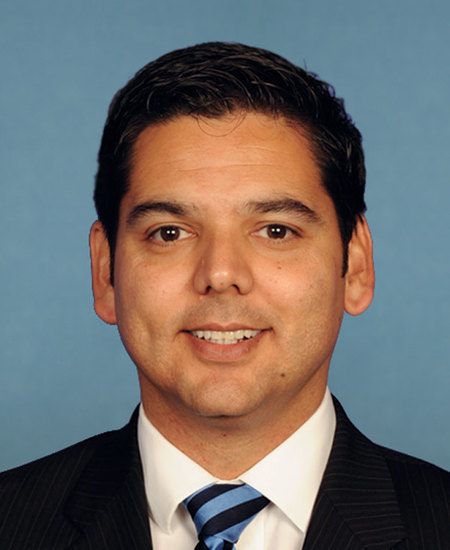
Rep. Raul Ruiz
Sponsored bills
Maddy summaryThe Protect Our Hospitals Act (HR 4807) repeals a specific provision (Section 71115 of Public Law 119-21) that altered Medicaid provider tax rules. This bill restores the prior tax structure for Medicaid providers, including hospitals and clinics that accept Medicaid, returning them to the tax treatment that existed before the change. As a result, these providers will no longer be subject to the modified tax rules enacted by the repealed provision. The bill does not affect Medicaid eligibility, benefits, or coverage - it solely reverts a tax policy change without introducing new requirements.
Maddy summaryThis bill removes a barrier preventing most low-income students from accessing SNAP benefits. It amends the Food and Nutrition Act to explicitly allow students enrolled at least half-time in recognized higher education programs to qualify for SNAP, reversing a prior exclusion. The key change eliminates the previous requirement that students meet specific exceptions (now deleted) and adds a new eligibility category under Section 3(m)(5). This directly affects low-income undergraduate and graduate students at colleges and training programs who were previously ineligible. The changes take effect January 2, 2026.
Maddy summaryThis bill amends Medicare rules to improve payment for air ambulance services. It requires air ambulance providers to submit detailed cost and revenue data every three years (including fixed costs per base, utilization rates, and revenue) to the Medicare Secretary. The Secretary must then revise fee schedules based on this data and stakeholder input, aiming to better align payments with actual costs. A separate provision mandates the GAO to study average operating costs, payment adequacy, geographic variations, and make recommendations within one year of data collection starting. The bill directly affects Medicare beneficiaries using air ambulances and the providers operating those services.
Maddy summaryThis resolution symbolically designates August 25-29, 2025, as "National Community Health Worker Awareness Week" for the third consecutive year. It recognizes community health workers (CHWs) as trusted frontline staff who connect underserved communities to health services, provide cultural mediation, and support health education - without creating new laws or funding. The resolution encourages federal, state, and local collaboration to highlight CHWs' roles but does not alter existing programs or require government action. It directly affects CHWs and their communities by raising public awareness of their contributions.
Maddy summaryHR 4696 amends Section 249 of the Immigration and Nationality Act to update eligibility for a registry program that provides a pathway to legal status for long-term residents. It changes the requirement from entering the U.S. before January 1, 1972, to entering at least 7 years before the application date. This adjustment bases eligibility on a rolling 7-year window instead of a fixed historical cutoff, allowing more recent long-term residents to qualify. The bill directly affects individuals who entered the U.S. after 1972 but maintained continuous residence for at least seven years prior to applying.
Maddy summaryHR 4723, the Mental Health for Latinos Act of 2025, requires the U.S. Department of Health and Human Services to create a new outreach strategy specifically for Hispanic and Latino communities to improve mental health access and reduce stigma. The strategy must address cultural and language needs, provide information on culturally appropriate treatments, and involve community members in its development. It mandates annual reports to Congress on the strategy’s impact on mental health outcomes and allocates $1 million for fiscal year 2026 to fund implementation. This bill directly affects Hispanic and Latino individuals facing barriers to mental health care due to cultural, linguistic, or systemic factors.
Maddy summaryThe Keep Kids Covered Act extends continuous health coverage under Medicaid and CHIP for children. It requires states to maintain coverage for children under age 6 for six years (previously one year) and for children under age 19 for two years (previously one year), without requiring reapplication. Former foster youth will now remain covered until age 26. States must also annually update contact information for enrolled children and inform them about their coverage status and remaining eligibility period.
Maddy summaryHR 4710, the No Surprises Act Enforcement Act, increases penalties for health insurance plans and issuers that violate balance billing protections, which prevent surprise medical bills. The bill raises fines from $100 to $10,000 per violation for specific balance billing rule violations and adds a new penalty of three times the difference between initial payment and out-of-network rates for late payments after Independent Dispute Resolution decisions. It requires health plans and nonparticipating providers to make timely payments within 30 days of a payment determination, with interest accruing on late payments. The bill also establishes new transparency reporting requirements for the Secretary to submit regular reports to Congress about audits, enforcement actions, and penalties. These provisions directly affect health insurance issuers, group health plans, and nonparticipating healthcare providers.
Maddy summaryThe Urban Indian Health Parity Act (HR 4722) would amend the Social Security Act to extend full federal medical assistance to urban Indian health organizations. Currently, only tribal organizations receive this full federal funding level under Medicaid, but urban Indian organizations are excluded. The bill adds urban Indian organizations - defined under the Indian Health Care Improvement Act - to the list of entities eligible for full federal medical assistance when operating under a grant or contract with the Indian Health Service. This change would ensure urban Indian health organizations receive the same federal funding as tribal organizations for Medicaid services.