

Maddy summaryThe FAMILY Act would establish a national paid family and medical leave insurance program that provides wage replacement benefits for workers needing time off for caregiving or medical reasons. It defines "qualified caregiving" to include caring for a family member with a serious health condition, personal medical needs, or recovery from violence (including domestic violence, sexual assault, or stalking). Benefits would be calculated based on earnings, with a minimum monthly benefit of $580 and maximum of $4,000, administered by a new Office of Paid Family and Medical Leave within the Social Security Administration. Eligible individuals would need to have worked for at least 8 quarters in the previous year and file an application with required documentation, while existing state paid leave programs would continue to operate alongside this federal program.
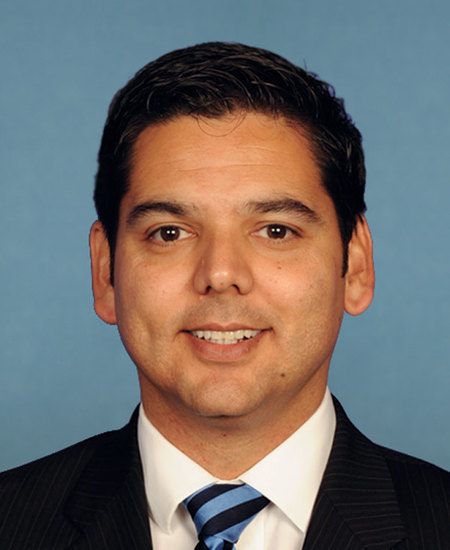
Rep. Raul Ruiz
Sponsored bills
Maddy summaryHRES 715 is a symbolic resolution supporting the designation of the week of September 15, 2025, as "National Latino Gastronomic Cuisine Week." It expresses congressional recognition of Latino culinary traditions' cultural significance, economic contributions, and role in fostering inclusivity, but does not create new laws or allocate funding. The resolution encourages federal agencies and community groups to promote awareness through events and educational initiatives. As a non-binding resolution, it focuses solely on celebration and acknowledgment, not policy implementation.
Maddy summaryHRES 718 is a non-binding resolution expressing congressional support for increasing Latino participation in STEM careers. It highlights that Latinos make up 18.2% of the U.S. workforce but only 14.8% of STEM workers, despite growing educational enrollment and strong interest in STEM fields. The resolution encourages federal investment in initiatives to support Latino students pursuing STEM education and careers, particularly through Hispanic-serving institutions. It emphasizes that boosting Latino representation in STEM would strengthen the U.S. workforce, improve economic mobility, and reduce reliance on foreign workers.
Maddy summaryThis bill prohibits Members of Congress, their spouses, and dependent children from owning or trading certain investments, including stocks, commodities, and derivatives (referred to as "covered investments"). It requires affected individuals to divest these investments within 90-180 days, with specific exemptions for Treasury bonds, diversified mutual funds, small business interests, and family trusts meeting strict conditions. Violations incur penalties of 10% of the investment's value plus disgorgement of profits, paid directly to the U.S. Treasury. The law applies to all covered individuals during federal service, with exceptions for investments acquired through inheritance or occupational trading (e.g., a spouse’s finance job).
Maddy summaryHR 5094, the "Protect Patients from Costly Care Act," repeals two specific provisions from a prior reconciliation law (Public Law 119-21) that would have increased patient costs. It restores Medicaid cost sharing rules to their pre-2023 state, directly affecting Medicaid beneficiaries by preventing higher out-of-pocket costs. It also reverses changes to orphan drug exclusions under the Drug Price Negotiation Program, bringing those medications back under federal price negotiation rules for manufacturers. The bill does not create new policies but undoes specific cost-increasing changes to existing programs.
Maddy summaryThis bill requires the Department of Housing and Urban Development (HUD) to investigate whether prices for rental spaces (pad sites) in mobile home communities are being manipulated or artificially raised through practices like price gouging. HUD must also monitor if any single buyer (including large investors) purchases over 2,500 mobile homes or pad sites in one area, and investigate potential issues like unjustified rent hikes or utility failures. The investigation findings will lead to reports for Congress and public websites, specifically analyzing impacts on seniors and underserved communities. The bill directly affects residents of manufactured home communities, particularly those in areas with high institutional investment, by mandating federal oversight of pricing practices.
Maddy summaryHR 4966 prohibits grocery stores from selling items at "grossly excessive prices," defined as 120% or more above the average market price over the previous six months (with exceptions for unavoidable cost increases like supply chain issues). It bans using facial recognition or personal data to set different prices for individual customers (e.g., adjusting prices based on shopping history) and requires clear signage if facial recognition is used. Stores over 10,000 square feet must replace electronic shelf labels with physical price tags. The Federal Trade Commission enforces these rules, allowing consumers to seek $3,000 per violation or actual damages, with penalties for willful violations.
Maddy summaryHR 4960 (BENES 2.0 Act) requires Social Security to include clear Medicare eligibility information in annual statements mailed to individuals reaching ages 60-65. The notice must explain enrollment rules, late penalties, relief options, and special considerations for veterans and Puerto Rico residents, with practical examples. Statements will be mailed 6 months before age 65 and updated every 2 years based on stakeholder feedback. This directly affects all Americans approaching Medicare eligibility through Social Security.
Maddy summaryHR 4874 creates a federal grant program to fund supportive services for residents in affordable housing properties assisted by federal programs like low-income housing tax credits, Section 8 housing, and supportive housing for seniors or people with disabilities. Eligible non-profits managing such properties can receive 5-year grants to provide voluntary services including health access, educational programs, financial literacy, housing stability support, and assistance with public benefits. Grantees must use at least 25% of funds for staff salaries and training, while no more than 75% can cover direct resident services like mentoring or home modifications. The program aims to improve resident outcomes by connecting them to community resources without requiring participation in any service.
Maddy summaryHRES 629 is a non-binding House resolution honoring Dr. Paul Farmer and calling for U.S. policy changes to address global health inequities. It directly affects low- and middle-income countries by urging the federal government to adopt a "21st-century global health solidarity strategy," including increasing U.S. global health funding to $125 billion annually (to meet the UN 0.7% GNI target) and supporting national health systems through Dr. Farmer’s "Five S’s" framework (staff, space, stuff, systems, social support). The resolution also mandates addressing systemic economic harms like debt, tax evasion, and colonial legacies through debt cancellation, tax reform, and reparations for historical injustices. It emphasizes concrete policy shifts rather than funding alone, requiring coordinated multilateral action to close health financing gaps and reform global governance institutions.