

Sanctioning Russia Act of 2025 This bill imposes penalties on certain persons (individuals and entities) if the President determines that the Russian government or a person acting at Russia's direction is involved with (1) refusing to negotiate a peace agreement with Ukraine; (2) violating a negotiated peace agreement; (3) initiating another invasion of Ukraine; or (4) overthrowing, dismantling, or seeking to subvert the Ukrainian government. If the President makes such a determination, the bill requires certain actions including the President must impose visa- and property-blocking sanctions on specified persons such as the Russian president, certain Russian military commanders, and any foreign person that knowingly provides defense items to the Russian armed forces; the President must increase the rate of duty on all goods and services imported from Russia into the United States to at least 500% relative to the value of such goods and services; the President must increase the rate of duty on all goods and services imported into the United States from countries that knowingly engage in the exchange of Russian-origin uranium and petroleum products to at least 500% relative to the value of such goods and services; the Department of the Treasury must impose property-blocking sanctions on any financial institution organized under Russian law and owned wholly or partly by Russia, and any financial institution that engages in transactions with those entities; and the Department of Commerce must prohibit the export, reexport, or in-country transfer to or in Russia of any U.S.-produced energy or energy product.
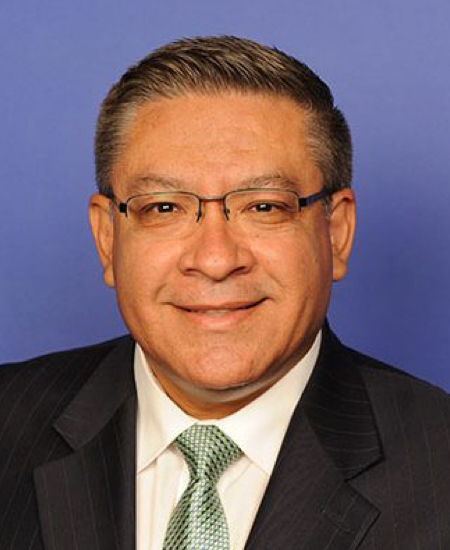
Rep. Salud O. Carbajal
Sponsored bills
Maddy summaryThis bill clarifies when unintended radiation exposure in nuclear medicine must be reported to the Nuclear Regulatory Commission (NRC). It requires the NRC to revise regulations within 120 days to specify that a radiation dose from a leakage incident (extravasation) must be reported if it exceeds 0.5 Sv (50 rem) in either a 5 cubic centimeter tissue volume or 10 square centimeters of skin. The change directly affects hospitals and medical facilities using radioactive materials in procedures like diagnostic imaging or cancer treatment. The revised reporting threshold takes effect 18 months after the bill becomes law. This is a regulatory adjustment focused on defining specific exposure limits, not altering patient care or funding.
Maddy summaryHR 2587, the Youth Mental Health Research Act, establishes a new NIH research initiative to coordinate studies on youth mental health across federal health institutes. It focuses on two key areas: researching community resilience and early intervention strategies for at-risk youth, and improving how mental health services are delivered in schools, communities, and other settings where young people spend time. The bill authorizes $100 million annually for fiscal years 2025 through 2030 to fund this research. This initiative directly supports future evidence-based approaches to youth mental health, without altering current services or directly affecting individuals.
Maddy summaryThis symbolic resolution (HCONRES 23) expresses Congress's support for International Transgender Day of Visibility, observed annually on March 31. It encourages Americans to recognize and celebrate transgender community achievements while acknowledging ongoing challenges like discrimination in employment, healthcare, and public accommodations. The resolution does not create new laws or policies but formally endorses the day's purpose through non-binding statements of support and recognition. It directly affects the broader public by promoting awareness and respect for transgender individuals' rights and contributions.
Maddy summaryThis resolution (HRES 271) is a symbolic House of Representatives measure honoring César Estrada Chávez, a civil rights leader who co-founded the United Farm Workers and advocated for farmworkers' rights through nonviolent action. It recognizes his life, legacy, and the "¡Sí se puede!" (Yes, we can!) slogan, referencing his work on fair wages, safe conditions, and the 1975 California Agricultural Labor Relations Act. The resolution encourages the public to commemorate his legacy through service and education, consistent with existing state observances of his birthday (March 31) in multiple states. It has no legal effect or policy changes, as it is purely commemorative.
Maddy summaryHR 2514, the Trucker Bathroom Access Act, requires businesses like warehouses, distribution centers, and shipping facilities (but not small restaurants under 800 sq ft) to allow commercial truck drivers access to their restrooms when delivering goods or waiting to load cargo. It also mandates that port terminals provide sufficient restrooms for drayage truck operators (drivers of large trucks moving cargo at ports) in safe, accessible areas, including parking spots for vehicle access. The bill does not require businesses to make physical restroom changes and exempts locations where access would create health, safety, or security risks. It defines "covered drivers" as those operating commercial vehicles regulated by the Department of Transportation and "covered restrooms" as those safely accessible to drivers. This law directly affects truck drivers and the businesses they interact with during deliveries or port operations.
Maddy summaryThe SHOPP Act of 2025 amends the Gus Schumacher Nutrition Incentive Program to expand eligible food items for SNAP participants. It adds legumes (like beans and peas) to the list of qualifying foods and allows fresh frozen fruits and vegetables to count toward year-round incentives. This directly affects SNAP recipients shopping at participating farmers markets or retailers, making it easier to access more types of produce. The bill updates existing program language to replace "fruits and vegetables" with "fruits, vegetables, and legumes" and "fresh fruits and vegetables" with "fresh or fresh frozen fruits, vegetables, and legumes." These changes aim to increase access to a wider variety of nutritious foods through existing incentive programs.
Save America's Forgotten Equines Act of 2025 or the SAFE Act of 2025 This bill permanently prohibits the slaughter of equines (e.g., horses and mules) for human consumption. (Current law prohibits the slaughter of dogs and cats for human consumption. This bill extends the prohibition to equines.) Specifically, this bill prohibits a person from knowingly (1) slaughtering an equine for human consumption; or (2) shipping, transporting, possessing, purchasing, selling, or donating an equine to be slaughtered for human consumption or equine parts for human consumption. The bill subjects a violator to a fine. The bill applies to conduct in or affecting interstate or foreign commerce or within the special maritime and territorial jurisdiction of the United States. However, it does not apply to an activity carried out by an Indian for a religious ceremony. As background, in recent years, the appropriations acts have prohibited the Department of Agriculture (USDA) from using federal funds to inspect horses before they are slaughtered for human consumption. Therefore, there are currently no USDA-inspected horse slaughter facilities in the United States.
Maddy summaryHR 2467, America's Red Rock Wilderness Act, would designate approximately 1.3 million acres of public land across Utah as wilderness areas, protecting them from development and managing them for conservation. The bill specifically designates 77 wilderness areas in the Great Basin and Colorado Plateau regions, including lands within existing national monuments like Grand Staircase-Escalante and Bears Ears. It includes provisions for water rights protection, allows continued livestock grazing under certain conditions, and withdraws the designated lands from mining and mineral leasing. The bill also ensures Tribal rights are protected and requires the Secretary of the Interior to administer these areas according to wilderness management standards.
Maddy summary# Northern Rockies Ecosystem Protection Act (2023) - Summary This comprehensive environmental protection bill designates and protects vast areas across the Northern Rockies region of Idaho, Montana, Wyoming, Oregon, and Washington. ## Key Provisions 1. **Wilderness Designations**: - Creates numerous new wilderness areas totaling millions of acres across the region - Includes specific designations like Yellowstone, Glacier/Northern Continental Divide, Hells Canyon, Salmon/Selway, and Cabinet-Yaak ecosystems - Includes 108 specific wilderness areas identified in the bill (from Anaconda-Pintler to McCullough Peaks) 2. **Biological Connecting Corridors**: - Designates approximately 2.9 million acres as biological corridors - These corridors connect larger ecosystem areas to facilitate wildlife migration - Prohibits timber harvesting, mining, oil/gas development, and new road construction in these corridors 3. **Wild and Scenic Rivers**: - Adds 78 new river segments to the Wild and Scenic Rivers system - Protects rivers like the South Fork Payette, Salmon River, Yaak River, and many others - Specifies exact segments for protection 4. **Wildland Restoration**: - Designates 9 recovery areas totaling approximately 1,023,000 acres - Requires restoration of damaged lands to natural conditions - Prohibits certain activities in these recovery areas 5. **Implementation**: - Requires an interagency team to monitor and evaluate implementation - Mandates geographic information system for monitoring the Northern Rockies Bioregion - Requires annual reports to Congress on implementation progress 6. **Special Protections**: - Maintains existing water rights of the United States - Protects Indian Tribe treaty rights and cultural access to protected areas - Requires consultation with Tribes regarding management plans This bill represents a comprehensive effort to protect biodiversity, maintain ecosystem connectivity, and restore damaged lands across a significant portion of the Northern Rockies region.