

Maddy summaryThis bill, HR 2253 (Puppy Protection Act of 2025), sets new federal standards for commercial dog dealers who sell puppies to the public. It requires specific housing sizes based on dog size (e.g., 12-30 square feet per dog), daily exercise in safe outdoor areas, clean water and nutritious food twice daily, and annual veterinary exams including dental checks. The bill also limits breeding frequency (max 2 litters in 25 months), sets age minimums for breeding (18 months for small dogs, 2 years for large dogs), and mandates health screenings to prevent genetic diseases. These requirements apply directly to commercial dealers, with final regulations to be issued within 18 months of enactment.
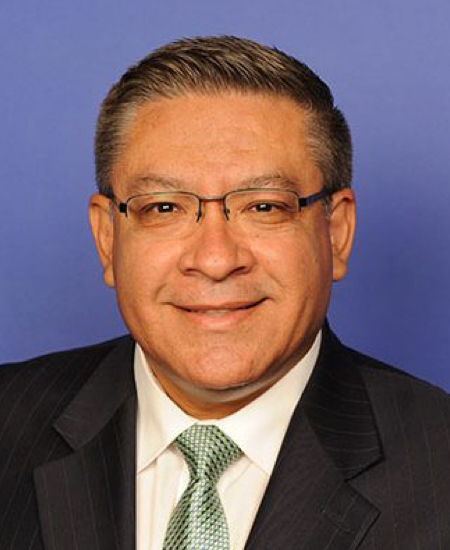
Rep. Salud O. Carbajal
Sponsored bills
Maddy summaryHR 2195, the Feed Hungry Veterans Act of 2025, would expand eligibility for food assistance under the Supplemental Nutrition Assistance Program (SNAP) to more veterans. It adds four new qualifying categories to the existing rules: veterans with a "catastrophically disabled" determination under military disability law, veterans under 65 receiving a pension, and veterans meeting specific combined disability rating thresholds. The bill amends the Food and Nutrition Act to include these new groups in SNAP eligibility, directly affecting veterans who currently may not qualify under existing disability rating criteria. The changes would take effect on October 1, 2030.
Maddy summaryThis bill, HR 2102 (Major Richard Star Act), allows veterans with combat-related disabilities to receive both full military retired pay and veterans' disability compensation simultaneously, without the previous offset that reduced retired pay. It directly affects veterans already eligible for both benefits due to combat-related injuries, removing the requirement that their retired pay be reduced by the disability compensation amount. The key provision amends Title 10 and Title 38 to eliminate the offset rule (sections 5304 and 5305 of Title 38) for these veterans. The change applies to payments starting after the bill’s enactment date, effective for all qualifying veterans. This is a policy change to increase financial support for affected veterans, not a new benefit.
Maddy summaryThis bill increases loan limits for farmers under the Farm Service Agency. It raises farm ownership loan caps from $600,000/$1.75 million to $850,000/$3.5 million (for direct/guaranteed loans) and operating loan caps from $400,000/$1.75 million to $750,000/$3 million, effective 2025. It also creates a refinancing program allowing distressed guaranteed loans to convert to direct loans if borrowers prove problems can be fixed and the farm can return to financial stability. Additionally, it doubles the microloan limit from $50,000 to $100,000 and updates inflation calculations for loan adjustments using USDA land value data instead of previous metrics.
Maddy summaryThe IDEA Full Funding Act (HR 2598) mandates specific annual federal funding levels for the Individuals with Disabilities Education Act (IDEA), directly affecting schools and students with disabilities nationwide. It requires the federal government to appropriate either a fixed dollar amount or a specified percentage (increasing annually from 4.5% to 40%) of a calculated total - based on the number of eligible students and average per-pupil costs - starting in fiscal year 2026 through 2035. The bill sets clear, escalating funding targets, with the higher of two calculated amounts (dollar figure or percentage) becoming available for obligation each fiscal year. This establishes a binding financial commitment to address long-standing underfunding of special education services under IDEA.
Maddy summaryHR 2596 creates a $1.00 per gallon tax credit for renewable natural gas (RNG) used as transportation fuel in vehicles, boats, or aircraft. The credit applies to producers and businesses that sell or use RNG meeting specific requirements, including registration under existing rules and producer certification. RNG must be derived from biomass and produced within the U.S., with blended fuel treated as RNG only under strict contractual and certification conditions. The credit expires for sales or uses after December 31, 2035, and applies to fuel sold or used after December 31, 2025.
Maddy summaryHCONRES 25 is a symbolic congressional resolution stating that the Trump administration's planned 25% tariffs on imports from Canada and Mexico violate the USMCA trade agreement. It directly addresses the administration's tariff announcement (set for April 2, 2025), which Congress claims undermines the USMCA's terms. The resolution emphasizes that these tariffs threaten established trade relationships, harm the $1.6 trillion annual trade between the U.S. and these nations, and contradict the agreement's goal of maintaining a level playing field. As a non-binding expression of congressional opinion, it does not alter tariffs but highlights concerns about USMCA compliance.
Maddy summaryThis bill raises the asset limits for Supplemental Security Income (SSI) recipients to allow more savings without losing benefits. It increases the individual resource limit from $2,250 to $20,000 (in 2025) and the couple limit from $1,500 to $10,000, with automatic annual inflation adjustments based on the Consumer Price Index. These changes directly affect low-income seniors and people with disabilities who rely on SSI. The bill eliminates the current "savings penalty" that previously forced recipients to spend down savings to qualify. The new limits will adjust each year to maintain their real value against inflation.
Workplace Violence Prevention for Health Care and Social Service Workers Act This bill requires the Department of Labor to address workplace violence in health care, social service, and similar sectors. Specifically, Labor must issue an occupational safety and health standard that requires certain employers to take actions to protect workers and other personnel from workplace violence. The standard applies to employers in the health care sector, in the social service sector, and in sectors that conduct activities similar to those in the health care and social service sectors. Among other elements, the standard must require each employer to (1) develop a workplace violence prevention plan, (2) promptly investigate incidents of workplace violence, and (3) provide relevant training and education to employees. The bill requires certain hospitals and skilled nursing facilities to comply with this standard as a condition of Medicare participation.
Maddy summaryHR 2586, the Reentry Act of 2025, amends Medicaid rules to allow incarcerated individuals to receive Medicaid coverage during the 30 days immediately before their release from prison or jail. This directly affects people leaving correctional facilities, ensuring they can access health care as they transition back into communities. The bill requires a report within 18 months analyzing current health care standards in prisons, the number of people who would gain coverage, and current discharge practices to improve Medicaid enrollment for newly released individuals. The report will also assess how to better connect people with community health services and addiction treatment after release.