

Maddy summaryThis bill (HR 7723) amends campaign finance law to prevent political campaigns from automatically charging donors for recurring contributions without explicit permission. It requires campaigns to obtain active, affirmative consent (like checking a box) before setting up recurring donations - preventing donors from being charged simply by not unchecking a pre-checked box. Campaigns must provide clear receipts showing future charges and include easy cancellation instructions in all communications. The law directly affects federal election campaigns, independent expenditure groups, and electioneering communication funders by changing how they solicit and manage recurring donations.
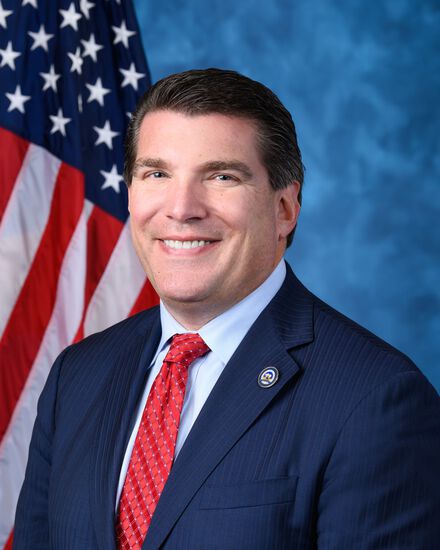
Rep. Jay Obernolte
Sponsored bills
Maddy summaryHR 4278, the Restore VA Accountability Act of 2023, establishes new disciplinary procedures for VA supervisors and management officials (excluding senior executives and political appointees). It requires the VA Secretary to use "substantial evidence" for removal, demotion, or suspension, sets strict timelines (15 business days total for decisions), and creates a new internal grievance process. The bill limits judicial review to procedural errors, not penalty severity, and strengthens whistleblower protections by requiring Office of Special Counsel approval for disciplinary actions involving disclosures. This directly affects VA supervisors and managers whose performance or misconduct leads to disciplinary action.
Maddy summaryThe Federal Judgeship Act of 2024 adds new federal district judgeships across multiple courts, primarily in California, Florida, Texas, and other states with growing caseloads. It authorizes specific numbers of additional judges for districts including the Central and Northern Districts of California, the Middle District of Florida, and the Western District of Texas, with appointments to take effect in 2025, 2027, 2029, and 2031. The bill also permanently converts certain temporary judgeships to permanent positions and adds circuit judges to the Ninth Circuit Court of Appeals in 2027 and 2031. These changes directly affect federal court operations by increasing judicial capacity in specific geographic regions. The legislation focuses on adjusting court staffing levels to address case volume without altering substantive legal procedures or policies.
Maddy summaryThis bill requires the National Suicide Prevention Lifeline (9-8-8) program to strengthen cybersecurity protections. It mandates coordination with the Department of Health and Human Services' Chief Information Security Officer to address vulnerabilities, and requires network administrators receiving federal funding to report cybersecurity incidents or vulnerabilities to the Assistant Secretary. The bill also directs a study by the Comptroller General within 180 days to evaluate cybersecurity risks for the lifeline program. These provisions directly affect the 9-8-8 program and its federally funded operators, aiming to prevent disruptions to this critical suicide prevention service.
Maddy summaryThe Farm to Fly Act of 2023 amends USDA programs to include sustainable aviation fuel (SAF) as a qualifying product for financial assistance, directly affecting farmers, biorefineries, and agricultural producers. It defines SAF as liquid fuel meeting strict environmental standards - requiring at least a 50% reduction in lifecycle greenhouse gas emissions compared to jet fuel and excluding sources like palm oil or petroleum. The bill mandates the Secretary of Agriculture to lead a cross-agency initiative focused on advancing SAF development, leveraging agricultural resources, and fostering public-private partnerships to expand the domestic SAF market. This aims to support rural economic growth, strengthen U.S. energy security, and align with national clean energy goals in aviation.
Maddy summaryHR 7455, the Sunset Act of 2024, requires federal agencies to automatically expire significant rules after 10 years unless Congress passes a new law extending them. Agencies must submit reports 180 days before expiration, and Congress can extend rules via joint resolution within 3 legislative days of receiving the report. The bill also mandates annual reviews of 10% of active agency rules for 9 years, with rules not extended by Congress after the 10-year period expiring. It applies to all major agency rules (e.g., environmental or safety regulations) and includes limited presidential exemptions for emergencies, but does not affect existing rules already in effect.
Maddy summaryThis bill prohibits the Department of Labor from finalizing, implementing, or enforcing a specific proposed rule (published September 8, 2023) that would have raised the salary threshold for overtime eligibility for certain white-collar workers. It directly affects the Department of Labor's ability to move forward with that rule change. The bill does not create new overtime rules or alter current requirements; it simply blocks this particular proposed rule from taking effect. As a procedural measure, it prevents the rule from becoming final policy.
Maddy summaryHR 7248, the FDA Modernization Act 3.0, creates a new FDA process to qualify alternative nonclinical testing methods that can replace or reduce animal testing in drug development. Drug developers can request qualification for methods that improve safety/efficacy predictivity or shorten development time, with the FDA required to review requests within 180 days. If qualified, these methods allow expedited FDA review of drug applications and enable referencing the qualified method in submissions. The bill mandates annual reports tracking qualified methods, animal use reduction, and application approvals, with transparency requirements for Congress. This directly affects pharmaceutical companies and biotech firms developing new drugs.
Maddy summaryHJRES 107 is a congressional resolution seeking to block a Federal Communications Commission (FCC) rule published on January 22, 2024 (89 Fed. Reg. 4128). The resolution aims to disapprove the FCC's rule implementing digital discrimination protections under the Infrastructure Investment and Jobs Act, which would have required internet providers to prevent discriminatory practices. If passed, this resolution would nullify the FCC rule, preventing it from taking effect under the Congressional Review Act (Chapter 8 of Title 5, U.S. Code). The bill directly affects the FCC's regulatory authority over digital discrimination enforcement in broadband services.
Maddy summaryHR 7185 reauthorizes the High Intensity Drug Trafficking Areas (HIDTA) program through 2030, with specific focus on fentanyl. It allocates $302 million annually for HIDTA operations and adds $14.2 million yearly for grants to enhance fentanyl seizure efforts through competitive grants. The bill requires annual reports detailing fentanyl seizures and trafficking data, and directs the Attorney General to assign at least 16 assistant U.S. attorneys to prioritize fentanyl trafficking cases. This directly affects federal drug task forces, law enforcement agencies, and prosecutors working on fentanyl-related investigations.