

Maddy summaryHR 5530, the VA Emergency Transportation Access Act, prevents the Department of Veterans Affairs (VA) from lowering payment rates for specialized transportation used by veterans and eligible individuals (like ambulances or wheelchair vans) without strict requirements. It mandates that any rate change that could reduce access to care must first undergo a detailed review analyzing economic impacts on the VA and transportation industry, and ensure the new rate covers actual costs. The VA must also develop a formal process for rate changes and consult with industry experts, veterans' groups, and healthcare agencies before implementing such changes. This bill directly affects veterans relying on specialized transportation for medical care, particularly those in rural or underserved communities, by safeguarding their access to necessary emergency transport services.
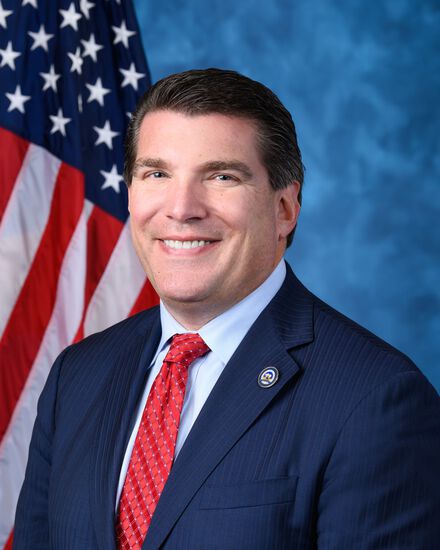
Rep. Jay Obernolte
Sponsored bills
Maddy summaryHR 3644, the ACT for Veterans Act, extends the time veterans have to submit documentation for emergency care received outside VA facilities. It allows veterans (or their representatives) to get coverage for emergency treatment at non-VA medical providers without immediate paperwork, as long as notification is submitted within 96 hours after treatment. This change applies specifically to veterans needing emergency care in non-VA settings and modifies Section 1703 of Title 38, U.S. Code. The bill takes effect one year after enactment.
Maddy summaryHRES 1148 is a resolution passed by the U.S. House of Representatives that condemns the Iranian government for supporting terrorism, regional proxy conflicts, and internal suppression of dissent - including its crackdown on protests following Mahsa Amini's death in 2022. It specifically calls for maintaining sanctions against Iran, supporting the Iranian Resistance's Ten-Point Plan (which advocates for a democratic, secular, nonnuclear Iran), and protecting Iranian political refugees in Albania. The resolution also affirms the Iranian people's right to self-determination under international law and urges the U.S. to recognize their struggle for freedom. As a non-binding resolution, it does not create new laws but formally expresses congressional stance.
Maddy summaryH.J.Res. 116 seeks to block a Department of Labor rule finalized on January 10, 2024, which aimed to clarify how businesses classify workers as employees or independent contractors under the Fair Labor Standards Act (FLSA). If passed, this resolution would prevent the rule from taking effect, directly affecting businesses that use independent contractors and their workers, who rely on FLSA protections for minimum wage and overtime pay. The bill uses a specific congressional process (under Chapter 8 of Title 5, U.S. Code) to disapprove the rule, rather than creating new policy. This action would maintain the existing classification standards until a new rule is established.
Maddy summaryHR 661, "Sarah’s Law," requires U.S. immigration authorities to detain certain immigrants charged with crimes causing death or serious injury. It applies to immigrants who entered without proper inspection, held revoked temporary visas, or fall under specific deportation categories, and who face charges for violent crimes. The bill mandates that immigration officials notify victims or their families (like parents or spouses) about the immigrant’s identity, immigration status, custody details, and removal efforts. This law does not change existing victim rights but adds specific notification requirements for these cases.
Maddy summaryHRES 987 is a symbolic resolution introduced in the U.S. House of Representatives on January 31, 2024, by multiple Republican members. It formally denounces the Biden administration’s energy policies as "harmful" and "anti-American," citing specific actions like canceling the Keystone XL pipeline, restricting federal land leasing for oil and gas, blocking LNG exports, and implementing mineral extraction rules. The resolution does not create new laws or affect any group directly; it serves only as a formal expression of disapproval by the House. It has no legal effect and is intended to convey political opposition to the administration’s approach to energy development.
Maddy summaryHR 7770, the Rosie the Riveter Commemorative Coin Act, authorizes the U.S. Mint to produce and sell three commemorative coins honoring women who worked on the U.S. home front during World War II. It specifies $5 gold coins (max 50,000), $1 silver coins (max 400,000), and half-dollar coins (max 750,000), all to be issued between January 1, 2025, and December 31, 2025. Each coin sale includes a surcharge ($35 for gold, $10 for silver, $5 for half-dollar), with all surcharge funds directed to the Rosie the Riveter Trust for maintaining the Rosie the Riveter WWII Home Front National Historical Park and educational programs. The coins will feature designs reflecting the legacy of diverse women workers and must meet specific weight, diameter, and composition standards.
Maddy summaryHR 7771 designates March 21 as National Rosie the Riveter Day to honor the over 6 million American women who joined the workforce during World War II. The bill requests the President issue an annual proclamation encouraging all levels of government to observe the day with ceremonies and educational programs. It does not create new programs or funding but formally recognizes these women's contributions to the war effort and their legacy of empowerment. This procedural resolution directly affects the President and government entities through ceremonial recognition, not policy changes.
Maddy summaryThis bill amends the Clean Air Act to change how national air quality standards are implemented and reviewed. It extends the timeline for reviewing air quality standards from 5 to 10 years, requires consideration of economic impacts and feasibility when setting standards, and mandates that the EPA issue implementing regulations and guidance at the same time as new standards. It also gives states more time (up to 3 years) to correct deficiencies before federal plans are imposed, and adds wildfire mitigation measures as factors that can be considered in air quality designations. The bill directly affects states, local governments, and businesses that must comply with air quality regulations, particularly those in ozone and particulate matter nonattainment areas. These changes aim to create a more balanced implementation process that considers both environmental protection and practical economic considerations.
Maddy summaryThis resolution (HRES 149) is a symbolic congressional statement condemning Russia's actions in Ukraine, specifically the forcible transfer and abduction of Ukrainian children. It directly addresses the Russian government, citing evidence including Ukrainian reports of over 2,300 children kidnapped and Russia's policy granting citizenship to children born in occupied territories after February 24, 2022. The resolution formally declares these actions violate the Genocide Convention (Article II(e)) and claims Russia is attempting to erase Ukrainian identity by targeting children. As a non-binding resolution, it holds no legal force but expresses the House's official stance against these practices.