

Maddy summaryHR 895, the Combating Organized Retail Crime Act of 2023, expands federal law to better prosecute organized retail theft by amending sections 2314 and 2315 of Title 18. It clarifies that crimes involving stolen goods valued at $5,000 or more over 12 months - including retail theft - can be prosecuted under existing federal statutes, and broadens definitions to include goods taken via "any facility of interstate or foreign commerce." The bill also creates a new Organized Retail Crime Coordination Center within Homeland Security, requiring it to coordinate federal, state, and local law enforcement efforts, share threat information with retailers, and produce annual public reports on trends. This directly affects law enforcement agencies, retailers, and criminal justice systems by standardizing prosecution thresholds and enhancing interagency collaboration.
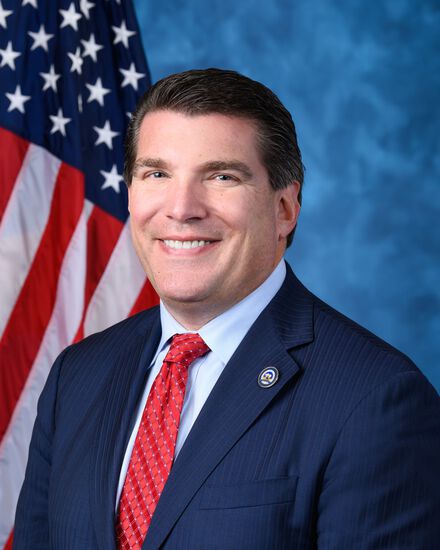
Rep. Jay Obernolte
Sponsored bills
Maddy summaryHR 5754 renames the U.S. courthouse at 350 W. 1st Street, Los Angeles, California, as the "Felicitas and Gonzalo Mendez United States Courthouse." The bill updates all federal references - such as legal documents, maps, and records - to use the new name. This is a ceremonial designation with no policy changes or direct impact on citizens or laws. The bill solely affects the courthouse's official name and related federal paperwork.
Maddy summaryThis bill amends the Law Enforcement Officers Safety Act (LEOSA) to expand where current and retired law enforcement officers can carry concealed firearms. It specifically allows qualified officers to carry in Federal facilities like post offices and courthouses (previously restricted), clarifies they may carry on public property and transportation, and updates firearms training requirements to accept certification from any state-certified instructor. The key change requires officers to meet recent firearms training standards (using flexible state-based criteria), rather than relying solely on their former agency's standards. This directly affects retired officers seeking to carry in more public spaces and federal buildings without needing prior agency certification.
Maddy summaryHR 8430, the Reshape Alternatives to Detention Act of 2024, terminates existing alternatives-to-detention programs like the Case Management Pilot and Young Adult Case Management programs. It mandates GPS monitoring for all non-detained immigrants throughout immigration proceedings, requires mandatory check-ins within 14 days, and redirects funds from terminated programs to expand detention bed capacity. The bill prohibits participation in alternatives-to-detention programs for immigrants moving to jurisdictions with sanctuary policies and requires biometric data submission for program eligibility. These provisions directly affect immigrants enrolled in the Intensive Supervision Appearance Program (ISAP) and alter immigration enforcement procedures.
Maddy summaryHRES 1226 is a non-binding resolution honoring 282 law enforcement officers killed in the line of duty during 2023, listed by name in the resolution. It formally acknowledges their sacrifice, expresses unwavering support for current officers, and recognizes the need for adequate resources to protect them. The resolution does not create new laws or policies but serves as a ceremonial tribute to memorialize fallen officers and support their families, aligning with existing National Police Week observances established since 1962.
Maddy summaryThis bill updates the National Construction Safety Team Act by replacing "building" with "structure" throughout the law and adjusting related terminology. It ensures investigations cover a broader range of infrastructure, including bridges, dams, and other structures, not just traditional buildings. Key provisions clarify that investigations may defer to other federal agencies when appropriate and update references to "engineering standards, practices, and building codes." The bill does not change funding levels, maintaining the $5 million annual appropriation for the National Institute of Standards and Technology through 2027. It focuses on modernizing the law's language to reflect current infrastructure safety needs without introducing new requirements.
Maddy summaryThis bill names a specific United States Postal Service facility at 24355 Creekside Road in Santa Clarita, California, as the "William L. Reynolds Post Office Building." It directly affects the physical location of this post office by changing its official designation. The key provision is a simple name change, with all existing references to the building in federal documents automatically updated to reflect the new name. This is a ceremonial designation with no policy or funding changes.
Maddy summaryHJRES 131 seeks congressional disapproval of an EPA rule establishing emissions standards for light- and medium-duty vehicles model years 2027 and later. If passed, this resolution would block the EPA's rule from taking effect, preventing automakers from having to comply with those specific pollution requirements. The bill targets the EPA's April 18, 2024, rule published in the Federal Register (89 Fed. Reg. 27842). This is a procedural disapproval resolution under the Congressional Review Act, not a new policy.
Maddy summaryThe Weather Act Reauthorization Act of 2023 reauthorizes and updates the Weather Research and Forecasting Innovation Act of 2017, focusing on improving weather forecasting capabilities across multiple domains. It authorizes annual funding for research and development in tornado, hurricane, and atmospheric river forecasting, with specific provisions for enhancing data collection from commercial sources and improving public communication of weather warnings. The bill establishes programs to improve data assimilation practices, support agricultural and water management applications, and enhance the National Oceanic and Atmospheric Administration's computing resources for weather modeling. This legislation directly affects the National Oceanic and Atmospheric Administration, its partners in the weather enterprise, and the public who rely on weather forecasts and warnings for safety and planning.
Maddy summaryHR 8147 repeals the Corporate Transparency Act, which required certain businesses (typically those with more than 20 employees) to report beneficial ownership details to the Treasury Department. This bill eliminates the requirement for companies to disclose who ultimately owns or controls them, directly affecting business owners and financial institutions that previously submitted this information. The bill also makes minor technical changes to Title 31 of the U.S. Code to remove references to the repealed provisions. The repeal would end the existing financial transparency reporting obligation for covered entities.