

Maddy summaryHR 5617, the Space Transformation And Reliability Act (STAR Act), is a procedural bill that makes a technical amendment to existing law. It changes the reference from "2023" to "2031" in a specific provision (section 50905(c)(9) of Title 51, U.S. Code) regarding a learning period. This adjustment modifies a deadline year for an unspecified program or requirement within the referenced legal section. The bill does not establish new policy or directly affect specific stakeholders, as it only updates a single year in a technical legal citation.
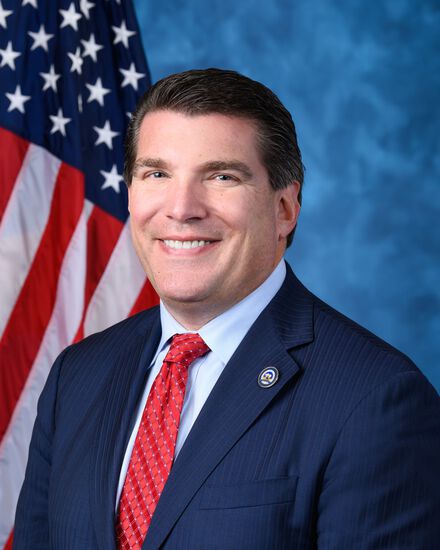
Rep. Jay Obernolte
Sponsored bills
Maddy summaryHR 2971, the Veterans Claims Education Act of 2023, requires the Department of Veterans Affairs (VA) to provide veterans filing claims with clear information about free or low-cost assistance. Specifically, it mandates that veterans not represented by an accredited person receive notice about free help from veterans service organizations, an online directory of trained representatives, and how to report unaccredited representatives charging fees. The VA must also include fee warnings and links to these resources on its claim-filing websites. Additionally, the bill requires the VA to review and report on its processes for recognizing accredited representatives within 180 days of enactment.
Maddy summaryHRES 1355 is a non-binding resolution supporting the designation of July 10 as Journeyman Lineworkers Recognition Day. It honors lineworkers who maintain electrical infrastructure under hazardous conditions, including during disasters, and commemorates Henry Miller, the first president of the International Brotherhood of Electrical Workers, who died on July 10, 1896, while troubleshooting an electrical outage. The resolution encourages public recognition of these workers' contributions but does not create new laws or policies.
Maddy summaryThis bill establishes a Department of the Interior program to support Indian Tribes and Tribal organizations in managing buffalo and buffalo habitat on Indian land. It authorizes grants, contracts, and technical assistance for tribes to restore buffalo populations, develop commercial buffalo activities, and participate in related decision-making. The program requires ongoing consultation with tribes on buffalo management and protects culturally sensitive information shared with the Department. The program will end on September 30, 2030, and explicitly preserves existing tribal treaty rights.
Maddy summaryThis bill rescinds unspent funds from specific federal programs. It targets leftover money from pandemic relief (like the CARES Act and American Rescue Plan) and certain infrastructure initiatives (including education stabilization funds and transportation programs like the Congestion Mitigation Program). The rescission is limited to amounts already allocated for Israel, Ukraine, and Indo-Pacific security supplements under recent appropriations. Unspent funds must be returned to the Treasury, with no new spending created.
Maddy summaryHR 8673 establishes the Foundation for Standards and Metrology, a nonprofit entity to support the National Institute of Standards and Technology (NIST) in advancing measurement science, technical standards, and technology development. The Foundation will foster collaboration between NIST, researchers, industry, educational institutions, and nonprofits to accelerate the commercialization of federally funded research and provide direct support like fellowships and grants to NIST associates. Governed by a Board of Directors and required to become financially self-sustaining within five years, the Foundation must submit annual reports to Congress detailing its activities, finances, and progress toward strategic goals. The bill authorizes $1.5 million annually for NIST to fund the Foundation’s operations from 2025 through 2029.
Maddy summaryHR 537 authorizes a Congressional Gold Medal to honor 60 diplomats who saved Jewish lives during the Holocaust by issuing visas and passports against their governments' orders, risking expulsion and personal danger. The medal will be presented to the next of kin of these diplomats, alongside representatives from their home countries, and permanently displayed at the United States Holocaust Memorial Museum. The bill also permits the sale of bronze duplicates to cover production costs, with proceeds going to the U.S. Mint. This legislation recognizes the diplomats' humanitarian actions without creating new government programs or altering existing laws.
Maddy summaryHR 8653 authorizes the posthumous award of a Congressional Gold Medal to Major Thomas D. Howie, a U.S. Army officer who died during the Battle of Normandy in WWII. The bill specifies the medal will be presented to his nephew, Tom Howie, or his next of kin, and then permanently displayed at The Citadel Museum. It also permits the U.S. Mint to produce and sell bronze duplicates to cover costs. This is a commemorative measure honoring Major Howie's military service and sacrifice, with no substantive policy changes.
Maddy summaryHR 1687 names the United States Postal Service facility at 6444 San Fernando Road in Glendale, California, as the "Paul Ignatius Post Office." All official U.S. government references to this location - such as in laws, maps, or documents - will now use the new name. This is a procedural bill with no policy changes beyond the naming designation.
Maddy summaryHRES 1255 is a non-binding House resolution introduced on May 23, 2024, that calls on all Americans to observe Memorial Day 2024 as a day of remembrance for military personnel who died in service. The resolution specifically honors "the men and women of the Armed Forces who have died in the pursuit of freedom and peace" and urges the public to demonstrate appreciation for their sacrifices. It does not create new laws or policies but serves as a symbolic expression of national gratitude, emphasizing respect for those who died while defending democratic values. The resolution was co-sponsored by multiple House members and aligns with the traditional observance of Memorial Day.