

Farm Tech Act This bill directs the Department of Agriculture (USDA) to establish a program to certify software that uses artificial intelligence to perform a task in connection with producing agricultural products. The program must be based on the Artificial Intelligence Risk Management Framework published by the National Institute of Standards and Technology. In order for USDA to certify software under the program, the software must (1) perform accurately; and (2) consistently meet or exceed the federal and state licensure, certification, and permitting standards applicable to a person performing the task. (The bill includes requirements for these standards.) USDA must prescribe any regulations necessary or appropriate to carry out this bill.
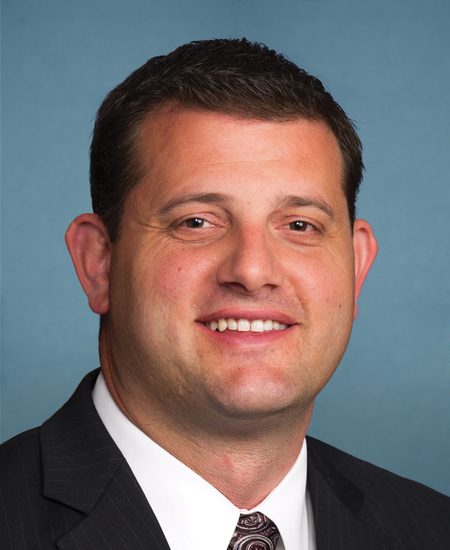
Rep. David G. Valadao
Sponsored bills
Maddy summaryThe HOPE Act of 2024 would establish HOPE Accounts, tax-advantaged savings accounts for paying qualified medical expenses. These accounts would allow individuals to save for medical costs with tax-free growth and distributions, with contribution limits of up to $4,000 per month for self-only coverage or $8,000 for family coverage. To qualify, individuals must have minimum essential health coverage and cannot have other health savings accounts like HSAs or FSAs. Contributions are generally not deductible but may be excluded from gross income for lower-income individuals, and distributions for qualified medical expenses would be tax-free. The bill also includes rules for employer contributions and coordination with existing health savings mechanisms.
Maddy summaryHR 9305 directs the Secretary of Health and Human Services to provide grants to local governments for training local enforcement officers (such as building code inspectors) to recognize and respond to public health risks caused by unsafe buildings. The bill requires grantees to develop training programs focused on identifying hazards like mold or structural failures that could lead to health outbreaks, and to coordinate with public health departments and other local agencies. Priority for funding goes to communities with identified health threats and applicants with strong training capacity. This legislation directly affects local code enforcement personnel and aims to improve public safety through targeted training, without changing building codes themselves.
Maddy summaryThe Safer Skies Act of 2024 requires certain smaller airlines to adopt the federal security screening program currently used by larger carriers. Specifically, it mandates that airlines operating passenger planes with more than 9 seats (that do not use TSA checkpoints, offer individual seats in advance with public schedules) must comply with the Aircraft Operator Standard Security Program within 360 days of enactment. The Transportation Security Administration must revise its rules to enforce this new requirement. This directly affects regional carriers that currently skip standard airport security screenings but serve passengers under these specific operational conditions. The bill extends existing security standards to cover these previously exempt airlines without creating new security protocols.
Maddy summaryThis bill amends the Trafficking Victims Protection Act to improve protections for victims of human trafficking. It requires the government to grant at least two years of temporary protection (with possible extensions) to victims involved in investigations, prosecutions, or civil lawsuits under federal law. Victims automatically receive work authorization during this period, and immigration enforcement actions against them are limited without consultation between law enforcement agencies. The law also creates new pathways for relatives of trafficking victims to obtain temporary protection and work permits.
Maddy summaryHR 9263 creates a new 30% federal tax credit for businesses investing in qualifying agricultural technology projects focused on specialty crops. It directly affects farmers and agribusinesses adopting precision agriculture (like GPS-guided equipment or soil sensors) or controlled environment agriculture (such as indoor vertical farms with climate control systems). The credit applies to qualified property like equipment, software, and infrastructure placed in service before 2035, with specific definitions for eligible technologies. Businesses cannot double-benefit by claiming this credit alongside certain existing grant programs for similar projects. The credit is available for investments completed after January 1, 2023, and integrates into the existing tax code via amendments to sections 48F and 6417.
Maddy summaryThis bill makes it a federal crime to steal packages that have been delivered by private carriers (like FedEx or UPS) but not yet received by the recipient. It directly affects package recipients, carriers, and thieves who target unclaimed deliveries left on porches or in mailboxes. The key provision amends federal law to include these delivered-but-unclaimed packages under the same legal protections as mail in transit. This changes the law to treat stolen packages at the delivery stage as a federal offense, similar to theft of postal mail. The bill does not create new penalties but expands existing theft statutes to cover this specific scenario.
Maddy summaryThe Residential Recovery for Seniors Act would expand Medicare Part A coverage to include specific types of residential substance use disorder treatment for seniors. It creates three new coverage categories: low-intensity, high-intensity, and medically managed residential treatment, each with defined service requirements and facility standards. Medicare would cover these services when provided by certified facilities meeting specific clinical and operational criteria, including regular need assessments and adherence to evidence-based treatment standards. The bill also establishes a prospective payment system for these services to be implemented by October 2025, with initial payments matching current costs and future payments adjusted for inflation.
Maddy summaryThis bill reauthorizes the Debbie Smith DNA Backlog Grant Program, which provides federal funding to state and local law enforcement agencies to reduce backlogs in processing DNA evidence from crime scenes. It extends the program's funding period from fiscal years 2024 through 2029 (previously ending in 2024). The bill also updates audit requirements to ensure grant funds are used properly through 2029. This directly affects law enforcement agencies that receive these grants to accelerate DNA analysis for criminal investigations.
Maddy summaryHRES 1385 designates the week of August 4-10, 2024, as "National Farmers Market Week" to recognize the economic and community role of farmers markets. The resolution highlights that farmers markets generated $1.7 billion in income for U.S. farmers in 2020, supported 8,771 markets nationwide by 2019, and connect urban and rural communities while promoting sustainable farming and nutrition access. It does not create new laws or funding but formally acknowledges these markets’ contributions to local economies, public health, and community engagement. The resolution aims to raise awareness of farmers markets’ importance, directly affecting farmers, vendors, and consumers who rely on these venues.