

Maddy summaryHR 8880, the Simplifying Forms for Veterans Claims Act, requires the Department of Veterans Affairs (VA) to commission an independent assessment of its claim forms within 30 days of the bill's enactment. This assessment, conducted by a federally funded research center (FFRDC) in consultation with veterans' service organizations and legal experts, must identify how to make VA forms clearer and better organized for claimants. The VA must then implement the recommended changes within two years, submitting the assessment to Congress within 90 days of receiving it. The bill directly affects veterans filing claims by aiming to reduce confusion in the paperwork process, without altering benefit eligibility or amounts.
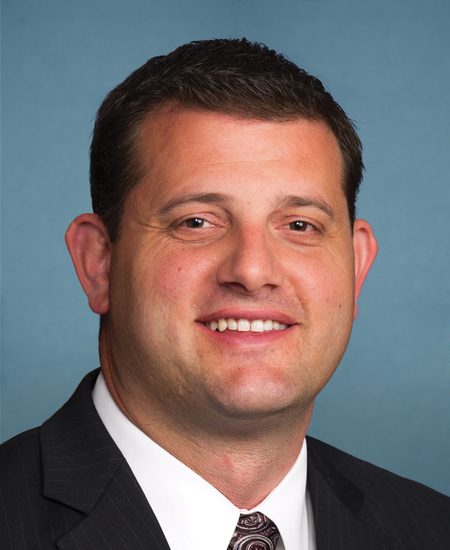
Rep. David G. Valadao
Sponsored bills
Maddy summaryHR 8874, the Modernizing All Veterans and Survivors Claims Processing Act, requires the Department of Veterans Affairs (VA) to create and update a plan for expanding automation tools to process veterans' claims. The plan, due within 180 days of enactment and updated biannually, focuses on tools that automate retrieving service/health records, compiling evidence, providing decision support, sharing agency data, and generating claim correspondence. This directly affects veterans and survivors whose claims are processed by VA offices like Pension, Education, Debt Management, and the Board of Veterans’ Appeals. The bill mandates the VA to analyze feasibility, necessary modifications, and collaboration needs for implementing these tools across priority VA subdivisions.
Maddy summaryThis resolution (HRES 1363) is a ceremonial tribute honoring Patrick Gottsch, founder of Rural Media Group, Inc. (which operates RFD-TV, The Cowboy Channel, and related media platforms). It recognizes his work founding the first 24-hour rural-focused television network in 2000, which reached over 40 million homes globally and promoted agricultural, equine, and rural lifestyle programming. The resolution commemorates his legacy following his passing on May 18, 2024, and his contributions to rural American media. As a commemorative resolution, it does not create policy changes or affect any individuals or groups.
Maddy summaryHR 9060 extends tax credits for biodiesel and renewable diesel producers and users through 2025, replacing the previous 2024 expiration date. It amends the Internal Revenue Code to extend the biodiesel credit (Section 40A) and biodiesel mixture credit (Section 6426) for fuels sold or used after December 31, 2024. The bill also adds a provision preventing double benefits by requiring the credit amount to be zero for fuels already claiming another credit under Section 45Z(a). This directly affects biodiesel producers, refiners, and businesses using these fuels for tax purposes.
Maddy summaryHR 9038, the FAIR Fleets Act, requires the U.S. Postal Service to conduct ongoing assessments of its vehicle distribution and develop a strategic plan to increase fleet availability in underserved areas using fuel-efficient, modern vehicles. The bill mandates an annual report to Congress by December 31 each year, detailing fleet distribution by state, steps taken to improve service in underserved areas, and recommendations for further action. Underserved areas are specifically defined to include rural regions, postal regions with aging vehicles, counties with significant delivery delays, high-poverty urban neighborhoods, and tribal lands. The law aims to improve fleet modernization and equitable distribution across all U.S. regions.
Maddy summaryHR 8772 is the Legislative Branch Appropriations Act for fiscal year 2025, providing funding for the operations of the U.S. Congress. The bill allocates specific sums for House and Senate salaries, committee operations, Capitol Police, the Architect of the Capitol, Library of Congress, Government Publishing Office, and other legislative branch entities. It includes provisions for intern compensation, modernization initiatives, and specific spending limits on vehicle leasing and telecommunications equipment. This funding bill does not create new policies but ensures Congress can carry out its legislative, oversight, and representative duties for the 2025 fiscal year.
Maddy summaryHRES 1355 is a non-binding resolution supporting the designation of July 10 as Journeyman Lineworkers Recognition Day. It honors lineworkers who maintain electrical infrastructure under hazardous conditions, including during disasters, and commemorates Henry Miller, the first president of the International Brotherhood of Electrical Workers, who died on July 10, 1896, while troubleshooting an electrical outage. The resolution encourages public recognition of these workers' contributions but does not create new laws or policies.
Maddy summaryHRES 1349 is a symbolic House resolution recognizing the success of the Food for Peace Act, which provides U.S. humanitarian food aid to global populations facing hunger. It does not create new policy or funding but formally acknowledges the program’s impact - such as reaching 53 million people with emergency aid in 2022 - and highlights global hunger statistics (e.g., 783 million people hungry in 2022). The resolution urges continued U.S. funding prioritization for the program but has no binding effect or direct policy changes. It directly affects no new groups, as it solely expresses congressional support for an existing aid program.
Maddy summaryHR 8974 establishes a voluntary certification program recognizing employers in industries with high human trafficking risk for providing employee training to identify and respond to suspected trafficking. Employers must apply annually with details about their training, and the Homeland Security Secretary awards a one-year certificate to eligible businesses. The program prohibits false displays of the certificate and requires annual reports to Congress on participation, fees, and program costs. It directly affects private-sector employers in designated high-risk industries, not public agencies or all businesses.
Maddy summaryThis bill amends federal law to change how fees are collected for medical care provided to prisoners injured by other inmates. Specifically, it allows the Federal Bureau of Prisons Director to charge the prisoner who caused the injury directly for the related medical services, using funds from that prisoner's account. The bill removes previous restrictions on fee collection and clarifies that the fee applies only to injuries inflicted by another prisoner. This directly affects prisoners who cause physical harm to others in federal custody, shifting the cost of their medical care to the responsible party rather than the federal system.