Maddy summaryHR 1522, the Federal Retirement Fairness Act, changes federal retirement rules to include temporary employees' service after January 1, 1988, in retirement benefit calculations. It directly affects temporary federal employees (including U.S. Postal Service workers) and Members of Congress who served after that date. The bill removes a previous cutoff date in retirement law, allowing their temporary service to count toward retirement eligibility. This means eligible temporary workers can now have their full service period considered when calculating retirement benefits.
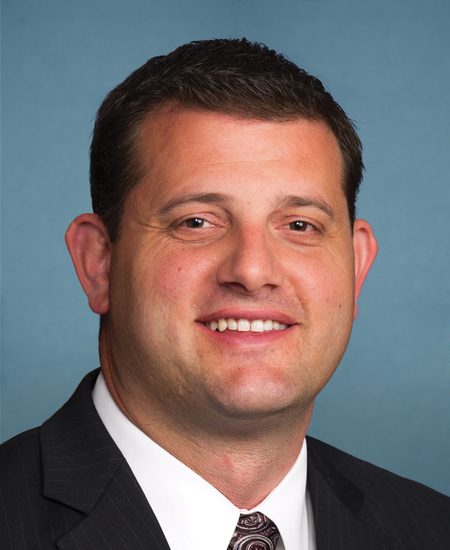
Rep. David G. Valadao
Sponsored bills
Frederick Douglass Trafficking Victims Prevention and Protection Reauthorization Act of 2025 This bill reauthorizes programs and activities that combat international trafficking; establishes a new program to help victims of trafficking; and updates various elements of the federal framework to combat international trafficking. Specifically, this bill reauthorizes through FY2029 programs and activities at various federal departments and agencies to combat international trafficking and reduce the prevalence of modern slavery. The bill also reauthorizes International Megan’s Law through FY2029. Among its provisions, the law requires sex offenders to provide certain information about their intended travel outside of the United States. Additionally, the bill authorizes the Department of Health and Human Services to carry out a new program to help victims of trafficking integrate or reintegrate into society. The bill requires the Department of State's Trafficking in Persons Report to include information about trafficking in persons for the purposes of organ removal. With respect to country rankings for anti-trafficking efforts, the bill narrows the types of countries that are listed on the Tier 2 Watch List and increases the length of time a country may remain on the Tier 2 Watch List after being downgraded to the lowest ranking and then reinstated to the watch list. (The Tier 2 Watch List refers to countries that are making efforts to meet international standards for combatting human trafficking but still have a significant number of severe trafficking cases.) Finally, the bill requires counter-trafficking strategies, activities, and efforts to be further incorporated into U.S. foreign assistance.

Maddy summaryThis bill (HR 4564) amends federal law to expand who can administer epinephrine in schools during emergencies. It replaces "school personnel" with "trained personnel" and allows non-employee volunteers (like parents or community members) to be treated as trained if they meet requirements and their state attorney general certifies the program. The bill also updates terminology from "auto-injectable epinephrine" to "epinephrine delivery systems" to include all administration methods. It directly affects schools, non-employee staff/volunteers, and state health authorities responsible for certification. The changes aim to make emergency allergy response more flexible while maintaining state oversight.
Maddy summaryHR 4500, the HELP Act, exempts certain commercial vehicles transporting livestock, insects, or aquatic animals from federal hours-of-service rules and electronic logging device (ELD) requirements. This directly affects livestock haulers who operate covered vehicles, including when driving empty to pick up or return from deliveries. The bill removes two specific regulatory burdens: the mandatory rest periods under 49 U.S.C. § 311 and ELD tracking under 49 U.S.C. § 31137. It applies only to vehicles defined as "covered livestock hauling vehicles" under the law, which includes all commercial livestock transport for commercial purposes. The exemption aims to provide operational flexibility for this specific segment of the transportation industry.
Maddy summaryHR 1919, the "Anti-CBDC Surveillance State Act," prohibits the Federal Reserve from developing, testing, or issuing any central bank digital currency (CBDC) or similar digital assets. It specifically bans the Fed from offering direct financial products to individuals, maintaining individual accounts, or issuing CBDCs directly or indirectly through intermediaries like banks. The bill also blocks the Fed from using any digital asset for monetary policy and clarifies that physical currency's privacy protections remain intact. This policy directly affects the Federal Reserve System's ability to create or manage digital monetary tools.
Maddy summary# Summary of "Dignity for Immigrants while Guarding our Nation to Ignite and Deliver the American Dream Act" This comprehensive immigration bill proposes multiple pathways to legal status and permanent residency for undocumented immigrants while creating new employment and workforce development programs. ## Key Provisions: 1. **Dignity Program (Subtitle III)**: - Creates a 7-year program for eligible undocumented immigrants requiring $7,000 in restitution payments to an H-1B fund - Provides deferred action on removal, work authorization, and travel privileges - Requires participants to maintain employment/education, pay taxes, and comply with all laws - Upon completion, participants receive "Dignity Status" valid for 7 years with renewal options 2. **Workforce Development (Division C)**: - Directs restitution payments to fund apprenticeships and work-based learning programs - Establishes industry partnerships to support small- and medium-sized businesses - Focuses on "in-demand industry sectors" with targeted training programs - Requires 12 months of post-employment support services for participants 3. **Family Reunification (Section 3111-3115)**: - Expands discretionary authority for family-based relief - Creates new "family purpose" nonimmigrant visa category (90-day limit) - Modernizes military naturalization for service members - Includes protections for children affected by visa backlogs 4. **Backlog Reduction (Section 3201-3203)**: - Creates premium processing for long-pending cases ($20,000 fee) - Increases per-country caps from 7% to 15% - Protects children from "aging out" of family-based visas 5. **Student and Worker Visas (Section 3301-3305)**: - Modernizes student visa categories with "dual intent" provisions - Recognizes doctoral STEM graduates as "extraordinary ability" - Streamlines visa processing through a new Immigration Agency Coordinator The bill aims to balance immigration reform with workforce development, creating a pathway to legal status while directing funds toward American workers through apprenticeships and training programs in high-demand fields.
Maddy summaryHR 1044 amends an existing law (Public Law 99-338) governing permits for the Kaweah Project. It increases the number of allowed permit renewals from three to seven and removes a reference to "Southern California Edison Company." This change directly affects the permit holders operating the Kaweah Project, extending their ability to renew permits. The bill makes a specific procedural adjustment to the renewal terms without altering the project's core operations.
Maddy summaryHR 4382 authorizes the U.S. Mint to produce commemorative coins for the 2028 Los Angeles Olympics/Paralympics and 2034 Salt Lake City Winter Olympics/Paralympics. It specifies gold, silver, and half-dollar coin designs with defined mintage limits (e.g., up to 100,000 $5 gold coins for each event), all bearing inscriptions like "2028" or "2034" and standard coin features. A surcharge ($5-$50 per coin) is added to sales, with all funds directed to the respective Olympic committees to support event hosting and legacy programs like youth sports. The bill ensures no net cost to the government by requiring surcharge revenues to cover all design, production, and marketing expenses before funds are disbursed.
Maddy summaryHRES 575 is a symbolic resolution designating July 10th as "Journeyman Lineworkers Recognition Day." It honors lineworkers who face significant risks daily - working at heights near live wires and responding to disasters like hurricanes and wildfires. The resolution specifically references Henry Miller, an early leader of the International Brotherhood of Electrical Workers, who died on July 10, 1896, while troubleshooting an outage. It encourages the public to recognize these workers' contributions but does not create new laws or allocate funding.
Maddy summaryHR 4354 establishes the Agricultural Emergency Relief Act of 2025, creating a new program to provide payments to farmers who suffer crop losses due to specific disasters like droughts, wildfires, floods, or extreme weather. Farmers must apply for payments by documenting "qualified losses" (such as prevented planting, crop quality damage, or wildfire smoke exposure) and agree to purchase Federal Crop Insurance or Noninsured Crop Disaster Assistance coverage for the next two crop years. Payments are calculated based on either past insurance data or farm revenue, with limits set at $125,000-$900,000 per farmer depending on their average farm income level, and capped at 70-90% of documented losses. The program requires the Secretary of Agriculture to administer both insurance-based and revenue-based payment calculations simultaneously during each crop year. This relief applies to eligible producers (excluding joint ventures or general partnerships) who experienced qualifying disasters during the crop year.