

Maddy summaryHRES 872 is a symbolic resolution supporting Creutzfeldt-Jakob Disease (CJD) Awareness Day, recognizing CJD as a rare, fatal brain disorder affecting approximately 1-2 people per million annually in the U.S. The resolution does not create new programs or policies but formally acknowledges the disease's impact and the importance of raising public awareness about CJD's rapid progression and challenges for patients and families. It specifically encourages recognition of CJD Awareness Day on November 12, 2025, as a way to highlight this condition. The resolution is non-binding and focuses solely on awareness, not medical research or funding.
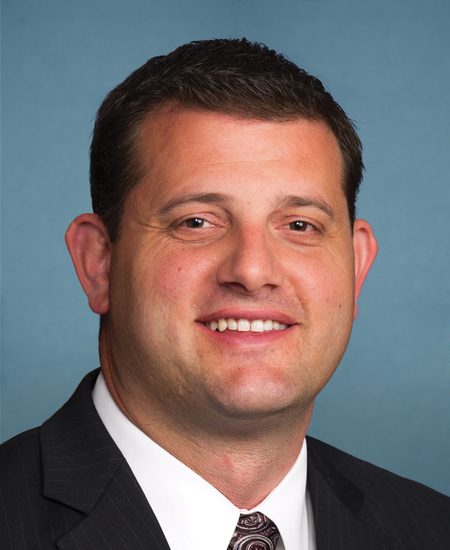
Rep. David G. Valadao
Sponsored bills
Maddy summaryThis bill creates a new process for farmers to request variances from standard floodproofing or elevation requirements for agricultural structures located in flood zones. Local officials can approve these variances if they determine floodproofing or elevation isn't feasible, the structure isn't in high-risk areas like floodways or near levees, and there have been limited past flood claims ($1,000 or less in 10 years). Crucially, it requires insurance premiums for these structures to match the rate for properly floodproofed buildings in the same zone. The bill directly affects farmers with agricultural properties in flood-prone areas, aiming to reduce insurance costs while maintaining safety standards.
Maddy summaryThis non-binding resolution (HRES 844) expresses the U.S. House of Representatives' support for designating October 2025 as "Crime Prevention Month." It encourages federal agencies to fund evidence-based crime prevention programs - like youth mentorship, mental health services, and neighborhood safety initiatives - and urges state/local governments to adopt strategies such as Crime Prevention Through Environmental Design. The resolution also commends community workers and calls on all citizens to participate in public safety activities during October. It has no legal effect but aims to raise awareness and foster collaboration across communities, government, and private sectors to reduce crime.
Maddy summaryThis resolution (HRES 841) is a symbolic statement expressing the U.S. House of Representatives' support for recognizing and commemorating the 1984 Sikh Genocide in India. It calls for official remembrance of the violence that killed over 30,000 Sikhs, destroyed communities, and involved state complicity, while urging accountability for perpetrators and rejecting denial of the event. The resolution does not create new laws or affect individuals directly but affirms the House's position on historical justice.
Maddy summaryThe FREE Act (HR 689) requires federal agencies to replace slow, discretionary permitting processes with a streamlined "permitting by rule" system for certain permits. Under this system, applicants would certify compliance with written standards (instead of lengthy agency reviews) and receive a permit automatically after 180 days if the agency doesn’t act. Agencies must first report on their current permitting processes and identify which permits can transition to this model, with deadlines for submissions and implementation. This directly affects federal agencies issuing permits (e.g., environmental or construction permits) and applicants seeking them, aiming to reduce delays and costs while allowing agencies to audit and enforce compliance after permits are granted.
Maddy summaryHR 5747, the *Preventing Illegal Laboratories and Protecting Public Health Act of 2025*, requires distributors of dangerous disease agents (like those in biosafety level 3 labs) to maintain electronic logbooks tracking every sale, lease, or transfer. These logbooks must include purchaser details, intended use, location, and security verification, with entries kept for three years and protected from public disclosure. The bill also mandates a federal review of high-containment laboratories to assess security, capacity, and risks, and establishes a dedicated team to coordinate with state/local agencies on biosafety issues. It directly affects biotech companies, research labs, and federal agencies managing pathogen distribution.
Maddy summaryThis bill modifies the USDA's 502 housing loan program to make it easier for rural homeowners to transfer properties with existing loans. It allows qualified buyers to assume a guaranteed loan when purchasing a property, releasing the original borrower from liability and transferring the loan's obligations to the new owner. The changes apply to loans guaranteed under the program after the bill's enactment, directly affecting rural homeowners and buyers in USDA loan programs. The bill also permits servicers to charge fees for transaction costs related to these loan assumptions.
Maddy summaryHRES 788 is a non-binding resolution expressing congressional support for designating October 8, 2025, as "National Hydrogen and Fuel Cell Day." It does not create new laws or policies but aims to raise public awareness about hydrogen and fuel cell technologies. The resolution highlights their role in clean energy, transportation (including vehicles and backup power), and U.S. innovation, citing their use in space programs and current applications. This symbolic gesture directly affects public awareness and industry recognition, not specific individuals or regulations.
Maddy summaryThis bill adds Medicare coverage for multi-cancer early detection screening tests (blood or biological tests analyzing cell-free DNA) starting January 1, 2028. It directly affects Medicare beneficiaries aged 68 and older (starting in 2028, with the age limit increasing by 1 year annually), requiring tests to be FDA-cleared and deemed reasonable/necessary by the Secretary for early cancer detection across multiple organ sites. Payment will initially match current stool DNA test rates before 2031, then shift to a lower rate or new payment system after 2031, with limits preventing more than one test per year. The bill explicitly states it does not alter coverage for existing cancer screenings like breast, colorectal, or prostate cancer tests.
Maddy summaryThis bill would require all states to recognize valid concealed carry permits issued by other states, allowing permit holders to carry concealed handguns (excluding machine guns) in any state that either issues such permits or doesn't prohibit concealed carry. It directly affects law-abiding gun owners with valid permits from their home state, ensuring they can carry in states with similar permit systems or no prohibitions. Key provisions include treating valid permit documents as proof of legal carry (reducing officer stops), shifting the burden of proof to prosecutors if challenged, and allowing civil lawsuits for violations with attorney's fee awards. The bill does not override state laws restricting firearms on private property or government land, nor does it affect federal gun restrictions like those in section 922(q).