

Maddy summaryHR 6315 (SECURE IT Act) requires federal election cybersecurity testing for voting systems and establishes a voluntary program for identifying vulnerabilities. It mandates accredited labs to conduct penetration testing on voting hardware/software within 180 days, and creates a 5-year pilot program where election system vendors can voluntarily share systems with vetted cybersecurity researchers. Researchers must report vulnerabilities to vendors and officials within 180 days, and vendors must provide fixes to election officials for critical issues, with patches reviewed by the Commission within 90 days. The bill grants legal protections for researchers under the Computer Fraud and Abuse Act and Digital Millennium Copyright Act, exempting vulnerability disclosures from public disclosure laws. This directly affects election system vendors, cybersecurity researchers, and state/local election officials managing election infrastructure.
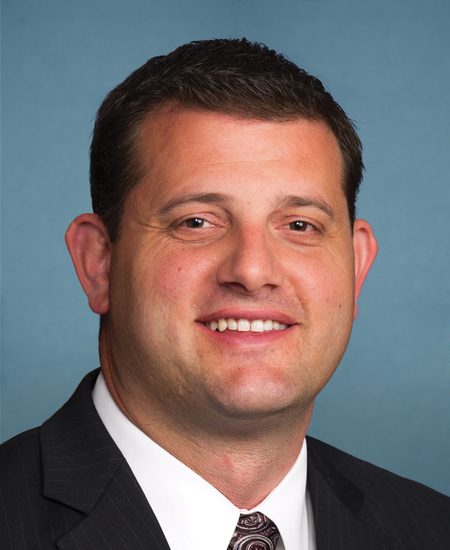
Rep. David G. Valadao
Sponsored bills
Maddy summaryThe CHARGE Act of 2025 establishes a $50 million annual grant program (2026-2030) to fund solar energy systems and energy storage technologies at Federally Qualified Health Centers (FQHCs). Eligible recipients - including FQHCs, state/local governments, or nonprofits representing FQHCs - can use grants to install renewable energy systems or receive technical assistance for their design and operation. The program, administered by the Department of Energy, directly supports community health centers in improving energy resilience and reducing operating costs. It specifically targets FQHCs serving underserved populations, as defined under the Social Security Act.
Maddy summaryThis bill allows states to contract with outside agencies or private contractors to handle Medicaid eligibility decisions and appeals, rather than relying solely on state staff. It requires that contractors cannot have financial ties to Medicaid managed care organizations or incentives to delay applications or deny coverage to eligible individuals. The law directly affects state Medicaid programs by expanding their administrative options while adding safeguards to prevent conflicts of interest. It does not change Medicaid eligibility rules or funding, only how states process applications and appeals.
Maddy summaryThis bill would expand Medicare Part B coverage to include medical nutrition therapy for beneficiaries with a wider range of chronic conditions beyond current limits (diabetes and kidney disease). It specifically adds conditions like obesity, hypertension, eating disorders, cancer, gastrointestinal diseases, and HIV to the list of covered illnesses, allowing coverage for prevention, management, or treatment. The bill also allows more healthcare providers - including dietitians, nurse practitioners, and clinical psychologists - to deliver these services. This change would directly affect millions of Medicare beneficiaries managing these conditions who previously lacked coverage for medically necessary nutrition therapy.
Maddy summaryHR 6126 authorizes the minting of commemorative coins to mark the 100th anniversary of the U.S. Foreign Service (established in 1924). It specifies three coin types: up to 50,000 $5 gold coins (90% gold), 400,000 $1 silver coins (90% silver), and 750,000 half-dollar coins, all to be sold during 2029. A surcharge of $35 per gold coin, $10 per silver coin, and $5 per half-dollar is added to the sale price, with all surcharge funds directed to the Association for Diplomatic Studies and Training to support its diplomatic history preservation work. The coins must include standard inscriptions (e.g., "Liberty," "United States of America") and will be legal tender, but the bill does not create new policy or affect government operations.
This bill designates the facility of the United States Postal Service located at 28201 Franklin Parkway in Santa Clarita, California, as the "Deputy Ryan Clinkunbroomer Post Office Building".
Maddy summaryHR 6163, the *Determination of NEPA Adequacy Streamlining Act*, streamlines federal environmental reviews under the National Environmental Policy Act (NEPA) by allowing agencies to reuse prior environmental assessments (EAs) or environmental impact statements (EISs). It permits federal agencies to rely on previously completed EAs or EISs for new projects that are "substantially the same" as past actions, provided the environmental effects are comparable. If a project differs significantly, agencies may modify existing documents instead of creating new ones, with the updated version made publicly available. This primarily affects federal agencies conducting environmental reviews for major projects, reducing redundant assessments while maintaining environmental review requirements. The bill does not alter environmental standards but changes how agencies fulfill NEPA obligations.
Maddy summaryThis bill amends federal water storage grant programs under the Infrastructure Investment and Jobs Act to expand eligibility for projects. It sets specific capacity limits: surface water projects must store 200-30,000 acre-feet, while groundwater projects must average 200-150,000 acre-feet annually. Eligible projects must increase storage, convey water to/from storage, or stabilize groundwater levels. The bill also increases the number of annual grants from 5 to 10 and explicitly states it does not override state water laws, federal water rights, or water rights protections.
Maddy summaryThe NEST Act (HR 6096) requires the federal government to provide newborn supply kits to new mothers, focusing on low-income families and communities with high maternal health risks. These kits include essential items like diapers, postpartum pads, breastfeeding supplies, blood pressure monitors, and health information resources. Funds for the kits come from a $5 million annual set-aside in Social Security Act funding, distributed through grants to community health centers, tribal organizations, and hospitals. Priority is given to rural areas, maternity care deserts, and mothers earning below 185% of the poverty line. The program mandates annual reporting on distribution demographics and health outcomes to Congress.
Maddy summaryThe Elijah E. Cummings Family Asthma Act authorizes $70 million over five years (2025-2029) to expand the CDC’s National Asthma Control Program. It requires the CDC to collaborate with state health departments to develop state asthma control plans, collect and publish annual data on asthma hospitalizations, emergency visits, and mortality rates disaggregated by race, ethnicity, age, and sex, and identify disparities affecting Black Americans, Native individuals, Puerto Ricans, and low-income populations. The law mandates biennial congressional reports with recommendations to reduce asthma-related hospitalizations, mortality, and economic costs, including strategies to improve care access and address environmental triggers. This bill focuses on enhancing public health surveillance and targeted interventions to reduce asthma’s burden, particularly for disproportionately impacted communities.