Maddy summaryThis bill changes how U.S. foreign aid is provided to international health organizations. It prevents U.S. agencies from denying aid to foreign non-governmental organizations (NGOs) solely because they offer health services (like counseling or referrals) using their own funds, as long as those services follow local laws. It also stops applying stricter rules about how foreign NGOs can use their own funds for advocacy compared to U.S. NGOs receiving similar aid. The bill directly affects foreign health-focused NGOs that rely on U.S. foreign assistance funding.
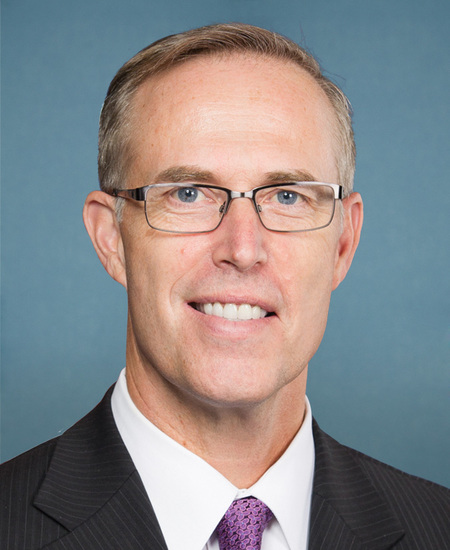
Rep. Jared Huffman
Sponsored bills
Maddy summaryHR 1814, the FIRE STATION Act, creates a federal grant program to help fire departments and emergency medical services (EMS) organizations upgrade or build facilities. It directly affects career, volunteer, and combination fire departments, as well as fire training facilities and nonaffiliated EMS organizations (non-hospital-based EMS groups). The program allocates $750 million for fiscal year 2024, with grants covering facility construction/renovation, safety upgrades (like HVAC or mold remediation), and requiring compliance with current safety codes. Grants are capped at $7.5 million per recipient, must follow Davis-Bacon wage standards, and require annual reporting on fund usage and program effectiveness.
Maddy summaryThe SAFEGUARD Act of 2023 restricts U.S. arms sales to countries committing genocide or war crimes. It prohibits defense exports to countries with credible evidence of such violations, with exceptions only if the government has punished perpetrators, prevented recurrence, and provided compensation. The bill requires recipient countries to agree not to use U.S. weapons to violate human rights, mandates end-use monitoring to ensure proper weapon use, and enhances congressional oversight for arms sales to countries with serious human rights concerns. These changes apply to all defense articles and services sold, exported, or transferred by the United States.
Maddy summaryThe Office of Gun Violence Prevention Act of 2023 establishes a new office within the Department of Justice to coordinate federal efforts on gun violence prevention. The office, led by a Director appointed by the Attorney General, will evaluate existing programs, identify data gaps, and make evidence-based policy recommendations to Congress and the President. It will work with an advisory council including DOJ officials and external members like gun violence survivors, community service providers, and public health experts. The office must produce an annual report to Congress on gun violence trends and policy recommendations, and the bill authorizes funding to support these activities.
Maddy summaryHR 1723, the Abortion is Health Care Everywhere Act of 2023, amends the Foreign Assistance Act to remove restrictions on using U.S. foreign aid funds for abortion services. It explicitly allows U.S. foreign assistance programs to fund comprehensive reproductive health care, including abortion services, training, and equipment. This change directly affects U.S. international health programs and recipient countries, enabling them to integrate safe abortion care into broader reproductive health services. The bill aims to align U.S. policy with global health guidelines by making abortion services a standard part of reproductive health care funded through foreign assistance.
Maddy summaryThis bill modifies federal highway funding rules to prioritize safety for cyclists and pedestrians. It allows states and local governments to receive 100% federal funding for projects that connect existing bike/pedestrian infrastructure or reduce safety risks for these users, instead of the usual lower federal share. The bill also requires projects to align with state safety plans focusing on vulnerable road users and includes specific "Proven Safety Countermeasures" for cyclists/pedestrians. These changes directly affect states administering federal highway funds and local governments seeking to improve non-motorized transportation infrastructure.
Offshore Pipeline Safety Act This bill establishes requirements that address the safety and environmental risks associated with certain pipelines on the Outer Continental Shelf. Specifically, the bill requires the Bureau of Safety and Environmental Enforcement (BSEE) to finalize regulations proposed in 2007 related to offshore pipelines. The regulations must require owners of oil and gas pipelines to (1) provide for biannual, third-party inspections of pipelines; and (2) equip pipelines with leak detection systems or devices. Further, the BSEE must issue regulations to charge an annual fee on such owners for the purpose of providing the BSEE with funds to decommission or remove offshore pipelines in the event the owner files for bankruptcy. In addition, the BSEE must continually monitor the condition and location of all oil and gas pipelines that have been decommissioned (e.g., inactive pipelines that are left buried in the seafloor) and remain in place. If the BSEE identifies an exposed segment of any decommissioned pipeline, then it must either remove the pipeline from the ocean or ensure it is properly decommissioned and does not pose a threat. If a segment of any active pipeline is exposed or shifts, then the BSEE must remove the pipeline, decommission it, or resecure the segment to the sea floor. When determining whether to permit an owner to decommission such pipelines, the BSEE must consider the navigational hazards, any interferences with other uses of the Outer Continental Shelf, and the environmental impacts of the pipelines.

Marine Mammal Climate Change Protection Act This bill establishes requirements to protect marine mammals adversely affected by climate change, including by establishing a program within the National Oceanic and Atmospheric Administration (NOAA) to monitor the adverse impacts of climate change on marine mammals. In addition, it also requires NOAA's National Marine Fisheries Service (NMFS) and the U.S. Fish and Wildlife Service (USFWS) to issue regulations that list marine mammal species in waters under U.S. jurisdiction for which climate change is more likely than not to result in a decline in population abundance, an impeded population recovery, or a reduced carrying capacity (i.e., the maximum population of a marine mammal species that an area will support without undergoing deterioration). The NMFS and the USFWS must update the list at least once every five years and issue regulations that include climate impact management plans for species on such list. The bill also directs the NMFS and the USFWS to review agreements with foreign governments concerning the management of marine mammals that are or may be affected by climate change. The Department of State must initiate amendments to such agreements or negotiate the development of such agreements in a manner consistent with the goals of the bill.
Maddy summaryHR 1396 expands Berryessa Snow Mountain National Monument by adding approximately 3,925 acres of federal land in Lake County, California (known as the Walker Ridge/Molok Luyuk Addition), directly affecting land management in that area. The bill modifies the monument's boundary to include this parcel, formally designates it as "Condor Ridge (Molok Luyuk)" (using the Patwin language), and requires the Secretary of the Interior to develop a joint management plan with the Secretary of Agriculture within one year of enactment. This plan must include consultation with affected federally recognized tribes and establish ongoing engagement with tribes for monument management. The bill also mandates public availability of updated maps and legal descriptions for the newly designated area.
Maddy summaryHR 1320, the COAST Anti-Drilling Act, bans new oil and gas leasing in four specific coastal areas: the Mid-Atlantic, South Atlantic, North Atlantic, and Straits of Florida planning areas of the outer Continental Shelf. The bill amends federal law to prohibit the Secretary of the Interior from issuing any leases or authorizations for exploration, development, or production of oil, natural gas, or minerals in these regions. This directly affects coastal states and marine ecosystems in those areas by preventing new offshore drilling projects. The law creates a permanent restriction on new leasing in these designated zones.