

Maddy summaryThis bill withdraws approximately 4,288 acres of federal land in the Placitas, New Mexico area (Tracts A-D) from new mining claims and mineral development under federal law. It directly affects the Bureau of Land Management (BLM), which administers this land, by preventing new mineral leasing or sales for extraction. The bill allows surface management under existing laws (like the Federal Land Policy and Management Act) but requires all surface transfers to reserve mineral rights to the federal government. This creates a permanent restriction on mineral development while permitting surface use.
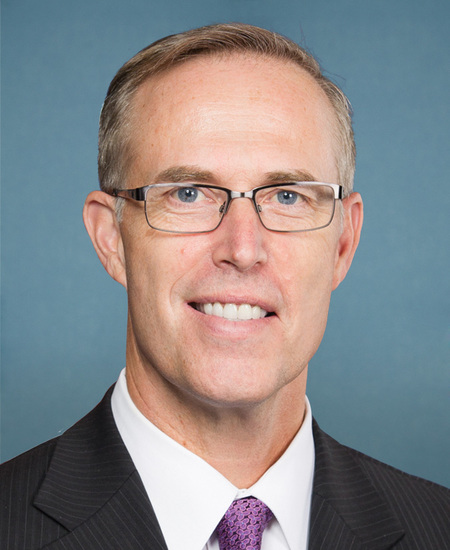
Rep. Jared Huffman
Sponsored bills
Maddy summaryThis bill establishes new health and identification requirements for importing live dogs into the U.S. Importers must provide veterinary certification proving dogs are healthy, vaccinated, treated for parasites, and permanently identified (e.g., microchipped), with documentation from accredited veterinarians. Dogs imported for transfer (sale, adoption, etc.) must be at least 6 months old and accompanied by a Secretary-issued permit. Limited exceptions exist for research, veterinary treatment (with quarantine), and Hawaii-specific puppy imports under state regulations, with regulations to be finalized within 18 months. The bill repeals a prior section of the Animal Welfare Act and strengthens enforcement through penalties for noncompliance.
California Clean Coast Act of 2023 This bill prohibits oil and gas exploration and leasing in areas of the outer Continental Shelf located off the coast of California.
Maddy summaryThe Outdoors for All Act establishes a federal grant program to fund outdoor recreation projects in underserved communities. It authorizes the Secretary of the Interior to award grants to eligible entities (like states, cities, tribal organizations, or nonprofits) for acquiring land, developing parks, or renovating outdoor facilities in qualifying urban areas (population 25,000+ or tribal lands) or low-income communities (where 30%+ of residents have incomes at or below 80% of local median income or 200% of the federal poverty line). Grants require a 100% cash or in-kind match (with limited waivers), prohibit funding for indoor facilities or maintenance, and prioritize projects enhancing park access, engaging youth, creating jobs, or improving environmental benefits like reducing urban heat islands. The program mandates annual reporting and focuses on concrete community outcomes rather than speculative results.
Maddy summaryThis bill requires the Environmental Protection Agency (EPA) to establish new reporting rules for large crypto-mining operations (those using 5+ megawatts of power) to track their greenhouse gas emissions and energy use. It mandates a comprehensive EPA study on crypto-mining’s environmental impacts, including emissions from onsite energy and offsite electricity, effects on climate goals, community health, and electronic waste. The study must analyze energy consumption patterns, location in environmental justice communities, and potential solutions for reducing fossil fuel dependence. The EPA will report findings to Congress within 18 months, with $5 million allocated for implementation.
Maddy summaryHR 1591 amends the Elementary and Secondary Education Act to increase annual federal funding for impact aid programs that support school districts near military bases, national parks, and other federal properties. It authorizes specific, rising funding levels for four key areas: payments for federal land acquisitions ($90 million in 2024, growing to $150 million by 2029), basic payments to heavily impacted school districts ($1.6 billion in 2024, growing to $2.45 billion by 2029), payments for students with disabilities ($60 million in 2024, growing to $120 million by 2029), and school construction projects ($22.9 million in 2024, growing to $45.4 million by 2029). These appropriations represent incremental steps toward full federal funding for these aid programs, as specified in the bill's text. The bill directly affects school districts located near federal land, providing predictable annual funding increases for their operational and infrastructure needs.
Maddy summaryThis bill authorizes a Congressional Gold Medal to honor the "Hello Girls" - female telephone operators who served in the Army Signal Corps during World War I. They provided critical battlefield communications in France (connecting 26 million calls), wore military uniforms, and faced combat risks, but were denied veteran benefits for 60 years due to being classified as civilian contractors. The medal recognizes their pioneering service, devotion, and the decades-long struggle to gain military recognition. The award follows similar recognition for other WWII women veterans and aims to correct the historical injustice they faced.
Maddy summaryThe SVB Act (HR 1602) repeals Title IV of the 2018 Economic Growth, Regulatory Relief, and Consumer Protection Act, which had relaxed banking regulations. It directly affects banks previously subject to those relaxed rules, particularly smaller institutions that benefited from the 2018 changes. The bill’s key mechanism is restoring the pre-2018 regulatory framework, reversing the specific provisions that eased oversight. This returns banking oversight to the structure that existed before the 2018 law took effect, without creating new rules.
Amplifying Processing of Livestock in the United States Act or the A-PLUS Act This bill directs the Department of Agriculture to revise its regulations to allow livestock market agencies (e.g., auction market owners) to hold an ownership interest in, finance, or participate in the management or operation of a meat packer with a cumulative slaughter capacity of (1) less than 2,000 animals per day or 700,000 animals per year for cattle and sheep, and (2) less than 10,000 animals per day or 3 million animals per year for hogs.
Maddy summaryThis bill removes federal restrictions that previously limited methadone prescribing for opioid use disorder, allowing certified addiction specialists and program employees to prescribe methadone through pharmacies for up to 30 days per electronic prescription. It directly affects patients with opioid use disorder who can now access treatment more flexibly outside traditional clinic settings, and healthcare providers who gain new prescribing authority. Key provisions include requiring electronic prescriptions, mandating patient informed consent about confidentiality differences, and permitting telehealth for counseling and ancillary services. The bill also requires annual reports to Congress tracking registered providers and patients served.