

FEMA Improvement, Reform, and Efficiency Act of 2021 or the FIRE Act This bill addresses the federal government's approach to wildfires. Specifically, the bill authorizes a public mitigation assistance applicant to relocate an eligible structure upon demonstrating that the structure is at risk from future damage and the relocation reduces the risk to the structure, is cost effective, and does not increase risk to adjacent structures. The Federal Emergency Management Agency (FEMA), in coordination with the National Weather Service, must conduct a study on Red Flag Warnings and similar weather and notification methods to implement plans and actions prior to a wildfire that can limit the impact, duration, or severity of the fire. The President must ensure that those providing counseling or case management services to victims of a major disaster are trained to address cultural competency. FEMA must (1) conduct a study and develop a plan to address providing housing assistance to survivors of major disasters or emergencies when presented with challenges such as the lack of proof of ownership, and (2) seek to contract with the National Academy of Sciences to study solutions to address the availability and affordability of insurance for wildfire perils and other related matters. The bill allows Indian tribal governments to apply for grants for equipping, upgrading, and constructing state and local emergency operations centers.
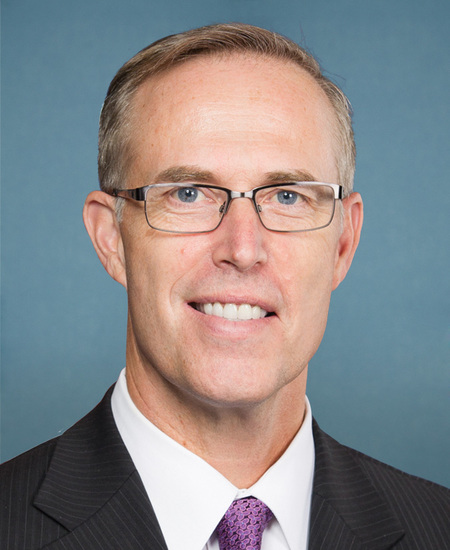
Rep. Jared Huffman
Sponsored bills
Sustainable International Financial Institutions Act of 2021 This bill directs specified international financial institutions to use the influence of the United States to advance the cause of reducing greenhouse gas emissions and transition the global economy to a clean energy economy. It also prohibits the United States from providing direct or indirect assistance to any country or entity to support any fossil fuel activity.
Cold War Service Medal Act This bill authorizes the military department concerned to issue Cold War Service Medals to eligible persons who served during the Cold War (September 2, 1945, to December 26, 1991) and meet other requirements. Specifically, eligible persons are those who (1) served on active duty for at least 24 consecutive months during the Cold War, (2) were deployed as members of the armed forces outside of the United States for at least 30 days during the Cold War, (3) were members of a reserve component and called or ordered to active duty related to the Cold War, or (4) performed other service in the armed forces during the Cold War. The military department concerned may issue the medal to the next-of-kin if the eligible recipient is deceased.
Social Security 2100: A Sacred Trust This bill makes changes to Social Security benefits, taxes, and other aspects of the program, including by raising the primary insurance amount, increasing the maximum taxable earnings that are subject to Social Security payroll taxes, and requiring Social Security account statements to be mailed unless the individual recipient opts for electronic delivery.
Wildland Firefighter Fair Pay Act This bill exempts federal wildland firefighters in the Department of the Interior, the Department of Agriculture (USDA), and the Department of Commerce from certain premium pay limitations for work relating to wildfire emergencies. The bill applies retroactively to January 1, 2020. Interior and USDA must each separately submit a report to specified congressional committees on the resources, policies, personnel or structural changes, and other investments necessary to support an expanded full-time, year-round firefighting workforce.
Public Service Freedom to Negotiate Act of 20 21 This bill provides minimum collective bargaining rights and procedures for public employees and prohibits strikes by certain public safety workers. The Federal Labor Relations Authority (FLRA) shall determine for each state whether the laws of such state substantially provide for each of the minimum standard collective bargaining rights and procedures specified by this bill, including the right of public employees and supervisory employees to self-organize, form or join a labor organization, or collectively bargain. The FLRA must issue rules and take actions to establish and administer bargaining rights and procedures for those states that do not substantially provide for them. No employers, emergency services employees, or law enforcement officers may engage in a lockout, strike, or any other organized job action that is likely to result in a measurable disruption of the delivery of emergency or public safety services. Furthermore, no labor organization may be the cause of a violation of such prohibition.
State, Local, Tribal, and Territorial Fiscal Recovery, Infrastructure, and Disaster Relief Flexibility Act This bill allows states, tribes, territories, and localities to use certain COVID-19 relief funds for new categories of spending, including for natural disasters and infrastructure projects. It also makes changes to expenditure deadlines and other aspects of this funding. Specifically, recipients may use funds for emergency relief from natural disasters and associated negative economic impacts of natural disasters. In addition, recipients may use a portion of their COVID-19 relief funds for designated infrastructure projects, such as nationally significant freight and highway projects. Furthermore, the bill allows recipients to expend COVID-19 relief funds on these types of infrastructure projects until September 30, 2026. Under current law, recipients must expend the funds by December 31, 2024. Other changes in the bill include (1) modifying eligibility and allocation requirements for funding set aside for counties and Indian tribes that are near public lands, (2) allowing Indian tribes an additional year to expend their COVID-19 relief funds, and (3) establishing a process for government entities to decline COVID-19 relief funds and requiring any declined funds to be used to reduce the federal deficit.
Jerry Lewis VA Clinic Act This bill designates the community-based outpatient clinic of the Department of Veterans Affairs in Redlands, California, as the Jerry Lewis Department of Veterans Affairs Clinic or the Jerry Lewis VA Clinic.
Bring Animals Relief and Kibble Act of 2021 or as the BARK Act of 2021 This bill extends federal protection from civil and criminal liability that applies to donations of food or grocery products for needy individuals to the donation of pet food or supplies.
Gig Is Up Act This bill requires employers to withhold employer and employee portions of Social Security and Medicare taxes when they contract with at least 10,000 independent contractors and gross at least $100 million in a calendar year.