

Uyghur Stop Oppressive Sterilizations Act or the Uyghur SOS Act This bill expands existing visa-blocking sanctions to cover certain high-ranking foreign government officials who are responsible for coercive population control policies, such as forced abortions, with a focus on those responsible for such policies against ethnic minority groups in China. Specifically, the Department of State may not issue a visa to a foreign national who is a head of state, head of government, or cabinet-level minister and responsible for establishing or enforcing such policies if the policies are (1) imposed with the intent to destroy a national, ethnic, racial, or religious group; or (2) targeting ethnic minority groups (e.g., Uyghurs, Kazakhs, or Tibetans) or individuals peacefully expressing internationally-recognized human rights in China. (Currently, these sanctions do not apply to any foreign government officials at these higher ranks.) The State Department must make a public announcement each time sanctions are imposed under this bill. The bill also requires the State Department to provide all appropriate assistance to women who belong to an ethnic minority group in China and who have experienced sexual violence, torture, or coercive population control policies.
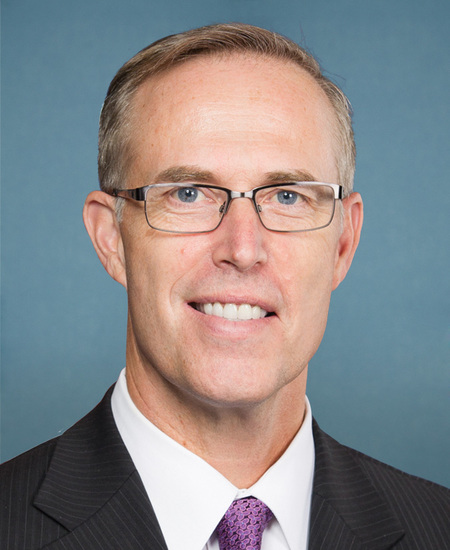
Rep. Jared Huffman
Sponsored bills
Untraceable Firearms Act of 2021 This bill establishes a federal statutory framework to regulate the manufacture, sale, offer to sell, transfer, purchase, and receipt of ghost guns (i.e., guns without serial numbers). Additionally, the bill revises the federal statutory framework regulating the manufacture, possession, sale, import, shipment, delivery, receipt, and transfer of undetectable firearms. Among the revisions, the bill defines undetectable firearm as a firearm without a major component wholly made of detectable material.
Vietnam Human Rights Act This bill requires actions related to human rights in Vietnam and addresses related issues. The Department of State must assist eligible individuals and entities working to secure the release of political and religious prisoners in Vietnam. The Office of Internet Freedom within the U.S. Agency for Global Media and the Bureau of Democracy, Human Rights, and Labor within the State Department shall prioritize (1) the immediate distribution of censorship circumvention tools for computers and smartphones in Vietnam; and (2) projects to ensure the safety and privacy of bloggers, journalists, and human rights defenders in Vietnam. Foreign assistance may not be used to assist any unit of the Vietnamese government engaged in cyberespionage activities. The State Department may establish programs to (1) monitor and halt sex trafficking of women from Vietnam and other Asian countries, and (2) address Vietnam's growing sex-ratio disparity. The bill also requires various reports to Congress, including reports on (1) persons subject to U.S. sanctions for human rights violations in Vietnam, (2) a strategy to promote internet freedom in Vietnam, and (3) cyberespionage activities sanctioned by the Vietnamese government targeting Vietnamese dissidents and human rights advocates living outside of Vietnam.
Southwestern Oregon Watershed and Salmon Protection Act of 2021 This bill withdraws specified federal land in Curry and Josephine Counties in Oregon from (1) entry, appropriation, or disposal under the public land laws; (2) location, entry, and patent under the mining laws; and (3) operation under the mineral leasing and geothermal leasing laws.
This resolution expresses the sense of the House of Representatives that access to reliable and clean drinking water is critically important to the health and welfare of American Indians and Alaska Natives. Further, the resolution calls upon the federal government to provide water access to tribal members and communities.
Open Access Evapotranspiration Data Act This bill directs the U.S. Geological Survey (USGS) to establish an Open Access Evapotranspiration (OpenET) Data Program under which the USGS shall provide for delivering satellite-based evapotranspiration data to advance the quantification of evaporation and consumptive water use. The bill defines Evapotranspiration as the process by which water is transferred from the land to the atmosphere by evaporation from soil and other surfaces and transpiration from plants. As part of the program, the USGS shall provide data users with field-scale estimates of evapotranspiration data across large landscapes over certain periods of time, enter into cooperative agreements with program partners (e.g., institutions of higher education, states, private sector entities, or nongovernmental organizations) to provide for the efficient and cost-effective administration of the program, and provide nonreimbursable matching funding for programmatic and operational activities.
This resolution expresses the sense of the House of Representatives that it is the duty of the Department of Defense (DOD) to reduce the overall environmental impact of military activities and missions and to monitor and report greenhouse gas emissions from all of its operations. The resolution also suggests that DOD take other environmentally conscious actions, including committing to annual greenhouse gas emission reporting mechanisms and repurposing and managing its properties to promote carbon sequestration and biodiversity.
Tim Hart Wildland Firefighter Classification and Pay Parity Act or Tim's Act This bill addresses the pay and benefits of federal wildland firefighters and related issues. Federal wildland firefighter is defined as any temporary, seasonal, or permanent position at the Department of Agriculture (USDA) or the Department of the Interior that maintains certain group, emergency incident management, or fire qualifications and primarily engages in or supports wildland fire management activities. Specifically, (1) the Office of Personnel Management (OPM) must establish one or more classification series for federal wildland firefighter positions, and (2) USDA and the Department of the Interior shall determine each position within USDA and Interior that qualifies as a federal wildland firefighter position. The bill, among other requirements (1) establishes a pay scale for such positions, with annual adjustments; and (2) provides for hazardous duty pay. The OPM must establish guidelines for work schedules. The bill addresses issues regarding wages, unpaid leave to care for a family member, recruitment and retention bonuses, and housing allowances. USDA and Interior shall (1) establish, maintain, coordinate, and operate a voluntary tuition assistance program; (2) establish and maintain a publicly accessible, searchable Federal Wildland Firefighter Cancer and Cardiovascular Disease Database; and (3) establish and carry out a program for mental health awareness and support. Additionally, the bill provides for continuation of firefighters pension coverage in case of disability and pay parity for federal structural firefighters.
This resolution expresses that the House of Representatives applauds the Biden administration for reaffirming the U.S. commitment to the Paris Agreement on climate change and to our collective responsibility to globally combat climate change; encourages the Biden administration to implement measures to ensure global climate change remains a top priority for this and future administrations and to cement the United States as a global leader in the fight to mitigate its most severe consequences; voices strong commitment as legislators toward achieving the climate goals of the Paris Agreement, fulfilling the forthcoming pledges from the COP26 in Glasgow, Scotland, and advancing other international efforts to keep global warming to no more than 1.5 degrees Celsius and realize global net-zero carbon emissions by 2050 using a whole-of-government approach; and recognizes the critical responsibility of the United States and other developed nations to ensure all societies have the capabilities to transition to a clean energy economy, the resources to protect against climate-induced disasters, and the necessary assistance to endure climate-related challenges to food security, regional migration, and public health.
Disaster Equity and Fairness Act This bill makes changes in the provision of federal disaster assistance to underserved communities and other specified recipients. Underserved community means populations sharing a particular characteristic and geographic communities that have been systematically denied a full opportunity to participate in aspects of economic, social, and civic life. Specifically, the bill increases the federal cost share to a local government or Indian tribal government in connection with a second or subsequent major disaster during any three-year period. The Federal Emergency Management Agency (FEMA) may provide assistance to a state, local government, or Indian tribal government to reimburse the cost of coordinating food delivery, production, and distribution in the event of a major disaster. FEMA must provide direct technical assistance to eligible entities for applications and prioritize specified categories of communities, including underserved communities, those that have demonstrated a compelling need, and those that are exposed to increased hazards or vulnerabilities. The bill increases the federal cost share for a recipient (1) that will use the assistance in, or for the benefit of persons who are members of, an undeserved community; or (2) who is in, or who is a member of, an underserved community.