

Maddy summaryThis bill requires Congress to approve major federal regulations before they take effect. It would mandate that agencies submit detailed reports including cost-benefit analyses, economic impact assessments, and other information to Congress before implementing significant regulations. Major rules - defined as those with at least $100 million annual economic impact or significant effects on costs, competition, or employment - would need a joint resolution of approval from Congress within 70 session days. Nonmajor rules would follow a less stringent disapproval process. The bill aims to increase legislative oversight of the regulatory process, requiring Congress to formally review and approve rules that significantly impact the economy or public regulations.
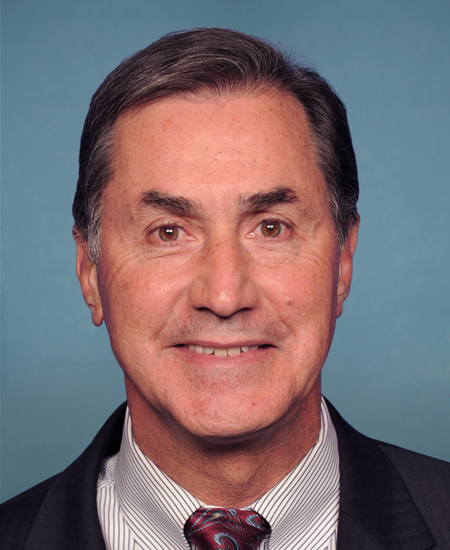
Rep. Gary J. Palmer
Sponsored bills
Maddy summaryThis bill designates the U.S. Postal Service facility at 379 North Oates Street in Dothan, Alabama, as the "LaBruce 'Bruce' Tidwell Post Office Building." It updates all official federal references to the building to reflect this new name. The bill has no funding, regulatory, or policy impacts - it is purely a ceremonial naming action. The change applies only to this specific post office location and its official documentation.
Maddy summaryHR 4864 would amend U.S. immigration law to redefine automatic birthright citizenship under the 14th Amendment. It specifies that children born in the U.S. automatically gain citizenship only if born to a parent who is a U.S. citizen, a refugee, a lawful permanent resident, or an active-duty military member. This would deny automatic citizenship to children born to parents who are undocumented immigrants, temporary visitors, or otherwise not meeting these specific categories. The change would apply only to births occurring on or after the bill's enactment date.
Maddy summaryHR 4428, the Guidance Clarity Act, requires federal agencies to include a specific statement on all guidance documents they issue. This statement must clearly state that the document has no legal force, does not bind the public or the agency, and is only for clarifying existing laws or policies. Agencies must display this statement prominently on the first page of such guidance, effective 30 days after the Office of Management and Budget issues implementing instructions. The bill directly affects federal agencies and the public receiving these documents, ensuring transparency about the non-binding nature of agency guidance.
Maddy summaryThe FOCA Act of 2023 requires federal agencies to stop mandating or banning contractor agreements with labor organizations (like union contracts) in construction project bids and contracts. It directly affects federal contractors, subcontractors, and agencies managing construction projects funded by the government. The bill prohibits favoring or penalizing contractors based on their labor affiliation status, aiming to promote fair competition and reduce costs. It also mandates updates to federal contracting rules within 60 days of enactment to implement these changes.
Maddy summaryHR 8411, the Defending American Property Abroad Act, blocks U.S. government funding for activities involving foreign ports or terminals where a U.S. entity owns the land needed for access, and a foreign government has taken actions like nationalizing that land or nullifying a related contract. It requires the Homeland Security Secretary to designate such "prohibited property" within 60 days, then prohibits funding for vessels using these locations to import goods, dock, or receive maintenance. The bill mandates annual reports to Congress tracking designated properties, affected vessels, and the foreign actions triggering designations, along with assessments of economic and national security impacts. This directly affects U.S. businesses with foreign port access and U.S. agencies managing maritime activities.
Maddy summaryThis bill modifies Social Security Number (SSN) requirements for claiming the Child Tax Credit and Earned Income Tax Credit. It specifies that qualifying SSNs must be issued to U.S. citizens (or under specific Social Security Act provisions) and issued before the tax return due date. The changes apply to tax years beginning after December 31, 2024, and update related tax code references to use "social security number" instead of "taxpayer identification number." These are technical adjustments to eligibility criteria, not new benefits or funding.
Maddy summaryHR 7207, the Preventing Racism in Medicare Act of 2024, prohibits the Medicare program from counting the development of anti-racism plans as qualifying "clinical practice improvement activities" under Medicare rules. The bill amends existing law to explicitly exclude such activities - defined by a 2021 Medicare rule - from meeting requirements for quality improvement programs. This directly affects Medicare providers and suppliers who previously might have used anti-racism planning to fulfill these quality improvement obligations. The change is a technical adjustment to Medicare payment policy, not a new program or benefit.
Maddy summaryThe Retirement Freedom Act allows individuals already eligible for Medicare Part A hospital insurance to choose to opt out of that coverage. If they opt out, they can later re-enroll without penalty, won't lose Social Security retirement benefits, and won't have to repay Medicare for services received before opting out. This directly affects current Medicare Part A beneficiaries who wish to manage their healthcare coverage differently. The bill establishes a formal process for opting in and out without financial penalties or loss of other benefits.
Maddy summaryThe Maximum Pressure Act (HR 6114) is a legislative proposal that would maintain and expand U.S. sanctions against Iran. The bill would codify existing sanctions, require Iran to meet 12 specific conditions before sanctions could be lifted (including ending support for terrorism, releasing hostages, and ending nuclear enrichment), and expand sanctions on Iran's Revolutionary Guard Corps and missile programs. It also establishes new reporting requirements for the U.S. government to monitor Iran's activities and the impact of sanctions. The legislation would require congressional review before any sanctions could be lifted or modified, preventing the executive branch from unilaterally easing restrictions.