

No Amnesty Act This bill prohibits federal agencies from expending funds or resources to implement, administer, or enforce certain executive actions related to immigration, including actions that (1) prioritize the removal of certain aliens, such as those suspected of engaging in terrorism; (2) revoke an earlier executive order that required heightened vetting of aliens seeking admission as refugees; and (3) direct the Assistant to the President for National Security Affairs to develop a strategy to address the root causes of migration from El Salvador, Guatemala, and Honduras. Such executive actions shall have no force or effect.
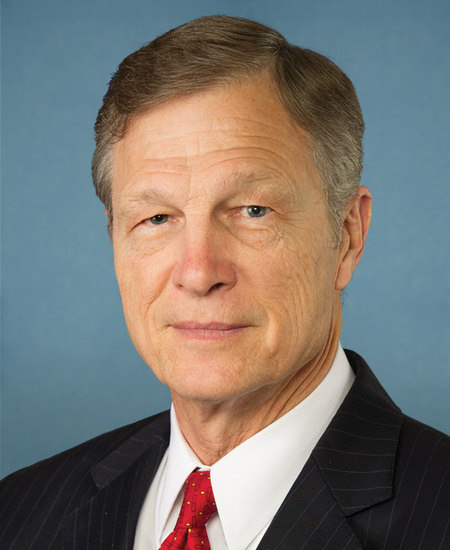
Rep. Brian Babin
Sponsored bills
Secure the Southern Border Act This bill enacts into law several immigration-related executive orders, including orders (1) requiring reports on various issues, such as efforts by the Department of Homeland Security (DHS) to end policies relating to the release of certain detained aliens; (2) requiring DHS to take actions to construct a physical barrier along the U.S.-Mexico border; and (3) directing DHS to prioritize the removal of certain aliens, including those convicted or charged with any criminal offense.
End Taxpayer Funding of Gender Experimentation Act of 2021 This bill modifies provisions relating to federal funding for, and health insurance coverage of, gender reassignment medical interventions, which include surgical remedies and hormone therapy arising from a conflict between an individual's gender identity and the sex the individual has or was identified as having at birth. Specifically, the bill prohibits the use of federal funds for gender reassignment medical interventions or for health coverage that includes such interventions. Additionally, such interventions may not be provided in a federal health care facility or by a federal employee. Under current law, coverage of these interventions through Medicare and Medicaid is generally determined at the state level. The bill's restrictions regarding the use of federal funds do not apply to treatment of individuals with medically verifiable disorders of sex development, such as individuals born with atypical development of chromosomal, gonadal, or anatomical sex. The bill also prohibits qualified health plans from including coverage for gender reassignment medical interventions. Further, plans that include coverage for such interventions are not eligible for federal subsidies.
Protecting Children From Experimentation Act of 2021 This bill establishes a new criminal offense for performing gender reassignment medical interventions on minors. It also provides that a minor who receives such an intervention may bring a civil action against each person who performed that intervention. The bill defines these interventions as certain surgeries or the use of hormones to change the body of an individual to correspond to a sex that is discordant with the individual's biological sex. It excludes, however, interventions in cases where an individual has ambiguous external biological sex characteristics or where a physician has determined that an individual does not have normal sex chromosome structure, sex steroid hormone production, or sex steroid hormone action. An individual who performs these interventions on a minor is subject to criminal penalties—a fine, a prison term of up to five years, or both. A minor who receives these medical interventions may not be arrested or prosecuted for an offense under this bill.
Stopping Border Surges Act This bill modifies immigration law provisions relating to unaccompanied alien minors and to asylum seekers. For certain unaccompanied inadmissible alien children, generally those not at risk of being trafficking victims nor having a fear of persecution, the Department of Homeland Security (DHS) shall repatriate the child. Currently, only inadmissible unaccompanied aliens from neighboring countries are subject to repatriation, and DHS has discretion whether to repatriate. When HHS releases an unaccompanied child to an individual, it shall provide DHS with certain information about that individual, including Social Security number and immigration status. The bill amends the definition of credible fear of persecution to require that such fear can be established by statements that are more probable than not. The bill also imposes certain rules relating to credible fear interviews, including requirements for recordings and interpreters. If an alien is granted asylum because of fear of persecution in a country, the alien shall be deemed to have renounced asylum status by returning to that country, if there has been no change in the country's conditions. The bill also (1) expands the definition of what constitutes a frivolous asylum application, (2) imposes additional limitations on eligibility for asylum, (3) shortens the deadline for applying for asylum, and (4) extends the time period an alien seeking asylum must wait before receiving employment authorization. Any individual who knowingly and willfully makes materially false statements or uses fraudulent documents in asylum-related proceedings shall be fined or imprisoned up to 10 years, or both.
Promoting the Unbiased Role of Employees in the Executive Act or the PURE Executive Act This bill expands restrictions on post-employment lobbying for senior executive branch personnel. Specifically, the bill prohibits senior personnel (e.g., deputy secretaries) and very senior personnel (e.g., cabinet members) from lobbying agencies for five years after their employment ends. The bill also prohibits such personnel from lobbying on behalf of foreign entities, including foreign corporations, at any time after their employment ends. Currently, senior and very senior personnel may not lobby agencies for one year and two years post-employment, respectively, and may not lobby on behalf of foreign governments or political parties for one year post-employment.
Gun Owner Registration Information Protection Act This bill prohibits federal funding of, or support for, state databases that list (1) firearms lawfully owned or possessed by individuals, or (2) individuals who lawfully own or possess firearms.
U.S. Military Right to Carry Act This bill requires a state that receives funds under the Edward Byrne Memorial Justice Assistance Grant Program to have implemented (1) a law or policy authorizing members of the Armed Forces who are outside of their state of residence under orders to renew a permit to carry a concealed firearm through the mail, and (2) a law or policy that treats members of the Armed Forces on active duty in the state as residents of the state for purposes of issuing a permit to carry a concealed firearm in the state. The Department of Justice must reduce by 5% the amount that a state would otherwise receive under the grant program if the state fails to comply with either requirement.
Regulations from the Executive in Need of Scrutiny Act of 20 21 This bill revises provisions relating to congressional review of agency rulemaking. Specifically, the bill establishes a congressional approval process for a major rule. A major rule may only take effect if Congress approves of the rule. A major rule is a rule that results in (1) an annual effect on the economy of $100 million or more; (2) a major increase in costs or prices for consumers, individual industries, government agencies, or geographic regions; or (3) significant adverse effects on competition, employment, investment, productivity, innovation, or the ability of U.S.-based enterprises to compete with foreign-based enterprises. In addition, the bill establishes a congressional disapproval process for a nonmajor rule. A nonmajor rule may only take effect if Congress does not disapprove of the rule.
Lawful Interstate Transportation of Firearms Act This bill revises criminal provisions related to the interstate transportation of firearms and ammunition. An individual may transport a firearm between two places (e.g., states) where it is legal to possess, carry, or transport the firearm. During transport, the firearm must be unloaded and secured or securely stored. Additionally, an individual may transport ammunition, or a detachable magazine or feeding device, between two places where it is legal to possess, carry, or transport the ammunition, magazine, or feeding device. During transport, the ammunition, magazine, or feeding device must not be loaded into a firearm and must be securely stored. The term transport includes staying in temporary lodging; stopping for food, fuel, vehicle maintenance, an emergency, or medical treatment; or any other activity incidental to the transport. The bill prohibits the arrest or detention of an individual for a state or local firearm or ammunition violation unless there is probable cause to believe the individual failed to comply with the provisions of this bill, and there is probable cause to believe the individual committed another crime.