Issue · Education

Education

Every education bill, vote, and legislator stance in Idaho, automatically classified by Maddy, our AI policy reader.

Total bills
11
119th Congress
Top supporter
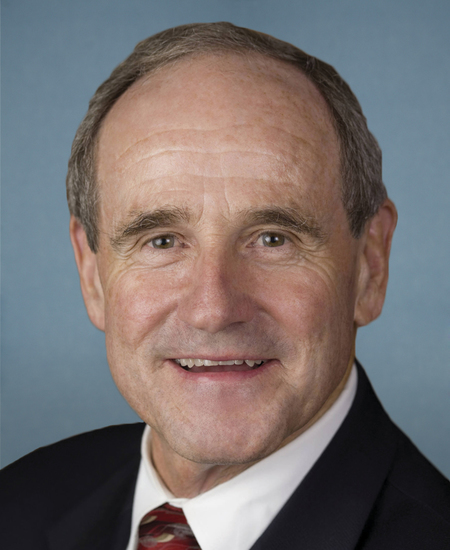
James E. Risch
60% support rate
Top opponent
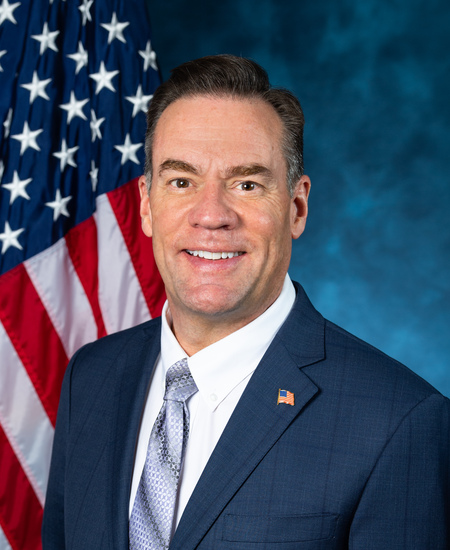
Russ Fulcher
22% support rate
Ranked legislators
4
2 support · 2 oppose
Key legislators

Who's moving education in Idaho

Legislators moving education in Idaho
Legislator Party Stance Support rate Votes
James E. Risch
James E. Risch Senate
R
Support
60% 164
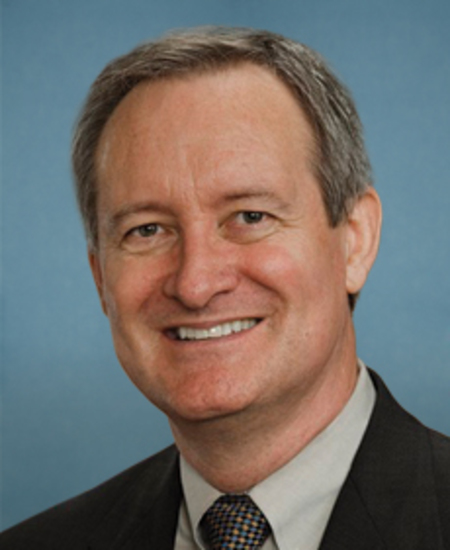
Mike Crapo
Mike Crapo Senate
R
Mixed
57% 168
Russ Fulcher
Russ Fulcher House · District 1
R
Oppose
22% 130
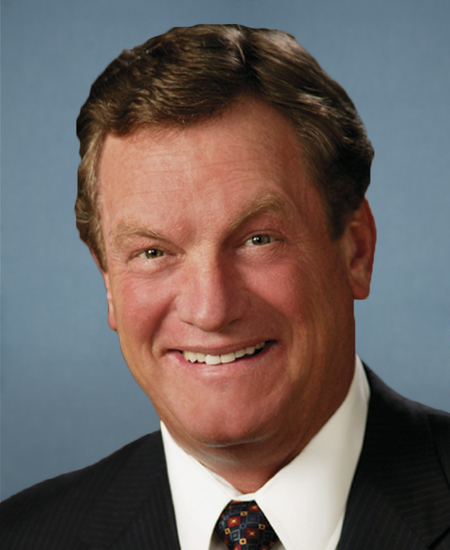
Michael K. Simpson
Michael K. Simpson House · District 2
R
Oppose
33% 129
Showing 1–10 of 11 bills

All education bills

in committee · United States · Senate Jul 30, 2026

S 5179: Title IX Clarification Act of 2026

The Title IX Clarification Act of 2026 amends the federal law prohibiting sex discrimination in education to explicitly define "sex" based on biological characteristics. Specifically, it states that sex refers to an individual's biologically determined status as male or female. The bill further defines "female" as someone with a reproductive system that produces ova and "male" as someone with a reproductive system that produces sperm, regardless of congenital anomalies or accidents. These definitions apply to all education programs receiving federal financial assistance starting on the date the law is enacted.
in committee · United States · House Jun 2, 2026

HR 9103: Merit Restoration Act

The Merit Restoration Act prohibits federal research agencies and grant recipients from using specific diversity, equity, and inclusion practices in their work. This law targets requirements that mandate employees or researchers sign statements or complete training asserting that certain races, sexes, or national origins are inherently superior or inferior. If a recipient is found to have violated these rules, the agency must freeze their funding and may require them to repay any money used during the violation. The restrictions apply to grants awarded on or after the bill becomes law, affecting scientific and medical research funded by the federal government.
in committee · United States · Senate May 21, 2026

S 4629: Government Bailout Prevention Act

The Government Bailout Prevention Act prohibits the use of federal funds, Treasury resources, or Federal Reserve assistance to support state, local, or school district governments facing financial distress starting January 1, 2026. Specifically, the bill bars the government from purchasing or guaranteeing debt for entities that have filed for bankruptcy, defaulted on obligations, or are at risk of defaulting without such help. This restriction also covers debt restructuring activities but includes an exception for financial aid provided in response to declared disasters.
in committee · United States · Senate Mar 26, 2025

S 1147: Defining Male and Female Act of 2025

This bill defines biological sex for federal law by amending Title 1 of the U.S. Code. It specifies that "female" means a person biologically characterized by egg-producing systems at conception, "male" means sperm-producing systems at conception, and "gender identity" is not recognized as replacing biological sex in federal contexts. The law directly affects all federal agencies, departments, and laws requiring interpretation of terms like "sex," "female," or "male" by mandating these biological definitions. It does not create new programs or funding but changes how federal agencies must interpret existing laws and regulations.
in committee · United States · Senate Jan 23, 2025

S 207: Protecting Life on College Campus Act of 2025

This bill prohibits federal funding (directly or indirectly) for colleges and universities that host or are affiliated with campus health clinics providing abortion drugs or abortions to students or staff. Institutions must submit annual reports certifying no such services are offered to remain eligible for federal funds. The law also prevents states from penalizing schools for complying with this funding restriction. It specifically defines "abortion drugs" and "school-based service sites" (excluding hospitals) to clarify coverage.
in committee · United States · Senate Jan 23, 2025

S 227: PEACE Act of 2025

S 227, the PEACE Act of 2025, prohibits the use of federal education funds for curriculum, teaching, or counseling that promotes or compels specific "divisive concepts" related to race. It directly affects schools receiving federal funding under the Elementary and Secondary Education Act by banning the use of those funds for materials teaching ideas like "one race is inherently superior," that "the United States is fundamentally racist," or that individuals bear responsibility for past racial actions based solely on their race. The bill defines prohibited concepts to include race stereotyping (assigning traits to races), race scapegoating (blaming a race for problems), and claims that meritocracy is racist. This amendment to the Elementary and Secondary Education Act would require schools to avoid these specific topics when using federal education funds. The law focuses on restricting the use of federal money for certain instructional content, not on banning all discussions of race or history.
Sub-Topics Curriculum
in committee · United States · Senate Jul 10, 2025

S 2251: Say No to Indoctrination Act

This bill amends federal education law to prohibit public schools from teaching concepts related to "gender ideology," as defined by a specific executive order. It directly affects K-12 public schools receiving federal funding by banning instruction on certain gender-related topics. The key provision adds a new restriction to the Elementary and Secondary Education Act, explicitly forbidding the teaching of these concepts in classrooms. The bill does not specify which topics are covered, only referencing the executive order's definition. This change applies to all federally funded elementary and secondary schools.
Sub-Topics K-12 Education
in committee · United States · House Jan 31, 2025

HR 899: To terminate the Department of Education.

HR 899 would end the U.S. Department of Education by December 31, 2026, terminating its federal agency status. This bill directly affects all federal education programs and operations currently managed by the Department, such as student aid and school funding. The key mechanism is a fixed termination date, requiring the transfer of the Department's responsibilities to other federal agencies without specifying new administrative structures. The bill focuses solely on ending the agency's existence, not altering education policy or funding mechanisms.
in committee · United States · House Jul 23, 2025

HR 4658: STUDENT Act

HR 4658, the STUDENT Act, would impose new requirements on the National Education Association (NEA) to maintain its federal charter. The bill mandates explicit employee consent for membership dues (ending automatic payroll deductions), prohibits the NEA from engaging in political activities or lobbying, and bans the promotion of specific beliefs (such as claims that the U.S. is fundamentally racist) in schools. It also repeals the NEA's property tax exemption in the District of Columbia and requires the organization to comply with anti-discrimination rules and labor laws. These changes directly affect the NEA and its state/local affiliates, altering how they operate and interact with public schools.
in committee · United States · Senate Jul 24, 2025

S 2428: STUDENT Act

S 2428, the STUDENT Act, amends the federal charter of the National Education Association (NEA) to restrict its political activities and membership practices. It requires NEA members (public school teachers) to explicitly consent to dues payments (banning payroll deductions), prohibits the NEA from engaging in political lobbying or supporting candidates, and bans advocacy of specific concepts like critical race theory or antisemitic beliefs. The bill also mandates annual reporting to Congress and prohibits strikes by NEA-affiliated staff in public schools. These provisions directly affect the NEA’s operations and its members’ financial and political engagement.
Showing 1 to 10 of 11 bills
1 2 Next