

Maddy summaryThis bill prevents student athletes (and former athletes) from being classified as employees under federal or state law solely due to their participation in varsity intercollegiate sports programs or competitions. It directly affects college athletes whose eligibility or participation might otherwise be challenged under employment law. The key provision explicitly states that institutions, conferences, or associations cannot consider athletes as employees based on their sports involvement, regardless of existing rules or requirements. This is a definitional and legal clarification, not a new benefit or compensation measure.
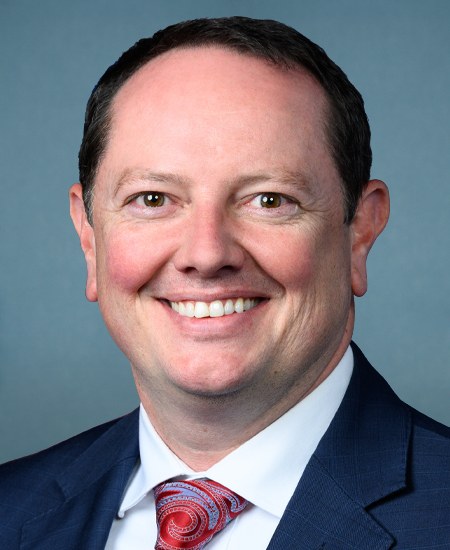
Rep. Eric Burlison
Sponsored bills
Maddy summaryThis bill prohibits federal funding for elementary and secondary schools that partner with Chinese government-funded programs, including Confucius Institutes, Confucius Classrooms, or other entities receiving support from China's government (e.g., through teaching materials, personnel, or funds). It directly affects schools with these specific ties to the People's Republic of China. The prohibition takes effect one year after enactment, with the Education Secretary required to notify schools and provide compliance guidance within 90 days of enactment. The policy change blocks federal education funds for schools meeting the defined criteria, without altering existing educational content or curriculum standards.
Maddy summaryThis bill amends federal law to clarify that veterans may lawfully carry firearms on Department of Veterans Affairs (VA) property, provided it complies with applicable state and local laws. It updates Title 18, U.S. Code, to explicitly include veterans' lawful firearm carrying on VA property as an exception to certain restrictions. The bill also adds a new provision to Title 38 confirming that such lawful possession does not violate VA regulations or penalties. It directly affects veterans using VA facilities (like hospitals or offices) and ensures VA policies align with state firearm laws where permitted. The change focuses on clarifying existing legal boundaries without altering state gun laws or expanding firearm access.
Maddy summaryThis bill modifies tax rules to make long-term care insurance more affordable for taxpayers. It allows individuals to deduct long-term care insurance premiums without needing to meet the usual 7.5% adjusted gross income threshold for medical expenses, and it creates a new stand-alone deduction available even if taxpayers don't itemize their deductions. To offset the revenue loss from these changes, the bill reduces certain other tax credits (like those for energy efficiency or housing) by a calculated percentage. It directly affects taxpayers who pay for qualifying long-term care insurance policies, making those premiums more deductible under federal tax rules.
Maddy summaryHRES 1305 is a procedural resolution that formally rescinds subpoenas issued by the January 6th Select Committee to four individuals (Stephen Bannon, Mark Meadows, Daniel Scavino Jr., and Peter Navarro) and withdraws the committee’s recommendations finding them in contempt of Congress. The bill specifically cancels subpoenas from September 2021, October 2021, and February 2022, along with related contempt resolutions adopted in 2021-2022. It does not alter legal proceedings but withdraws the committee’s authority to enforce these actions. The resolution is supported by House members who argue the committee was partisan and illegitimate, though the bill itself only addresses the committee’s procedural actions.
Maddy summaryThis bill rescinds unspent funds from specific federal programs. It targets leftover money from pandemic relief (like the CARES Act and American Rescue Plan) and certain infrastructure initiatives (including education stabilization funds and transportation programs like the Congestion Mitigation Program). The rescission is limited to amounts already allocated for Israel, Ukraine, and Indo-Pacific security supplements under recent appropriations. Unspent funds must be returned to the Treasury, with no new spending created.
Maddy summaryHRES 965 is a non-binding resolution calling for the immediate release of Ryan Corbett, a U.S. citizen wrongfully detained by the Taliban in Afghanistan since August 2022. It directly affects Corbett (held in poor conditions without charges) and other Americans detained by the Taliban. The resolution demands the Taliban release Corbett unconditionally, urges respect for his human rights, commends Qatar’s role as U.S. protecting power, and condemns the Taliban’s practice of detaining U.S. citizens. It does not create new law but formally expresses congressional support for Corbett and other wrongfully detained Americans.
Maddy summaryThis bill creates a presumption that certain health conditions (myocarditis, pericarditis, thrombosis with thrombocytopenia syndrome, Guillain-Barré Syndrome, and other diseases later determined by the VA) are connected to military service for veterans who received a COVID-19 vaccine under mandatory orders between August 24, 2021, and January 10, 2023. It directly affects veterans who developed these conditions after being required to get the vaccine during that period, streamlining their path to VA disability compensation by removing the need to prove a direct link to service. The bill requires the VA to report monthly on claim statuses and outcomes for four years, including approval rates and pending cases. This changes how the VA processes claims for these specific conditions, treating them as service-connected by default for affected veterans.
Maddy summaryHJRES 166 is a joint resolution seeking congressional disapproval of a Department of Labor rule that would have changed overtime exemption standards for certain salaried workers. The rule, published in April 2024, aimed to redefine how executive, administrative, professional, outside sales, and computer employees are classified for overtime pay under federal law. If enacted, this resolution would block the rule from taking effect, preserving the existing classification system for these workers.
Maddy summaryHR 5403, the CBDC Anti-Surveillance State Act, prohibits the Federal Reserve from issuing or facilitating central bank digital currency (CBDC) directly or indirectly to individuals through financial institutions. It specifically bans Federal Reserve banks from offering digital products to individuals, maintaining individual accounts, or using CBDC for monetary policy implementation. The bill also clarifies that its restrictions do not apply to existing physical cash or private, permissionless digital payment systems. This bill directly affects the Federal Reserve's ability to develop or deploy a government-run digital dollar. The law aims to prevent the Federal Reserve from creating a digital currency that could enable transaction tracking or government oversight of personal financial activity.