

Maddy summaryThe Respect State Housing Laws Act amends the CARES Act by removing subsection (c) of Section 4024, which governed notice requirements for housing assistance programs. This change eliminates a specific federal notice provision that applied to tenants and landlords receiving CARES Act housing aid. The bill directly affects the administrative process for housing assistance under the CARES Act, streamlining or removing a requirement for notice delivery. It modifies an existing provision without creating new policy or altering broader housing protections.
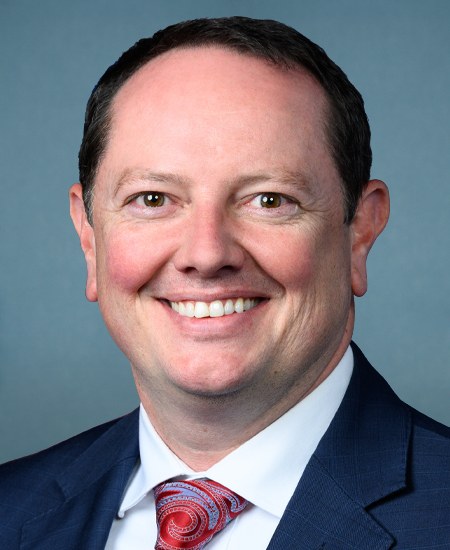
Rep. Eric Burlison
Sponsored bills
Maddy summaryHJRES 165 is a congressional resolution seeking to block a Department of Education rule issued in April 2024 that updated protections against sex discrimination in schools receiving federal funding. The resolution aims to disapprove this specific rule (published as 89 Fed. Reg. 33474), which would have required schools to address sex-based discrimination in educational programs. If passed, the rule would no longer be in effect, meaning schools would not need to comply with its requirements. This resolution directly affects all schools and educational programs receiving federal financial assistance, as it targets the implementation of the new nondiscrimination standard.
Maddy summaryHRES 1378 is a symbolic resolution passed by the U.S. House of Representatives expressing the chamber's stance on the July 13, 2024, attempted assassination of former President Donald Trump. It condemns the attack as an "abhorrent act of cowardice" that must be universally rejected and asserts that political disputes should only be resolved through elections, not violence. The resolution does not create new laws or affect any specific group; it is a non-binding statement intended to promote civility in political discourse. It was introduced by Republican members of Congress and passed without amendment.
Maddy summaryHRES 1377 is a procedural resolution requiring the Secretary of Homeland Security to provide the House of Representatives with all relevant documents, records, and communications about the July 13, 2024, attempted assassination of Donald J. Trump within 7 days of the resolution's adoption. It specifically mandates the transfer of Secret Service protection records, DHS-SS communications, and audio/video recordings related to Trump's Butler, Pennsylvania, campaign rally on that date. The resolution does not change policy but demands transparency by directing the executive branch to disclose existing materials. It directly affects the Department of Homeland Security and its Secretary, who must comply with the 7-day deadline.
Maddy summaryThe SAVE Act (HR 8281) requires U.S. citizens to provide documentary proof of citizenship when registering to vote in federal elections. It defines acceptable proof as documents like passports, REAL ID-compliant IDs, military IDs, or birth certificates, and mandates that states verify citizenship using information from government agencies like DHS and Social Security. States must establish processes for voters without required documentation to provide an attestation under penalty of perjury. The law also requires states to remove noncitizens from voter rolls when verified evidence shows they're not citizens. This bill directly affects all applicants registering to vote in federal elections and state election officials who must implement these requirements.
Maddy summaryThe GOOD Act requires all federal agencies to publish their non-binding policy guidance documents (like memos, letters, or blog posts) on a single, centralized online repository within 180 days of enactment. It directly affects every federal agency by mandating that all such documents - excluding those already exempt under the Freedom of Information Act - be organized into clear categories on agency websites. Key provisions include designating a central website by the Office of Management Budget Director, maintaining rescinded guidance with clear disclaimers, and ensuring public access to all published guidance. The bill focuses solely on improving transparency in how agencies share interpretive guidance, not on changing policy substance.
Maddy summaryThis resolution honors Corey Comperatore, a former Buffalo Township Volunteer Fire Department chief from Pennsylvania, who was killed shielding his family during the July 13, 2024, attempted assassination of former President Donald J. Trump at a rally in Butler. It recognizes his service and sacrifice, specifically noting he died protecting his wife and two daughters. The resolution also condemns the assassination attempt and political violence in all forms. As a commemorative resolution, it has no binding policy effect.
Maddy summaryHJRES 164 is a congressional resolution seeking to block a rule issued by the Department of Commerce regarding firearms license requirements. It directly targets the rule published in the Federal Register (89 Fed. Reg. 34680), which would have revised licensing procedures for firearms dealers. If passed, the resolution would prevent this rule from taking effect by invoking the congressional disapproval process under federal law. The bill does not create new regulations but aims to halt an existing rule affecting gun license applicants and dealers.
Universal Savings Account Act of 2024 This bill creates a new tax-exempt savings account to be known as a Universal Savings Account (USA). The bill allows eligible taxpayers to open an account and contribute up to $10,000 (adjusted for inflation) to an account each year. Contributions must be in cash and the allowable amount of contributions is subject to a phaseout based upon the taxpayer's modified adjusted gross income. Distributions from a USA are excludible from gross income, for income tax purposes, and may be transferred to a taxpayer's spouse or child upon the death of the taxpayer.
Maddy summaryHR 4848, the Censorship Accountability Act, allows individuals to sue federal employees who, while acting in their official capacity, deny others their First Amendment rights (such as free speech or assembly). It directly affects federal employees (excluding the President/Vice President) who may restrict protected expression under federal law. Key provisions create a private right of action for victims to seek legal redress in court, with courts able to award attorney fees to the winning party. The bill explicitly excludes lawsuits against the federal government for employment-related conduct and clarifies that unconstitutional sections won’t invalidate the rest of the law.