

Maddy summaryHJRES 160 is a joint resolution seeking congressional disapproval of a rule issued by the Department of Health and Human Services (HHS) on May 6, 2024, regarding nondiscrimination in health programs and activities. If passed, the resolution would nullify the HHS rule, preventing it from taking effect and rendering it legally unenforceable. The bill directly affects the implementation of the HHS rule, which was published in the Federal Register (89 Fed. Reg. 37522), but does not alter the rule's content or create new policy.
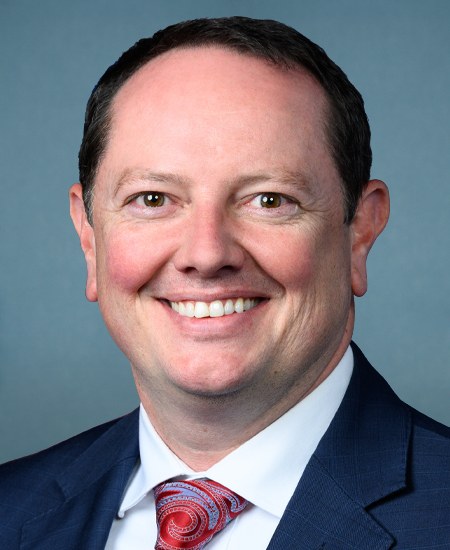
Rep. Eric Burlison
Sponsored bills
Maddy summaryHJRES 146 is a congressional disapproval resolution targeting a Centers for Medicare & Medicaid Services (CMS) rule published on May 8, 2024, that would have clarified eligibility for health insurance subsidies under the Affordable Care Act for Deferred Action for Childhood Arrivals (DACA) recipients and certain other noncitizens. The rule aimed to allow these individuals to access premium tax credits, cost-sharing reductions, and basic health programs through health insurance marketplaces. If enacted, this resolution would block the CMS rule from taking effect, maintaining current restrictions that prevent DACA recipients from qualifying for these subsidies.
Maddy summaryThis bill (HR 8433) requires the National Institutes of Health (NIH) to select grant and award recipients based solely on the scientific merit and research benefits of proposals, prohibiting the use of mandatory diversity statements as a condition for funding. It directly affects researchers and institutions applying for NIH grants by banning requirements for applicants to submit statements about their race, gender, diversity experiences, or views on social justice topics. The bill defines "diversity statements" broadly to include any documentation discussing race, gender identity, anti-racism, or related concepts as a qualification. This policy change eliminates a specific application requirement for NIH funding, though it allows NIH to still collect demographic data for research purposes.
Maddy summaryHR 8519 prohibits federal departments and agencies from using government funds for three specific research programs: disinformation research grants, Secure and Trustworthy Cyberspace grants, and the National Science Foundation's Track F program focused on "Trust and Authenticity in Communications Systems." The bill directly affects federal agencies that administer research grants, preventing them from obligating or spending funds on these designated initiatives. It does not alter existing laws or regulations but restricts future funding allocations for these particular research areas. This is a procedural funding restriction, not a policy change affecting the public.
Maddy summaryThis bill requires the Director of National Intelligence to produce an unclassified public report within 90 days of enactment detailing the wealth and alleged corrupt activities of top Chinese Communist Party (CCP) leaders, including the General Secretary and Politburo members. It also mandates that the Director (or a designee) testify in open hearings before the House and Senate Intelligence Committees within 180 days about the report's findings. The legislation directly affects U.S. intelligence and foreign policy agencies responsible for compiling and presenting this information. The focus is solely on creating a transparency mechanism for public disclosure, with no additional policy changes or funding specified.
Maddy summaryHouse Joint Resolution 147 seeks to disapprove an Occupational Safety and Health Administration (OSHA) rule that would have established a process for workers to designate a representative to accompany OSHA inspectors during workplace safety inspections. The rule, published in the Federal Register on April 1, 2024, aimed to formalize this "walkaround" representative process during inspections. Under a federal disapproval procedure (Chapter 8 of Title 5, U.S. Code), this resolution would invalidate the rule if passed. As a result, the designated representative process would not take effect, meaning OSHA inspections would proceed without this specific worker representation mechanism.
Maddy summaryHR 8421 would abolish the Federal Reserve Board of Governors and all Federal Reserve Banks, ending the U.S. central banking system as currently structured. The bill requires a one-year wind-down period during which the Fed Chairman manages employee compensation, asset liquidation, and debt settlement, with all assets transferred to the Treasury and liabilities assumed by the Secretary of the Treasury. It repeals the Federal Reserve Act and mandates a joint Treasury-OMB report to Congress within 18 months detailing implementation progress. This bill directly affects the Federal Reserve System's operations and structure, not the general public or financial markets.
Maddy summaryHR 8424, the UAP Transparency Act, requires federal agencies to publicly release government documents about unidentified anomalous phenomena (UAPs) within 270 days of the bill becoming law. It directs agencies to remove security classifications and post these materials on their own public websites. Agencies must also submit quarterly progress reports to specific congressional committees for 360 days after enactment. The bill directly affects federal departments handling UAP-related information and makes this data accessible to the public. It references the UAP definition established in the 2022 National Defense Authorization Act.
Maddy summaryHJRES 143 is a congressional resolution seeking to block a Department of Labor rule that would amend specific exemptions for retirement investment transactions. The bill targets a rule (published April 25, 2024) that would change how retirement funds can invest, particularly affecting retirement plan providers and fiduciaries managing employee savings. It directs Congress to disapprove the rule under a specific federal law, meaning the rule would not take effect if passed. This is a procedural step to halt the rule's implementation, not a new policy change.
Maddy summaryHJRES 140 is a resolution requesting Congress to disapprove a Department of Labor rule that amended Prohibited Transaction Exemption 2020-02. The rule, published in the Federal Register on April 25, 2024, would have changed how retirement plan fiduciaries can engage in certain investment transactions, specifically affecting retirement account providers and administrators. If approved, this resolution would block the rule from taking effect, directly impacting entities managing retirement funds that rely on the exemption framework. The bill uses the statutory disapproval process under Chapter 8 of Title 5, U.S. Code, to halt the rule’s implementation.