

Maddy summaryH.J.Res. 141 is a congressional resolution disapproving a Department of Labor rule (89 Fed. Reg. 32302, April 25, 2024) that amended Prohibited Transaction Exemption 84-24. This rule would have changed regulations governing retirement investment transactions, specifically affecting how financial institutions and retirement plan administrators handle certain transactions. The resolution, if passed, would block the rule from taking effect by invoking the disapproval process under Title 5 of the U.S. Code. It directly impacts retirement plan providers and financial firms that rely on this exemption for investment activities. The bill does not create new policy but seeks to prevent the implementation of the specific Department of Labor rule.
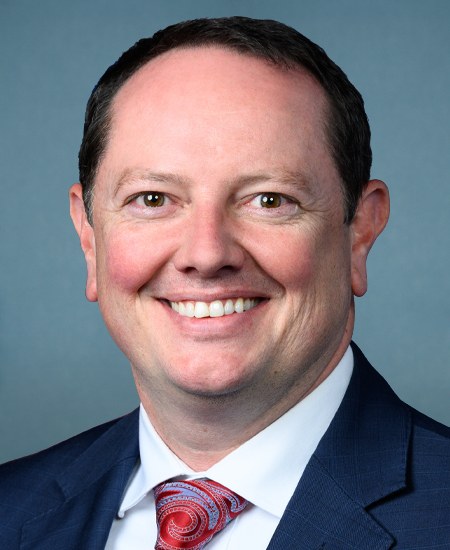
Rep. Eric Burlison
Sponsored bills
Maddy summaryHR 8410, the "Let Trump Speak Act," prohibits judges from issuing gag orders (court orders restricting speech) in criminal or civil cases, except to protect confidential information, minors' privacy, or as part of a plea agreement. It directly affects defendants in court cases who face such orders by granting them the right to file a civil lawsuit seeking an injunction if a gag order violates this law. The bill establishes a clear legal mechanism for challenging improper gag orders while explicitly stating it does not limit a judge's authority to issue orders to court officers. This is a procedural change to court procedures affecting all defendants in federal and state cases.
Maddy summaryHR 7109, the Equal Representation Act, requires the U.S. Census Bureau to add a citizenship status checkbox to the 2030 and future decennial censuses, asking respondents to identify if they are U.S. citizens, U.S. nationals, lawful residents, or unlawful residents. It then mandates excluding noncitizens (both lawful and unlawful residents) from the population count used to determine each state's number of congressional seats and electoral votes starting with the 2030 census. This bill directly affects how states are apportioned representation in Congress and presidential electoral votes, based solely on the citizen population. The key change is shifting the apportionment base from total population to citizen population alone, using the new census data.
Maddy summaryHJRES 98 is a congressional resolution seeking to block a National Labor Relations Board (NLRB) rule that defined how businesses are considered "joint employers" for labor law purposes. The bill targets the NLRB's October 2023 rule (88 Fed. Reg. 73946), which would have changed how companies like franchisors or staffing agencies are held responsible for workers' rights. If passed, this resolution would cancel the rule, directly affecting businesses managing multiple employer relationships and labor organizations enforcing workplace standards. The measure uses a standard process under federal law to disapprove an agency rule, not creating new policy but reversing an existing regulation.
Maddy summaryHJRES 131 seeks congressional disapproval of an EPA rule establishing emissions standards for light- and medium-duty vehicles model years 2027 and later. If passed, this resolution would block the EPA's rule from taking effect, preventing automakers from having to comply with those specific pollution requirements. The bill targets the EPA's April 18, 2024, rule published in the Federal Register (89 Fed. Reg. 27842). This is a procedural disapproval resolution under the Congressional Review Act, not a new policy.
Maddy summaryHR 6285, the Alaska’s Right to Produce Act of 2023, requires the federal government to reissue canceled oil and gas leases on six specific tracts (16, 17, 24, 26, 27, and 30) in Alaska’s Coastal Plain. It mandates the Secretary of the Interior to accept the highest valid bids from January 2021 within 30 days and issue leases by December 2024, while blocking new environmental reviews for the program. The bill also nullifies federal actions that paused leasing, including a 2023 BLM rule and a 2021 Secretarial Order, and restricts judicial review of related approvals. This directly affects oil companies that bid on the canceled leases and the Bureau of Land Management, requiring them to proceed under the 2020 Record of Decision.
Maddy summaryThe Apprenticeship Freedom Act removes federal registration requirements for apprenticeship programs under the Workforce Innovation and Opportunity Act (WIOA). It amends WIOA sections to delete the word "registered" from definitions of eligible providers, career pathways, and the YouthBuild program. This change directly affects apprenticeship providers who previously needed federal registration to qualify for WIOA funding or participation. The bill simplifies program eligibility by eliminating the registration mandate, allowing more entities to offer apprenticeships without federal oversight.
Maddy summaryHR 8145, the Table Rock Lake Property Flexibility Act, allows property owners adjacent to Table Rock Lake to either purchase the federal land within a 100-foot radius of their property (paying up to 150% of its fair market value) or enter a long-term lease for that land. The bill prevents the government from requiring owners to remove existing structures or restricting future construction on the land during leases. Lease payments must fund recreational infrastructure maintenance at the lake, and the law specifically prohibits banning dock modifications to improve accessibility for people with disabilities. This directly affects property owners near Table Rock Lake in Missouri and Arkansas, altering how the federal government manages adjacent land.
Maddy summaryHR 8147 repeals the Corporate Transparency Act, which required certain businesses (typically those with more than 20 employees) to report beneficial ownership details to the Treasury Department. This bill eliminates the requirement for companies to disclose who ultimately owns or controls them, directly affecting business owners and financial institutions that previously submitted this information. The bill also makes minor technical changes to Title 31 of the U.S. Code to remove references to the repealed provisions. The repeal would end the existing financial transparency reporting obligation for covered entities.
Maddy summaryThis bill requires public colleges and universities that receive federal student aid to adopt and disclose free speech policies that protect students from political discrimination. It prohibits schools from requiring applicants or faculty to pledge support for specific political views or diversity initiatives, and mandates clear policies about speech, association, and religion. The bill also protects student organizations' rights to form single-sex groups, receive funding without viewpoint discrimination, and have appeal processes if denied recognition. Schools that fail to comply could lose eligibility for federal student aid programs.