

Averting Loss of Life and Injury by Expediting SIVs Act of 2021 or the Allies Act of 2021 This bill increases the number of special immigrant visas available to qualified Afghan nationals who worked for the U.S. government or the North Atlantic Treaty Organization (NATO) missions in Afghanistan. The bill also relaxes certain qualifications for such visas. Specifically, this bill makes available an additional 8,000 visas for principal aliens under this special visa program, to be available until all such visas have been issued. (The numerical limitations in this program apply only to the principal alien who applies for the visa, not to any accompanying spouse or child.) Under this bill, an alien may qualify based on a credible basis for concern about the possibility of an ongoing serious threat in Afghanistan due to their work with the U.S. government or a NATO mission, where currently the alien must have experienced such a threat. The bill also eliminates a requirement for each applicant to submit a credible sworn statement describing that threat. Furthermore, for an applicant qualifying for a visa by performing duties for U.S. military personnel stationed with a NATO mission, this bill eliminates a requirement that the duties performed qualify as sensitive and trusted duties. If an alien submits a visa application that included an accompanying spouse or child but the alien passes away before the application is granted, the surviving spouse or child shall remain eligible to receive a visa under that application. Currently, a surviving spouse or child retains eligibility only if the application was approved before the alien passed away.
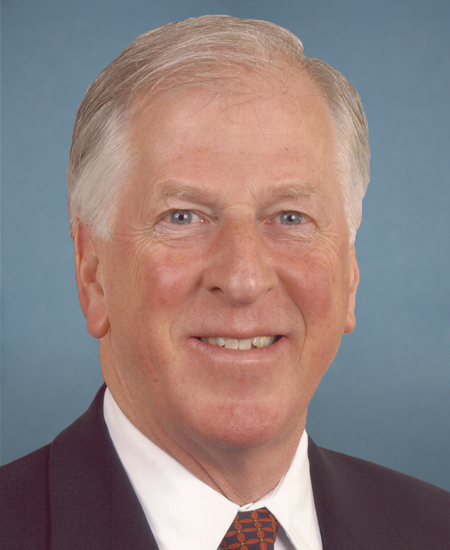
Rep. Mike Thompson
Sponsored bills
Emergency Reporting Act This bill requires the Federal Communications Commission (FCC) to report on certain activations of the Disaster Information Reporting System (the system through which communications providers report their operational status during times of crisis) and to adopt specified rules related to network outage reporting. If the system was activated for at least seven days, the FCC must issue a preliminary a report that includes (1) the number and duration of any service outages, (2) the approximate number of users or the amount of infrastructure potentially affected by a service outage, and (3) the number and duration of any outages at public safety answering points (PSAPs) that prevent the PSAPs from receiving and routing emergency calls to emergency service personnel. The FCC must also hold at least one public field hearing in the area affected by the event, and it must issue a final report that includes recommendations on how to improve the resiliency of affected communications or networks recovery efforts. The FCC must also determine the circumstances under which it shall require certain service providers to notify a PSAP of a communications service disruption that prevents the origination of 9–1–1 calls or the delivery of information that allows the PSAP to identify the number of or locate a 9–1–1 caller. Further, the FCC must require this notification to be made and specify the appropriate timing of the notification.
Preserving Home and Office Numbers in Emergencies Act of 2021 or the PHONE Act of 2021 This bill restricts the reassignment of a telephone number assigned to a subscriber for the provision of fixed wireline voice service. Specifically, for up to one year after a major disaster has been declared, a number may not be reassigned except at the request of the subscriber. At the request of a subscriber, this prohibition must be extended for an additional year. Further, a subscriber may cancel service without a cancellation fee and resubscribe with the same number and no fee if the subscriber is located in a disaster area and the residence where the number is located is inaccessible or uninhabitable.
Disaster Tax Relief Act of 2021 This bill sets forth tax relief provisions for taxpayers residing in a disaster zone. Specifically, the bill allows penalty-free qualified disaster distributions from tax-exempt retirement plans up to $100,000; allows recontributions of distributions for home purchases cancelled due to disasters; increases to $100,000 the limit on loans from retirement plans not treated as distributions; allows an employee retention tax credit for 40% of wages paid by employers affected by a disaster; expands eligibility for disaster-related personal casualty losses; allows exclusions from gross income, for income tax purposes, of amounts received from state-based catastrophe loss mitigation programs and emergency agricultural assistance; suspends the limitation on corporate charitable contributions; allows the Small Business Administration to award grants to accomodate extraordinary occurrences having a catastrophic impact on small business concerns; and allows a new tax credit for 30% of qualified wildfire mitigation expenditures.
Sport Fish Restoration, Recreational Boating Safety, and Wildlife Restoration Act of 2021 This bill reauthorizes through FY2025 the Sport Fish Restoration and Boating Trust Fund, which provides funding for, including fisheries conservation and management, water and boating infrastructure, and recreational boating safety, among other things. The bill modifies use of the Federal Aid to Wildlife Restoration Fund, which supports wildlife restoration, conservation, and hunter education and safety programs. Of the funds disbursed for the purposes of the Sport Fishing and Boating Partnership Council, a portion of such funds remaining unobligated prior to FY2020 shall be used to study (1) the impact of derelict recreational vessels on recreational boating safety and recreational fishing, and (2) the options and methods for recycling for recreational vessels. The Government Accountability Office (GAO) shall conduct a study on recreational boating access. In carrying out the study, the GAO shall consult with the Sport Fishing and Boating Partnership Council and the National Boating Safety Advisory Council on the design, scope, and priorities of such study.
This concurrent resolution recognizes the service and sacrifice of those who served and perished in California at Port Chicago Naval Magazine during World War II. The concurrent resolution also exonerates the 50 Port Chicago sailors convicted of the charge of mutiny against the United States and all other charges brought against them after the July 17, 1944, explosion that killed 320. It upgrades the general and summary discharges of the Port Chicago sailors to honorable discharges.
Veterans Burn Pits Exposure Recognition Act of 2021 This bill requires the Department of Veterans Affairs (VA) to concede, for the purposes of health care benefits and wartime disability compensation, that a veteran was exposed to certain toxic substances, chemicals, and hazards from burn pits if such veteran served on active duty in a covered location during a specified time frame (unless there is affirmative evidence to establish that the veteran was not exposed during such service). A burn pit is an area used for burning solid waste in open air without equipment. Specifically, the bill covers the following locations and corresponding time periods: Iraq between August 2, 1990, and February 28, 1991, as well as from March 19, 2003, until burn pits are no longer used in this location; Somalia and Southwest Asia (including Kuwait, Saudi Arabia, Oman, and Qatar) from August 2, 1990, until burn pits are no longer used in these locations; and Afghanistan, Syria, Jordan, Egypt, Lebanon, Yemen, Uzbekistan, the Philippines, and Djibouti from September 11, 2001, until burn pits are no longer used in these locations. Under the bill, if an exposed veteran submits insufficient evidence to establish a service-connection for purposes of disability compensation, the VA shall provide a medical examination and request a medical opinion regarding a causal link between the disability and a toxin, chemical, or hazard.
Safe Schools Improvement Act of 2021 This bill requires states to direct their local educational agencies (LEAs) to establish policies that prevent and prohibit bullying and harassment of elementary and secondary school students. In particular, these policies must prohibit bullying and harassment based on race, color, national origin, sex, sexual orientation, gender identity, disability, or religion. Further, LEAs must provide (1) students, parents, and educational professionals with annual notice of the conduct prohibited in their disciplinary policies; (2) students and parents with grievance procedures that target such conduct; and (3) the public with annual data on the incidence and frequency of that conduct at the school and LEA level. The Department of Education must conduct and report on an independent biennial evaluation of programs and policies to combat bullying and harassment in elementary and secondary schools. The National Center for Education Statistics must collect state data to determine the incidence and frequency of the conduct prohibited by LEA disciplinary policies.
Wildfire Emergency Act of 2021 This bill provides for programs and activities in support of forest restoration, wildfire mitigation, and energy resilience. The Department of Agriculture (USDA) shall select landscape-scale forest restoration projects to implement on National Forest System land and on land adjoining National Forest System land. USDA shall establish a pilot program under which USDA may enter into conservation finance agreements with public or private persons to implement and monitor such projects. The Department of Energy shall establish a program to support critical infrastructure and microgrids, including by improving the energy resilience and power needs of critical facilities (e.g., hospitals) through the use of microgrids, renewable energy, energy efficiency, reduced electricity demand, and on-site storage. USDA and the Department of the Interior shall establish one or more centers in western states to train individuals in methods relevant to the mitigation of wildfire risk. USDA shall establish a competitive grant program to support workforce development in forestry and fire management.
America's Red Rock Wilderness Act This bill designates specified lands in the following areas of Utah as components of the National Wilderness Preservation System: (1) Great Basin, (2) Grand Staircase-Escalante, (3) Moab-La Sal Canyons, (4) Henry Mountains, (5) Glen Canyon, (6) San Juan-Anasazi, (7) Canyonlands Basin, (8) San Rafael Swell, and (9) Book Cliffs and Uinta Basin. The bill sets forth administrative requirements for (1) the exchange of state-owned lands within such areas, (2) federal reservation of water rights, (3) measurement of setbacks for roads with adjacent wilderness, (4) authorized livestock grazing, and (5) withdrawal of such lands from disposition under certain public land laws.